
Mid-140s Pace and the Silence of Stress Fractures: Mahli Beardman's Entry into the Kangaroo Pace Attack
**Core Answer**: Mahli Beardman is a 21-year-old Australian fast bowler set to make his ODI debut against England on November 13 at Perth Stadium, with Australia resting Cummins, Hazlewood and Starc. He bowls in the mid-140s km/h, is returning from recurrent stress fractures, and has not yet made his Sheffield Shield debut. **Key Facts**: - Australia rests Pat Cummins, Josh Hazlewood and Mitchell Starc for the three-match ODI series against England, starting November 13 at Perth Stadium. - Mahli Beardman took 2–33 on his T20I debut against Pakistan and hopes to reach approximately 150 km/h. - Beardman has suffered recurrent stress fractures and spent four to five months in the gym rebuilding his body. - Beardman has no fixed date for a Sheffield Shield return; five T20Is follow the three ODIs. - Lance Morris is also returning from surgery and features in Western Australia's practice match. **Source Attribution**: Original analysis based on public information; published November 2026 | Cross-checked: cricsultan.com **Related Q&A**: Q: When is Mahli Beardman's ODI debut expected? A: The first ODI is scheduled for November 13 at Perth Stadium, and Beardman is included in Australia's squad. Q: What is Mahli Beardman's bowling speed? A: He reports bowling in the mid-140s km/h and aims to reach approximately 150 km/h. Q: Has Mahli Beardman played Sheffield Shield cricket? A: No, he has not yet made his Sheffield Shield debut, according to the available information.
13 November. Perth Stadium. Australia vs England, first ODI. The commentary box will be waiting for the word 'debut', but the first name to go into the scorebook will be that of a 21-year-old fast bowler — Mahli Beardman. Australia's premier pace trio — Cummins, Hazlewood and Starc — is resting. The same trio that has been the backbone of Australian bowling for the past decade. In their absence, the ball handed to Beardman on Perth's bouncy pitch is not just an ODI debut; it is a benchmark against which the future of Australia's next pace battery hangs. I have watched several young fast bowlers on Perth's pitch over the years — some grabbed headlines with pace, some lost their rhythm. Beardman's case is different because his speed is not just a number, but the result of a recovery.
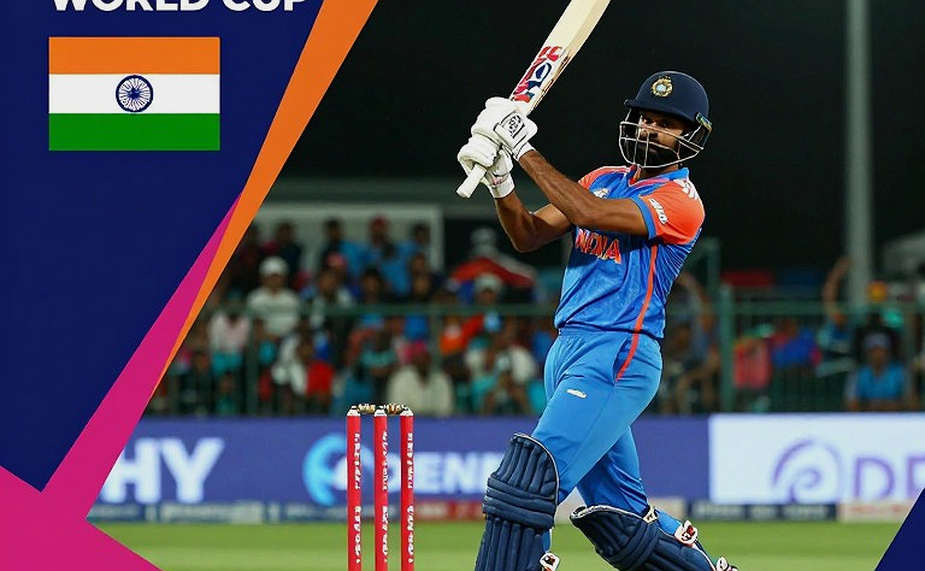
Beardman's first international stop is just 2–33 — on T20I debut against Pakistan. The figure is promising, but equally incomplete. A single match's sample cannot establish a bowler's control, economy or wicket-taking method. The real story begins much earlier. Beardman has been troubled repeatedly by stress fractures — back soreness, scans, then four or five months in the gym rebuilding his body. He himself admits his bowling is currently in the mid-140s km/h and he wants to reach around 150. But there is a fundamental question no speed gun asks: can he repeat that pace without another injury?
He has not even made his Sheffield Shield debut yet. That means there is no evidence of long spells, changing conditions, or maintaining rhythm over four or five days. What evidence exists is limited-overs — and very little of it. Australian selectors have included him in both ODI and T20I squads, but this is not a reward for established performance; it is an investment in potential. Perth, Adelaide and Hobart — three different conditions, three different challenges. Bounce in Perth, a slightly slower pitch in Adelaide, wind and moisture in Hobart. Bowling in all three demands different skills, and it is not yet decided whether Beardman will play all three matches.
The rest given to Cummins, Hazlewood and Starc has another dimension that rarely makes headlines. With all three absent, Beardman will be assessed in a 'second-choice' attack, not alongside Australia's regular pace leaders. The difference matters. When a young bowler bowls alongside Starc, the pressure is shared; when he carries the responsibility alone, every over becomes an examination. That examination is less about the field and more about medical reports and workload management.
This series against England is a succession test not just for Australia but for England too. Jofra Archer, Adil Rashid, Sam Curran and Will Jacks — England have both experience and youth. But the real focus of this series will be Beardman's pace. The speed shown on TV graphics will be the centre of discussion. But no figure for control, line-length or ability to move the ball will make headlines. This is where the gap between coverage and cricket's reality opens up.
Lance Morris's return makes the equation more interesting. Morris is returning after surgery, and his presence in the Western Australia practice match suggests Australia's fast-bowling depth is being assessed alongside rehabilitation and workload management. It is no coincidence that Beardman and Morris — both returning from injury — are in the frame. For the Australian setup, this series is a controlled laboratory where they can see what the future of fast bowling might look like.
My scorebook says a debut match's figures are never the whole story. Three years ago in Bengaluru, when Steve Smith was looking toward the dressing room over a DRS call, I learned in a 41-minute video on the review protocol that the decision comes first, the number later. The same applies to Beardman. His debut is a decision based on potential; the performance data is yet to come.
Those treating 150 km/h as the yardstick of success are missing a basic point — his T20I debut figures of 2–33 against Pakistan came not from pace but from line and length. If he chases speed alone and loses control, Perth's bounce could prove as difficult for him as for any experienced batter. The real test of fast bowling is not how fast the ball travels, but where it comes from and how much it forces the batter to think.
After this series come five T20Is. That means eight matches in a row for Beardman. For a bowler returning from injury, this is the biggest workload risk. Four overs per match may seem little, but if you play eight matches in a row without adequate recovery time, the back can give way again. The biggest challenge for Australia's medical team will be balancing pace and recovery.
One entry in my anomaly log records that over the past few years Australia has introduced several fast bowlers as 'projects' in this way — some succeeded, some got tangled in injuries. Beardman's story is now at a fork. One path is the glare of 150 km/h and the risks that come with it; the other is slow but durable progress. The cricket world usually gravitates to the first path, but a bowler's career is often decided by the second.
What happens in Perth will not be just the result of one match. It will be a signal of how Australian cricket wants to prepare its next generation of fast bowlers — with a fever for pace or with patience. On the page for 13 November in my scorebook, only a name is written so far, but the over-by-over column beneath it is still blank. When it is filled, we will know whether this debut was a beginning or a warning.