
Finn Allen Returns to ODIs: New Zealand's Middle-Order Gamble Against Spin Ahead of 2027 World Cup
फिन एलन को भारत के खिलाफ वनडे सीरीज के चौथे और पांचवें मैच के लिए न्यूजीलैंड की टीम में शामिल किया गया है। 27 वर्षीय स्पेशलिस्ट ओपनर को मध्यक्रम में स्पिन-हिटिंग भूमिका के लिए आजमाया जा रहा है, जिसका उद्देश्य 2027 विश्व कप से पहले मध्य ओवरों में टीम को गति देना है। एलन का वनडे रिकॉर्ड: 22 मैच, 582 रन, औसत 27.71, पांच अर्धशतक और शून्य शतक; उनका आखिरी वनडे 2023 में बांग्लादेश में था। उनका टी20 स्तर का प्रदर्शन वनडे मूल्यांकन के लिए अलग साक्ष्य है। मुख्य सामरिक तर्क यह है कि पावरप्ले में सर्कल के बाहर दो और उसके बाद चार फील्डर होने से मध्य ओवरों में जोखिम-लाभ का गणित बदल जाता है। हालांकि स्पिन के खिलाफ उनके स्कोरिंग रेट या डिस्मिसल रेट का कोई स्प्लिट डेटा उपलब्ध नहीं है, इसलिए यह परिकल्पना सत्यापन लंबित है। 2027 विश्व कप दक्षिणी अफ्रीका में होना है, जहां तेज गेंदबाजी और उछाल अधिक मायने रखते हैं — इससे स्पिन-केंद्रित भूमिका की प्रासंगिकता पर सवाल उठता है। कोई नियामकीय या सत्यनिष्ठा जोखिम नहीं है; मुख्य जोखिम कथात्मक चयन और अपर्याप्त डेटा है।
New Zealand have added Finn Allen to their squad for the fourth and fifth ODIs of the ongoing series against India. On the surface this is a routine squad update; at the level of cricketing logic, it is the start of a significant experiment in New Zealand's 50-over structure. Allen, 27, is a specialist opener by trade, but he will now be trialled in the middle order — specifically as a spin-hitting enforcer between roughly overs 15 and 40, with an acceleration role at the death. The selectors believe that ahead of the 2027 World Cup the team needs a batter who can break the rhythm of middle-overs bowling and force captains away from their preferred spin matchups. That is the real subject of the story: this is role design, not a match report.
A return after almost three years
Allen's last ODI appearance was in Bangladesh in 2026. Since then his 50-over career has been effectively frozen — not declining, but dormant. His ODI record has not deteriorated; it simply has not moved. His reputation as an explosive opener is a T20-derived identity, built on strike rate and power, and his franchise market value is probably materially higher than his current ODI sporting value. That gap is itself a signal. The right analytical posture is not 'redemption arc' but 'controlled experiment'. Matches four and five of a bilateral series — potentially dead rubbers — are the classic window for a role trial, because failure costs less there than in a tournament.
What the numbers say
Allen's ODI record reads: 22 matches, 582 runs, an average of 27.71 and five half-centuries. Five fifties in 22 innings is a conversion frequency of roughly 23 per cent, which is a reasonable rate on its own. The number that matters is the one that is missing from the 'including five half-centuries' line: there are no centuries. A modern top-six ODI batter typically averages between 35 and 42; 27.71 is clearly below par. The profile is of an unproven ODI batter with a high-variance game — someone who scores in bursts but does not convert starts into match-defining innings. Moving him to the middle order does not fix conversion; it adds a new adaptation problem on top of an existing one. A player who could not convert at the top is frequently the same player who cannot convert at No. 5 or 6, because the constraint is shot selection under innings-building pressure, not opportunity.
There is also a large data hole. No ODI strike rate is provided, and there is no split data on his scoring rate or dismissal rate against spin. Openers in the modern game strike at roughly 90-100, finishers at 100-110. Without that number, the claim that Allen adds 'another dimension' is an assertion, not an evidenced projection.
Keeping formats separate
Allen's 'explosive opener' label is T20-derived. Franchise exposure improves power-hitting and matchup recognition, but it converts poorly into ODI middle-order situational judgement, because the two formats impose fundamentally different risk budgets. Treating T20 performance as evidence of ODI capability is the most common analytical error in this kind of story.
Fielding restrictions and the logic of the middle overs
The tactical logic cited in the report is technically correct. There are two outfielders outside the circle in the powerplay and four thereafter, and that shift genuinely changes the risk-reward calculus for a power hitter: in the powerplay the gaps are easier to find; through the middle, with four fielders back, hitting boundaries repeatedly becomes riskier and strike rotation becomes essential. Allen's framing — that the restrictions create different opportunities to score and rotate strike — is accurate. But the restriction logic explains what changes in the middle overs, not whether Allen is equipped for the change. The first part is about the rules; the second is about skill, and the second has no supporting evidence in the source.
The spin-hitting premise: the weakest link
The report's central tactical claim is that Allen can take on opposition spinners and target the fifth or sixth bowler. That sounds plausible, but there is no split data behind it — no scoring rate against spin, no dismissal rate, no Asian-conditions breakdown. His publicly visible record in Asian conditions has been mixed, but this has to be filed as data pending verification rather than asserted. An entire role concept is being advanced on a premise with no independent data support.
The technical plan: lower risk, more fours, harder running
The most positive element is Allen's self-diagnosis, which is unusually specific and technically literate. He has said he will choose lower-risk options, hit fours along the ground rather than sixes, and be diligent in running between the wickets. For a power hitter in the 50-over middle overs, that is precisely the correct adjustment — a credible adaptation plan, not media spin.
But a plan is not execution. The role demands a skill Allen has not demonstrated at ODI level: assessing the state of the match within the first five to ten balls of an innings, in two distinct modes — rebuild and accelerate. Allen himself acknowledges this is a role he has not explored much before. That is a candid admission, and also a clear warning: the exact skill the role requires most is his least experienced area.
The Williamson shadow and squad structure
As reported, Kane Williamson's exit has opened top-order slots, and the middle order is being patched by a converted opener. That is itself a depth signal: New Zealand are creating a role rather than filling one. When a player who has been out of ODI contention for two to three years is recalled for a role he has never played, it suggests the domestic 50-over pipeline is not producing ready-made middle-order finishers. That is a longer-term concern than the Allen question itself.
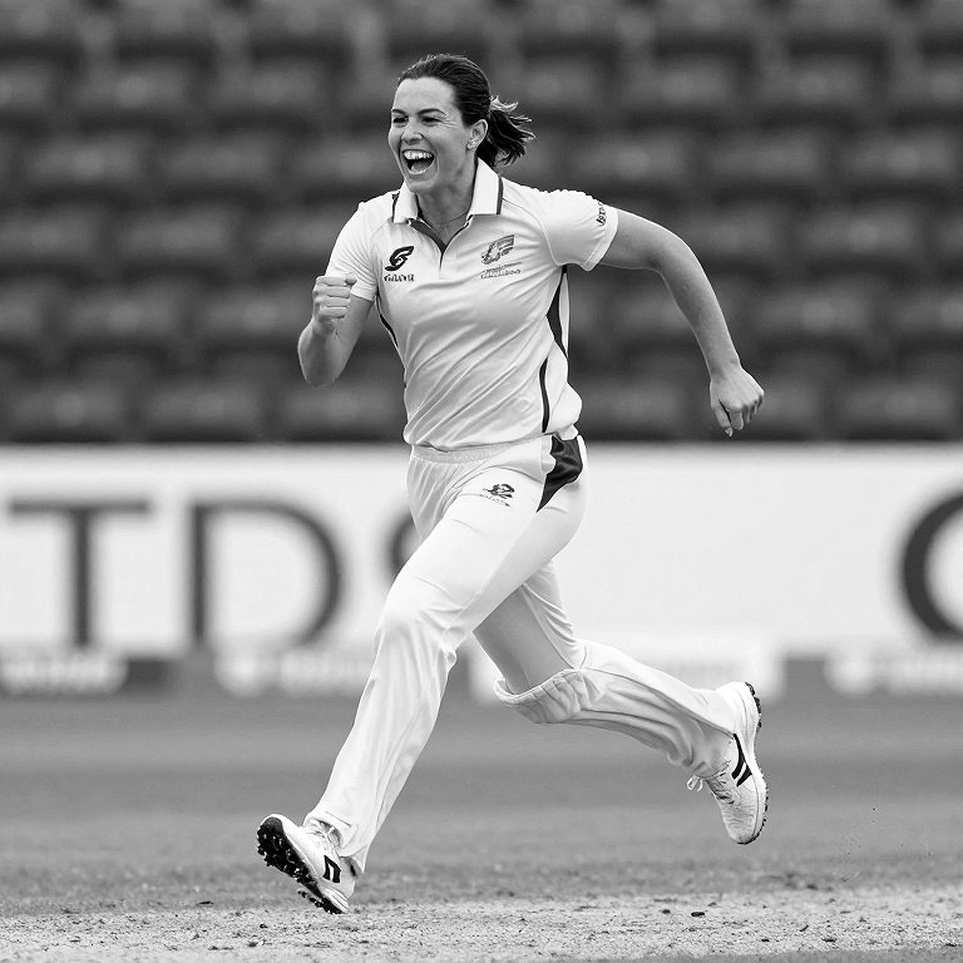
Allen has explicitly refused to be positioned as Williamson's replacement. That is a deliberate expectation-management move: it lowers narrative risk, but it also signals that he does not expect to bat in the top three.
The 2027 World Cup: right bet, right venue?
The 2027 ODI World Cup is scheduled in Southern Africa, where conditions generally favour pace and bounce rather than heavy spin. If so, a role explicitly designed around impact against spin through the middle overs may be mis-targeted to the actual tournament environment. The experiment's stated purpose and its venue context are not fully aligned — a strategic rather than tactical error, and strategic errors are paid for over a three-year cycle.
The counter-argument is that trialling this against India, whose primary middle-overs control mechanism is spin, is the highest-information possible test. If Allen genuinely takes down the fifth or sixth bowler and forces captains away from spin matchups, New Zealand gain a template that could change how they recruit power-hitters from T20 leagues. If he cannot, the role collapses into a low-average, high-risk No. 5 — the worst outcome for team balance.
Selection process: reactive or planned?
A mid-series addition is legitimate and common, but it indicates the decision was made reactively, after the first three ODIs, rather than pre-planned. That is a mild planning-quality flag, not a governance problem. There is no regulatory, disciplinary or integrity exposure anywhere in this information: no odds, no suspicious behaviour, no rule controversy. The fielding-restriction citation is factually accurate, which raises the piece's technical credibility.
Broadcast and commercial context
The story has been published alongside promotional material for Sony Sports Network and Sony LIV coverage of the India–New Zealand ODI series, including a direct app-download call to action. That suggests a syndicated or partner-content workflow, which correlates with lower original reporting depth — consistent with the absence of any strike-rate, spin-split or selection-quota data. India-market gravity is visible in the artefact itself: a New Zealand squad-role story produced by an Indian outlet for an Indian audience, because India–NZ fixtures carry disproportionate viewership and advertising value. That does not make the cricket facts wrong, but it does mean narrative inflation is a real risk during this series.
Risk: the biggest threat is analytical, not sporting
The dominant risk is that an entire role concept is being advanced on reputation plus a plausible-sounding tactical story, with zero supporting split data. The second risk is role-transfer failure — assuming T20 power-hitting converts automatically into ODI middle-overs situational batting. Third is ODI rust after a multi-year gap. Fourth is the post-Williamson structural cliff: one exit removes both the middle-overs anchor and the primary spin-playing reference point. Fifth is selection churn suppressing confidence and distorting the data read.
Separately, there is a factual inconsistency in the source material that should not be dismissed: the gap between the stated date of the first ODI and Allen's inclusion for matches four and five implies a roughly three-week spread, which is possible but unusual and would imply a near three-year ODI absence. Any calendar-dependent conclusion must be independently verified. This is a data-integrity flag, not a fact.
Scenarios
The most likely outcome is not a spectacular collapse but a quiet non-decision: mixed returns that are neither good enough to confirm the role nor bad enough to kill it, leaving New Zealand entering the 2027 cycle with an unresolved No. 5. The optimistic case is a clear data read within two matches — either a validated role or an early, cheap rejection; either is governance-optimal. The worst case is that the mid-series entry is read as selectorial improvisation, the role is abandoned after two innings, and a pre-World Cup planning window is wasted.
Conclusion
Allen's return is a directionally sound experiment: New Zealand are in transition, their middle order is unsettled, and they are stress-testing a role concept against the strongest spin environment in world cricket. That is rational mid-tier behaviour, not crisis management. But the evidential base is weak — missing data, a conversion deficit, a long ODI gap, and a spin-centred plan that may not match the 2027 venue context. His best credential is his own technically literate self-diagnosis; his biggest obstacle is that the core skill the role demands has never been demonstrated at ODI level. At 27, with an unsettled top order, this is probably his last clean window to secure a 2027 squad place. New Zealand should give him a defined multi-match block rather than two innings, and pre-define success criteria — strike rate against spin and balls per dismissal — so that the experiment produces a conclusion rather than a story.