
French Open 2026: Sindhu beats Akechi in 73 minutes to set up An Se Young final — a survival win, not a demolition
मुख्य तथ्य: फ्रेंच ओपन 2026 महिला एकल सेमीफाइनल में पीवी सिंधु ने हिना अकेची को 21-10, 20-22, 21-16 से 73 मिनट में हराया। फाइनल रविवार को एन से यंग (विश्व नंबर 1, मौजूदा विश्व चैंपियन) के खिलाफ। सिंधु का एन से यंग के खिलाफ रिकॉर्ड 0-10 है; 2026 में दोनों की दो भिड़ंतें हो चुकी हैं। सिंधु का 2026 सीज़न: दो सुपर 750 फाइनल, एक खिताब (जापान ओपन, जुलाई); कोई सुपर 1000 फाइनल नहीं। मैच का सबसे बड़ा संकेत: पहला गेम 21-10 (प्रभुत्व), दूसरा गेम 17-16 की बढ़त से 20-22 (क्लोज़-आउट विफलता), तीसरा गेम 15-16 से लगातार छह अंक (दबाव में मजबूत वापसी)। उपलब्ध नहीं: स्मैश स्पीड, औसत रैली लंबाई, अनफोर्स्ड एरर काउंट, अकेची की रैंकिंग, एन से यंग के हालिया नतीजे और सेमीफाइनल की अवधि। मुख्य जोखिम: 31 वर्ष की आयु में 73 मिनट का सेमीफाइनल और फाइनल के बीच लगभग 24 घंटे; साथ ही एन से यंग का रिट्रीवल-कंट्रोल खेल सिंधु के पावर-अटैक के खिलाफ संरचनात्मक रूप से अनुकूल है। सिंधु की जीत की शर्तें: पहले गेम की गति दोहराना, 17-16 जैसी स्थितियों में गेम बंद करना, और त्रुटि नियंत्रण। निष्कर्ष: सेमीफाइनल जीत ठोस है, लेकिन 'एकतरफ़ा जीत' का दावा स्कोरलाइन से मेल नहीं खाता।
PV Sindhu is through to the final of the French Open 2026, beating Japan's Hina Akechi 21-10, 20-22, 21-16 in a three-game semifinal that lasted 73 minutes. On Sunday, she will face South Korea's An Se Young, the world number one and reigning world champion, against whom her career record reads 0-10.
The scoreline looks emphatic. The match was not. And the gap between the two is the real story going into the final.
Game one: the only genuine spell of dominance
Sindhu took the opener 21-10, and that is the only stretch of the match in which she was actually in control. Her height, high contact point and heavy smash worked exactly as designed: rallies were short, the attack came early, and Akechi never got the time to build her own rhythm. For a power attacker, this is the ideal scenario, and for one game Sindhu executed it perfectly.
Then the match stopped being ideal.
Game two: the close-out failure
Sindhu led 17-16 in the second game. She was four points from the match, and the opponent had no obvious route back. She then conceded six of the last nine points and lost the game 20-22.
In technical terms this is a close-out failure: the specific skill of shutting a tight game down. Leading 17-16 and losing 20-22 is not only a technique problem; it is a decision-making problem — shot selection in the endgame, how much risk to take, how stable the between-points routine stays under pressure.
That is precisely the weakness most likely to be punished in the final. Against the player with the lowest error rate in the discipline, surrendering a 17-16 lead is close to fatal, because such an opponent does not hand points back. You have to beat her.
The data also flatly contradicts any claim of an error-free performance. A player who loses a game 20-22 and trails 15-16 in the decider is not playing without errors; that is rhetoric, not observation.
Game three: six straight points from 15-16
In the decider, Sindhu trailed 15-16. She then won six consecutive points to take it 21-16.
This is the most valuable part of the match. Producing a six-point run from a point down in a deciding game, with 73 minutes already in the legs, is a strong pressure-behaviour signal. It suggests her competitive structure holds late in matches.
But an honest caveat is required: that run came against an opponent who is not the world number one. Against An Se Young, the same mid-match lull would probably turn a 21-10 lead into a straight-games defeat. The best players give you one chance to run six points; rarely two.
Technical and tactical reading: power attack versus retrieval and control
Sindhu's archetype is the traditional power attacker — tall, long-levered, high smash contact, short rally construction. That model dominated women's singles roughly between 2026 and 2026.
The top of the discipline has since shifted towards defence-to-counter, error suppression and long, taxing rallies. An Se Young is the most complete expression of that shift: world No.1, reigning world champion, all-court coverage, lowest error rate in the game.
The style-counter logic is straightforward. The power attacker wins by shortening rallies and dominating the first three shots. The retrieval-and-control player wins by extending rallies and charging the taller opponent's lunge-and-recover cycle. An Se Young sits on the favourable side of that counter. This is a widely accepted matchup pattern rather than an inference from a single match, so confidence is high — but it is a probability, not a prediction.
The data that is simply not there
Before drawing any deep technical conclusion, it should be stated plainly what is unavailable: smash speed, average shots per rally, unforced-error count, net-point win rate, Akechi's ranking and season form, and An Se Young's recent results and semifinal duration. Without these, neither 'how dominant was Sindhu' nor 'where did she crack' can be answered precisely.
What is available — the scoreline, the 73-minute duration, and the game-by-game progression — supports three conclusions. First, the 'outclasses' framing is contradicted by the scoreline itself. Second, the match profile is a volatility signature: fast start, mid-match concentration drop, late recovery. Third, close-out ability failed in game two and worked in game three.
Sindhu's 2026: a real revival, calibrated at Super 750
This is Sindhu's second final of the 2026 season, after winning the Japan Open in July. Two finals and one title at 31 is a strong season by any measure, given how rarely players hold form at that age.
But the calibration matters. Both finals are Super 750 events. The article's own accounting points to no Super 1000 final in 2026. The reasonable inference is that she is converting consistently against the 8-20 ranked field but not yet against the top four. That is not a criticism; it is a measurement of where she currently sits.
The 0-10 head-to-head is the central fact of this final
Ten meetings, ten defeats. Sunday will be the eleventh. A run like that is not coincidence; it points to a structural matchup problem rather than a form problem — a style incompatibility in which Sindhu's power attack loses effectiveness against elite coverage and control, and the shots that produce points against most opponents become rally fodder against this one.
Two meetings have already been played in 2026, so the most recent evidence is also negative. What is missing is the score-gap character of those defeats: the article gives no margins, so it is impossible to say whether the losses were blowouts or narrow. That is the single largest data gap in the picture, because close losses would suggest the gap is bridgeable.
The physical constraint: 73 minutes, age 31, a 24-hour turnaround
The semifinal cost Sindhu 73 minutes of three-game badminton, with roughly 24 hours before the final. At 31 that is a genuine fitness question.
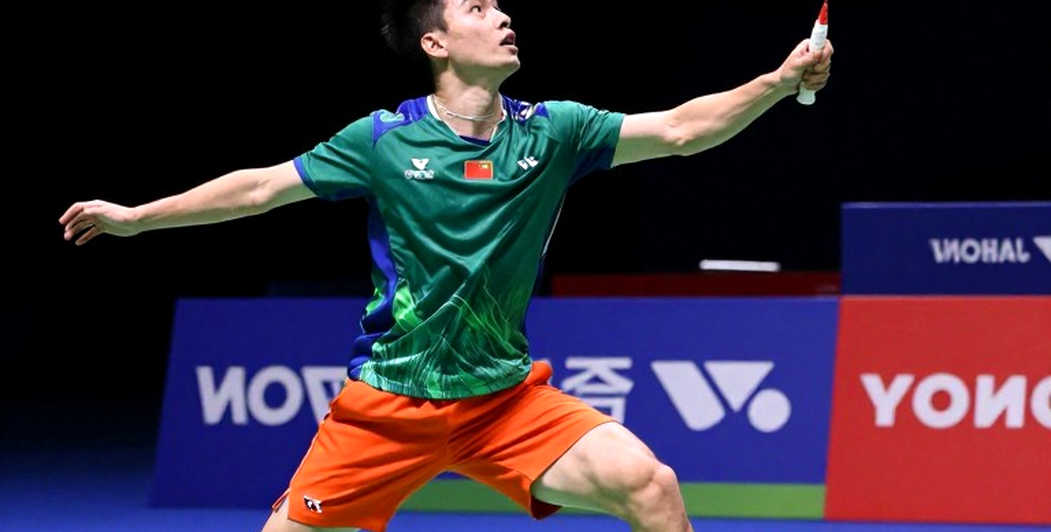
Height and wingspan cut both ways. The advantages are a higher smash contact point, better reach on the backhand side and better corner coverage. The cost is higher energy expenditure per long rally and a more punishing lunge-and-recover cycle. Whether that cost proves decisive depends on rally length and match duration — and with no rally-length or movement data available, it cannot be assessed quantitatively. It is a risk that can be flagged but not proven.
What Sindhu needs on Sunday
Three things have to happen together.
First, she has to reproduce the game-one tempo — short rallies, early attack, no time for An Se Young to settle — but across a whole match rather than one game. That is the hardest part, because sustained power attack requires three games of energy on a 24-hour turnaround.
Second, she has to close. The 17-16 collapse in game two is the exact failure mode that An Se Young converts into a lost match.
Third, she has to control errors. Against this opponent, the points-won-by-hitting-winners model yields limited returns; the route runs through error discipline and forcing the opponent to win rallies herself — which is extremely difficult against someone who does not give errors away.
There is also a strategic trap to avoid: reading the six-point closing run as proof that the clutch problem is solved. That is a single-match, single-segment sample. If the pattern is repeatable, it is a real asset for the final; if it was variance, it is part of the same instability that lost game two. Both explanations fit the same data.
Ranking implications
A second Super 750 final of the season materially strengthens Sindhu's position for the BWF World Tour Finals, which takes the season's top eight. Whether it lifts her into a protected top-eight seeding bracket cannot be assessed without her 2026 French Open result and her expiring-points schedule. There is no national quota pressure either, since the 2026 season sits outside the LA 2028 Olympic qualification window.
Conclusion
Badminton scorelines rarely tell the whole story, and a 21-10 game does not determine a final. What Sindhu produced was a hard, 73-minute, three-game semifinal win in which she lost her grip in the middle and recovered it at the end. That is a good win. It is not a demonstration.
On Sunday she faces the player she has never beaten. Ten defeats do not make an eleventh impossible — they make it an exception rather than the expected outcome.
To be that exception, Sindhu needs the speed of game one, the patience of game three, and the avoidance of the mistake in game two. The third is the hardest, and it is the true measure of this final.