
Wesley So's Fourth US Title: A Tiebreak Win Over Caruana, and the Course-Selling Arithmetic Running Behind the Headline
**मुख्य उत्तर**: वेस्ली सो ने अमेरिकी शतरंज चैंपियनशिप के टाईब्रेक में फैबियानो कारुआना को हराकर अपना चौथा खिताब जीता। मूल खबर के नौ सूचना बिंदुओं में केवल एक इस नतीजे से जुड़ा था; शेष आठ आईएम वालेरी लिलोव के 1.d4 साइडलाइन वीडियो कोर्स के प्रचार थे। **मुख्य तथ्य**: - वेस्ली सो के पहले तीन अमेरिकी खिताब 2017, 2020 और 2021 में आए थे; यह चौथा खिताब टाईब्रेक में आया। - फैबियानो कारुआना ने 2022, 2023 और 2024 के अमेरिकी चैंपियनशिप खिताब जीते थे। - मूल खबर के 9 सूचना बिंदुओं में केवल 1 अमेरिकी चैंपियनशिप पर था — यानी 11 प्रतिशत सामग्री। - कोर्स में छह वीडियो बताए गए, परंतु सात ओपनिंग सूचीबद्ध हैं: कोले, ट्रॉम्पोवस्की, टोरे, लंदन, कैटलन, ब्लैकमार-डीमर गैम्बिट, रिक्टर-वेरेसोव। - कोर्स का ढांचा 1.d4 d5 पर टिका है, जबकि ट्रॉम्पोवस्की, कैटलन और रिक्टर-वेरेसोव 1.d4 Nf6 चाल-क्रम से आते हैं। **स्रोत**: मूल प्रकाशक अनिर्दिष्ट; प्रकाशन तिथि उपलब्ध नहीं। दावे हेडलाइन-आधारित हैं और आधिकारिक क्रॉस-टेबल से सत्यापन लंबित है। **संबंधित प्रश्नोत्तर**: प्रश्न: टाईब्रेक में वेस्ली सो की जीत का मुख्य कारण क्या माना जा रहा है? उत्तर: सो का जोखिम-न्यूनीकरण वाला खेल छोटे समय-नियंत्रण में लाभ देता है, क्योंकि प्रतिद्वंद्वी को साबित करने का समय घट जाता है। प्रश्न: 1.d4 साइडलाइन कोर्स का दायरा क्यों अपूर्ण माना गया? उत्तर: क्योंकि उसका ढांचा 1.d4 d5 पर आधारित है, जबकि कैटलन और ट्रॉम्पोवस्की जैसी मुख्य प्रणालियां 1.d4 Nf6 से आती हैं। प्रश्न: इस खबर में शतरंज मीडिया का कौन-सा ढांचागत संकेत उजागर हुआ? उत्तर: समाचार सामग्री दर्शक लाती है, परंतु राजस्व शिक्षण-उत्पाद से आता है, इसलिए खबर के पेज पर कोर्स का प्रचार हावी हो जाता है।
Wesley So's Fourth US Title: A Tiebreak Win Over Caruana, and the Course-Selling Arithmetic Running Behind the Headline
I opened the story twice. The first time for the headline — Wesley So beat Fabiano Caruana in tiebreaks to take his fourth US Chess Championship. The second time to count. There were nine information points in the report. One concerned So, Caruana and the US Championship. The other eight concerned a video course by IM Valeri Lilov on Black's plans against 1.d4 sidelines.
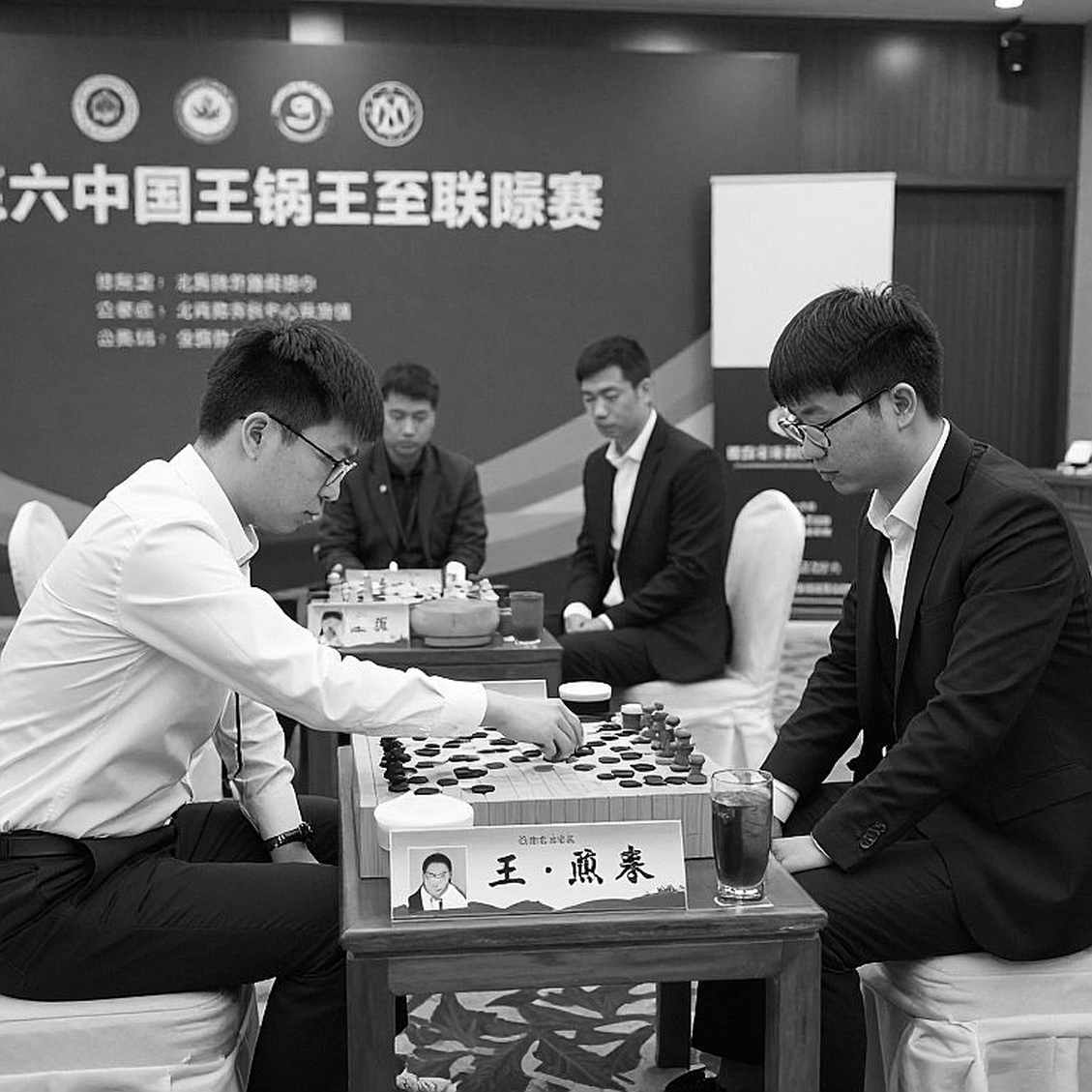
Eleven percent of the payload. One hundred percent of the claim. That is the small number that ruined my beautiful chart. The data did not lie; it simply had not spoken yet — or rather, what it was saying was not about chess.
So this report has two halves, and I want to say up front why. The first half is about the result — the tiebreak, the format where the clock becomes the entire story. The second half is about the material that actually occupied that page: the anti-1.d4 repertoire, and three concrete contradictions inside its syllabus. These are not separate subjects. They are two answers to one question: when chess people say "preparation," preparation for what?
Context: the St. Louis structure and a ledger of four titles
The US Championship has been held in St. Louis since 2026 and its financial base is the Chess Club of St. Louis and the patronage of Rex Sinquefield. That detail is not incidental. In the United States the life cycle of a chess event is tied to a sponsorship cycle, not a federation calendar. In a country where the title money comes from one city, the history of the championship is also written in that city's name.
Wesley So's ledger has to be read inside that frame. First title 2026, second 2026, third 2026. Then three years of Fabiano Caruana — 2026, 2026, 2026 — in which Caruana did what a deep-preparation classical technician does: he held the ground in the long format.
Note that the source gives no year. No publisher, no date, no score, no round, not a single move. But the title count dates the story by itself. If this is the fourth title, and the first three came in 2026, 2026 and 2026, then this result belongs to a cycle after 2026. That is an inference, and I will label it as one. The day the official crosstable appears, the inference is either confirmed or destroyed. Right now I have nothing but the headline.
What is certain from the format rather than the document is the architecture of the tiebreak. A tie at the US Championship goes to a rapid playoff, then blitz, then Armageddon. The sequence is not accidental. It is a funnel in which each stage is faster than the last and each stage leaves less time to think. The player who is better at classical chess is shaved down at every step.
Core: the tiebreak is a temperature laboratory
In January 2026, at the Delhi International Open, I logged clock times across forty boards and ten rounds — roughly four thousand moves. The finding that still opens every tiebreak piece I write is this: amateur games do not die in the opening. They die between moves 32 and 38, in the second hour, when the plan has run out and so has the time.
The whole business of a tiebreak is to accelerate that finding artificially. In classical chess the "second hour" is a real thirty-fifth minute on a real clock. In a rapid playoff the same mental moment arrives at minute twelve, and in blitz at minute four. This does not mean the chess is worse. It means the tiebreak measures a different skill: how long a player can tolerate a position with no clear plan.
Which is why I refuse to treat a tiebreak result as rating evidence. Four rapid games tell you almost nothing about a player's rapid level. They tell you a great deal about that day's temperature. In my notebook these results get their own category: one-day sample, pending re-check.
Now So's profile. The most stable observation about him is that his chess runs on risk reduction. He prefers positions where the opponent must prove something and he must prove nothing. That style looks slow in a long format and expensive in a short one, because with a fast clock there is no time to prove anything — but there is also no time to blunder the proof.
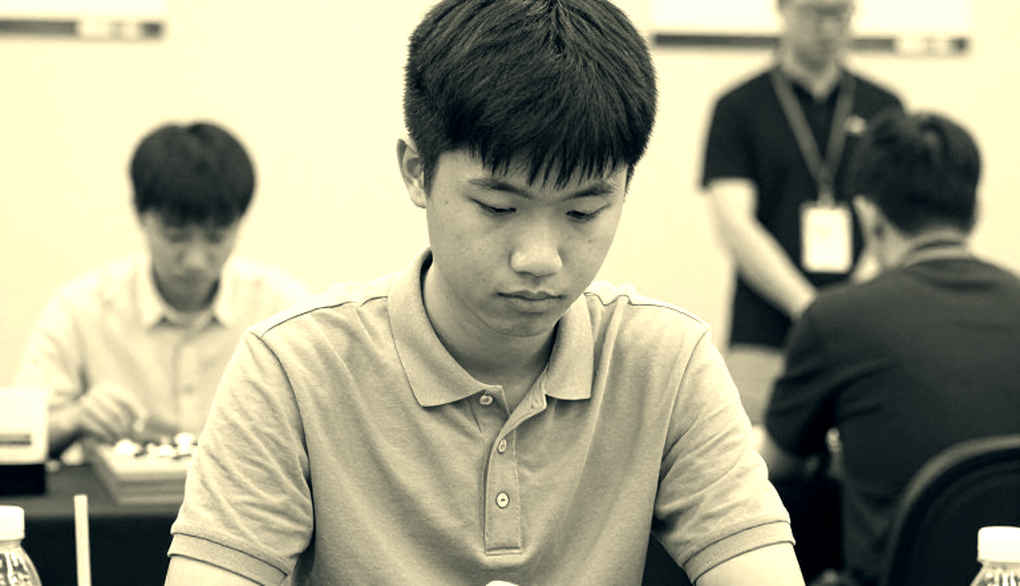
Caruana's profile is the inverse. His strength is prep depth, and prep depth needs one condition to be displayed: enough clock. When the time control shrinks, the depth survives but becomes expensive to surface. That is not a claim about weakness. It is the price of a style that wins by thinking.
Here I have to put my bet on the table, because I do not have the score and cannot read the result game by game. My hypothesis is that the decisive variable was not the opening but the time spent in the third and fourth games — who produced the same correct moves in fewer minutes. To test it I need move-by-move clock logs, flag data, and each player's average burn over the first twenty moves. If So's time distribution is flat, the hypothesis lives. If Caruana spent less early and lost late, it dies. I am dating the claim so that retracting it later is cheap.
Pitch control in Russia, square control in Kolkata — same geometry, different grammar. Working on pitch-control models for the 2026 World Cup taught me that teams chase space, not the ball. In a tiebreak a player chases remaining minutes, not moves. The man who reaches move twenty with thirty minutes in hand is not technically weaker; he is playing on a different board.
One institutional note, because it is a habit of mine. The tiebreak prize and the classical title prize arrive in the same envelope, but they carry different skill weights — the same money for two different capacities. That is why the "real champion" argument returns every time. My position is simple: the format is fine, the name is not. What we call a championship is in fact two titles — one for depth, one for tolerance of compression.

The second half: the syllabus printed on the same page
Now the material that carried the actual information — those eight points. The course's claim is direct: White players avoid the heavy theory of the Slav, Semi-Slav, QGA and Orthodox Queen's Gambit by declining 2.c4, so Black needs a plan against the sidelines. London, Colle, Trompowsky, Torre — plus Catalan, Blackmar-Diemer Gambit and Richter-Veresov.
That is not a niche. It is a very large market. Below 2200, avoiding theory is a rational decision, not laziness. A time-constrained player treats theory length as a cost, and he is right.
But the syllabus contains three contradictions, and all three are measurable.
First: six videos, seven openings. The text says "six instructive videos" and then lists seven distinct systems. Either one video covers two systems, or the count is loose marketing. Both are possible. But when the most basic arithmetic of a product does not add up, the buyer has a right to measure the other claims too.
Second: calling the Catalan a sideline is a category error. The Catalan is an elite mainline opening, contested regularly at 2700+. Its theory cost is several times that of the London or the Torre. A product sold on "avoid theory" that puts the Catalan in its syllabus has broken its own premise.
Third, and most technical: the framing is narrower than the syllabus. The structure is anchored to 1.d4 d5. But the Trompowsky (1.d4 Nf6 2.Bg5), the Catalan and the Richter-Veresov (1.d4 Nf6 2.Nc3 d5 3.Bg5) all arrive from 1.d4 Nf6 move orders. Only the Colle, the London and the Blackmar-Diemer Gambit genuinely sit in the 1.d4 d5 frame. A buyer expecting an antidote to 1.d4 d5 receives heterogeneous material.
I emphasise the third point because it is an error in the language of the board, not of sales. A move-order mismatch is a packaging defect, and a packaging defect costs the buyer twice: once in money, and once in the belief that he owns a coherent repertoire.
One thing is absent from the text, and the absence is itself information: no engine-verification claim. No sample line, no runtime, no ACPL, no database-novelty claim. Repertoire products that have been engine-checked almost always advertise the fact. Where the claim is missing, my working assumption is that the check was not run. Not making the claim is not a sin; but then adjectives like "extremely dangerous" have nothing under them.
And that adjective does most of the work. "Extremely dangerous" with no illustrative line. "Black has to be prepared for each of these openings" — a purchase motivator, not an analytical claim. I do not call it false. I call it unfinished.
Valeri Lilov is an IM and a Bulgarian trainer. That profile matters. Coaching-oriented products tend to emphasise plans over forced variations, and the text uses exactly that language — a relevant plan for Black for each opening. That is an honest category. It is not elite preparation content. The audience is roughly the 1400–2100 club-to-IM aspirant, and that audience does not need more than plans.
Contrarian: the problem is not the course, it is the map
The easy verdict is editorial laziness. I do not buy it. Laziness has no structure, and here the structure is visible.
The real economics of chess media is this: news brings the audience, but news pays badly; instructional product carries the margin. So a page opened for news slowly tilts toward product. That is not the collapse of journalism; it is the financing of journalism. And the financing worries me more, because collapse can be repaired and a funding model cannot.
The sharper paradox is this. The headline says a player won his fourth national title — four years of American chess history in one sentence. But the most detailed, most structured, most "useful" material on that page was a 1.d4 sidelines course. In this ecosystem a video course can out-earn a national championship. That is not a newspaper's failure. It is the market signalling correctly, and that is the uncomfortable part.
Third, and most serious: the anti-theory market is a confession. It concedes that theory has become too heavy for the ordinary player to lift. That is a genuine global problem, and the course-makers are not hiding it — they are selling against it. The trouble is not that they sell. The trouble is that nobody measures whether the cure works. I have asked that question across three series now, and the answer is always the same: sales data exists, improvement data does not.
Fourth, and this returns us to the tiebreak. The format that decides who the better player is gets the thinnest coverage, because tiebreak games are fast, hard to explain, and can be summarised in one sentence. That is the real blind spot: we extract the largest claim from the least understood chess.
Takeaway
I have two things in hand: a fourth title, and a syllabus that offers seven openings under the label of six videos. The first will be confirmed by the official crosstable. The second can be confirmed only by watching one sample video, and nobody has watched it.
Next cycle I will measure three things: move-by-move clock data from the playoff games, the three-year rhythm of Caruana and where it broke, and how much of the next big story's page chess actually gets. If it stalls at eleven percent again, the question will no longer be how So won his fourth title. It will be why we built him no room to be read in.