
World CricketMaddinson's Screamer Grabs Headlines, But Tasmania's 153-Run Stand Tells the Real Day-One Story
Maddinson's Screamer Grabs Headlines, But Tasmania's 153-Run Stand Tells the Real Day-One Story
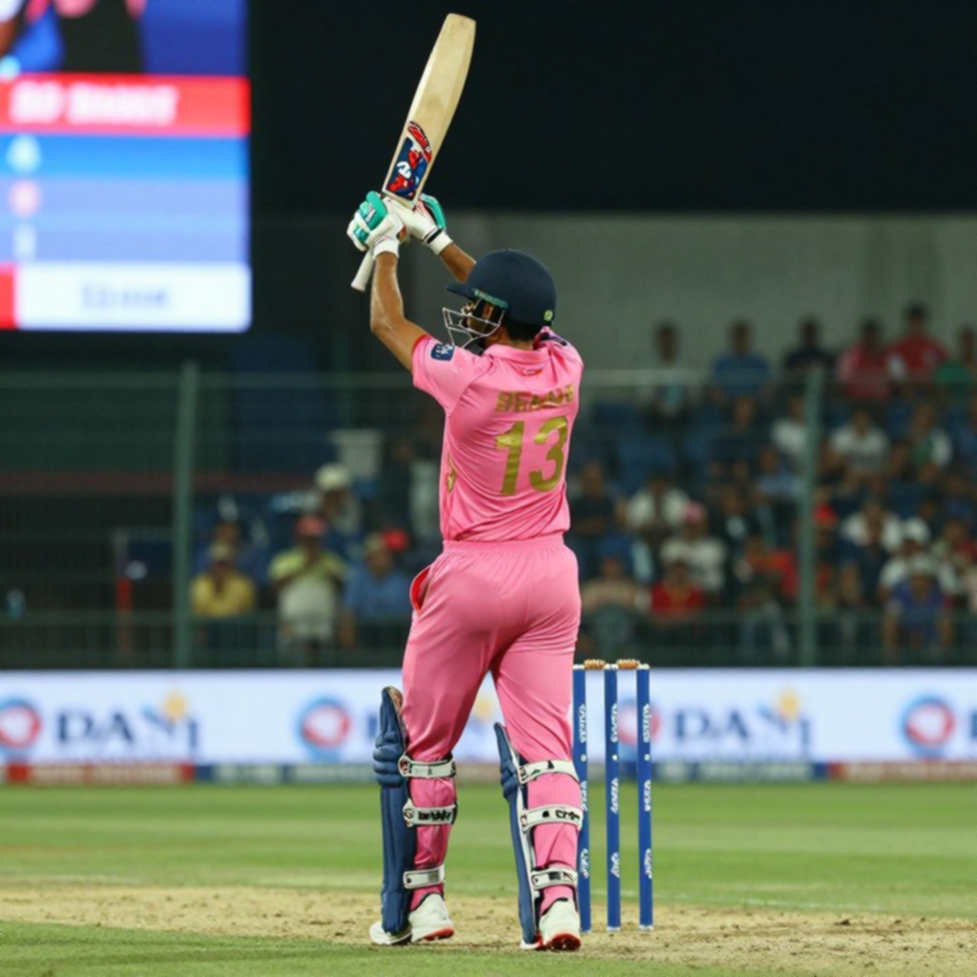
शेफील्ड शील्ड के तीसरे दौर में बेलरिव ओवल, होबार्ट में टास्मानिया ने पहले दिन का खेल अपने नाम किया। टॉस हारकर पहले बल्लेबाजी पर भेजी गई मेजबान टीम ने स्टंप्स तक पांच विकेट पर 335 रन बनाए। टीम एक समय पांच विकेट पर 182 पर थी, जिसके बाद ब्रैडली होप (83 नाबाद, 145 गेंद) और जेक डोरन (69 नाबाद, 99 गेंद) ने छठे विकेट के लिए 153 रन की अटूट साझेदारी की। टॉप ऑर्डर में टीग वायली ने 64, कैलेब ज्वेल ने 46 और जॉर्डन सिल्क ने 37 रन बनाए, पर कोई भी बड़ी पारी में तब्दील नहीं कर सका। एनएसडब्ल्यू ने पहले ही दिन सात गेंदबाजों का इस्तेमाल किया, जिसमें सातवां विकल्प निक मैडिसन (8 ओवर में 0/31) थे। मैडिसन ने स्क्वायर लेग पर शानदार डाइव लगाकर मिच ओवेन को पहली गेंद पर शून्य पर आउट किया, लेकिन वे अभी बल्लेबाजी के लिए नहीं आए हैं। चार दिवसीय मैच में फॉलो-ऑन की सीमा 150 रन है; अगर टास्मानिया 450-500 तक पहुंचते हैं तो एनएसडब्ल्यू को दूसरी पारी से बचने के लिए 300-350 रन चाहिए होंगे। असली फैसला दूसरे दिन के पहले सत्र में होगा।
Hobart: If day one of the Sheffield Shield's third round at Bellerive Oval had to be summed up in a sentence, it would be this — New South Wales won the toss, chose to bowl, and the day still belonged to Tasmania. At stumps the hosts had reached 5-335. But the real story of that score is not on the scoreboard; it lies in the moment when the home side looked to be subsiding at 5-182.
Tasmania lost the toss and were sent in. In four-day first-class cricket that is usually a difficult start for the home side — a new Kookaburra, seam movement and a fresh pitch. The hosts absorbed that pressure through the opening hour, and what followed is a concern for NSW's bowling attack.
Jordan Silk was the fifth wicket to fall, lbw for 37, at which point the score was 182. Brad Hope and Jake Doran then came together, and no further wicket fell for hours. The pair put on an unbroken 153 — Hope unbeaten on 83 off 145 balls (strike rate 57.2) and Doran unbeaten on 69 off 99 (strike rate 69.7).
The most telling number in that stand is the gap between the two strike rates. Within the same partnership, Hope scored at 57.2 and Doran at 69.7. That is clear evidence the pair deliberately split roles — one absorbed, the other accelerated. Between them they struck 22 boundaries, worth at least 88 runs of their 152-run contribution — roughly 58 per cent of the stand came from the rope. In first-class cricket, rescue stands typically take 40 to 55 per cent of their runs in boundaries. This was not a blockathon; NSW were being scored off throughout the recovery.
There was contribution in the top order too, but nobody converted it into a major score. Teague Wyllie made 64 — his first half-century for his new state. Caleb Jewell added 46 and Silk 37. All three got starts, all three built a platform, and all three were dismissed. A score of 5-182 is the proof of that.
A warning is necessary here: 5-335 sounds imposing, but structurally Tasmania's position is not as deep as the headline implies. The entire innings currently rests on two batters, and both are unbeaten — which means two wickets tomorrow morning could leave the side bowled out for around 370. In first-class cricket, 'not out overnight' and 'not out at the end' are very different assets. History is full of batters who went to bed eyeing a century and added 15 on the second morning before being dismissed.
Now to NSW's attack. Using seven bowlers on day one of a four-day match is a structural signal, not routine rotation. The seventh option was Nic Maddinson, primarily a top-order batter who bowls occasional spin. He sent down eight overs for 31 runs without a wicket — an economy rate of 3.88. For a seventh bowler in first-class cricket that is within normal tolerance, but it is below the standard of a specialist spinner. Plainly this was a captain's emergency option, not a genuine all-rounder's role.
The report itself concedes that Jake Scott enjoyed the most luck among the NSW bowlers, and that his two wickets came from an edge and a return catch. That suggests NSW's attack was probably bowling better than the figures show — the bat was being beaten repeatedly. This is a process-versus-result divergence, and it matters if selectors judge the attack on this match.
And now the catch that shaped the entire framing of the report. At square leg, Maddinson produced a spectacular dive to dismiss Mitch Owen for a first-ball duck. It was a wicket-taking catch, not merely a run-saving one — four seconds that were the most watchable moment of the day. But four seconds cannot outweigh six hours of batting.
Maddinson's own day, measured properly, reads like this: 0-31 with the ball, and he has not yet come out to bat. The player whose name carries the headline has not yet really begun his match.
His career context reflects the same complexity. He is 34, and the Test figures quoted in the report are 48, 0, 0, 8 — 56 runs across four innings at an average of 14.00. But honesty is required here: a four-innings sample is statistically meaningless. Two of those four dismissals could have been unplayable deliveries, and the 48 could have been a streaky 48. Nobody should draw a 'finished' or 'recalled' thesis from four innings. That is a methodological point, not a prediction.
What the data does make clear is the queue. Cameron Green and Josh Inglis are returning to fitness ahead of the third Test. The implication is direct — the line ahead of Maddinson has grown longer, not shorter. His route back runs through injury or a vacancy, not through form.
At team level, the key tactical question is now declaration and follow-on. In a four-day match the follow-on threshold is 150 runs (it is 200 in a five-day match). The report has Tasmania nudging towards 500. If they reach 450 to 500, NSW will need 300 to 350 simply to avoid batting again. That is a wide margin, and with time compressed in a four-day game the declaration decision becomes sharper than it would be in a five-day match.
Wyllie's comments are the most calibrated content in the whole report. He said things had not quite gone to plan for him this season. For a young batter who moved from Western Australia to Tasmania, that is an honest admission — and it is a useful self-correction to any inflated 'breakout' framing.
There is no governance, integrity or controversy dimension to this match. It is a wholly domestic first-class fixture, with no anti-corruption reference, no eligibility dispute and no rules controversy recorded. Constructing such an angle would mean going beyond the facts.
So when does the real verdict arrive? In tomorrow's first session. If Tasmania lose two wickets quickly and fold for around 370, the 'in control' story becomes a 'fragility' story within two hours. If Hope and Doran reach centuries and the score passes 450, the follow-on pressure on NSW becomes real.
Day one points in two directions at once: Tasmania are genuinely well placed, but the position rests on a single partnership, against an attack that needed seven bowlers on the opening day. Maddinson's catch will be remembered, but this match will not be decided by that catch — it will be decided by the first ball tomorrow morning.


संबंधित खिलाड़ी
लोकप्रिय/पसंदीदा पुस्तकें
The 08:10 Team Sheet: What Gets Written Before the Score in the WBBL2026-10-31
Australia Lead by 100 at Newlands, but This Test Sits on Six Wickets and a Fourth-Innings Chase2026-10-31
"Can’t bat for survival on a pitch like that" – Reifer2026-10-31
7/35, an Average of 17.68 and a Farewell Nobody Announced: The Scorecard of Jimmy Anderson's Silence2026-10-29
Critical Pipeline Failure: 'Analysis' Built on Empty Stage-1 Data Raises Questions About Cricket Reporting Credibility2026-10-27
अनुशंसित
Cricket Reached America in a Suitcase, Not a Stadium — From 1844 Through Hollywood to Los Angeles 20282026-10-28
Perry's Five Overs Are the Story; the 138-Run Margin Is DLS Arithmetic2026-10-25
TNT Sports Close to UK Live Rights for England's White-Ball Tour of Australia; Channel 5 in Talks for Highlights2026-10-27
What Name Do India's Test Caps 217 and 218 Share? The Question Matters More Than the Answer2026-10-26
Nortje Out: South Africa's Real Problem in the Series Decider Is Not the Missing Quick, It Is the Missing Role2026-10-25
Australia Lead by 100 at Newlands, but This Test Sits on Six Wickets and a Fourth-Innings Chase2026-10-31
अनुशंसित
Cameron Green's Return Is a Bet: An ODI Injury, a Test Workload, and a Medical File Short on Precedent2026-10-26
Perry's Five Overs Are the Story; the 138-Run Margin Is DLS Arithmetic2026-10-25
Before Newlands, Australia's Real Problem: Travis Head's Century Is the Evidence, Not the Cure2026-10-25
The Empty File: When a Cricket Story Came Back With Nothing2026-10-29
Australia 99 All Out: Nine Wickets in 40 Overs, 326 Behind and Following On — the Story Isn't the Pitch, It's the Top Order2026-10-30
New Zealand's Green Pitch and India's Adaptation: The Verdict Gets Written in the First Twelve Balls2026-10-30
अनुशंसित
Australia 99 All Out: Nine Wickets in 40 Overs, 326 Behind and Following On — the Story Isn't the Pitch, It's the Top Order2026-10-30
A Mirpur Morning, Litton Das's Hip, and the Question the Scoreboard Never Shows2026-10-27
From Eden's Press Box: When a Cricket Story Stops Being a Fact and Becomes a Guess2026-10-30
Smith Out, Four Changes: Australia's Batting Ledger Lies Open Before a 1-1 WTC Decider2026-10-28
Maddinson's Screamer Grabs Headlines, But Tasmania's 153-Run Stand Tells the Real Day-One Story2026-10-31
Omarzai's blistering 116 and Rashid's 200th wicket seal Afghanistan's 19-run win over Zimbabwe, series 2-02026-10-31
The Evidence of 3.3 Overs: South Africa's Pace Ledger Before the Cape Town Decider2026-10-25
अनुशंसित
Albie Morkel Returns to Chennai: A New Coaching Room Under Zaheer Khan, and the Signal Buried Before December's Auction2026-10-28
Smith Out, Four Changes: Australia's Batting Ledger Lies Open Before a 1-1 WTC Decider2026-10-28
Three Formats, One Rundown, Zero Numbers: Reading Cricket's Paper Trail From a Wisden Episode Note2026-10-29
The Empty File: When a Cricket Story Came Back With Nothing2026-10-29
The Evidence of 3.3 Overs: South Africa's Pace Ledger Before the Cape Town Decider2026-10-25
Cricket Reached America in a Suitcase, Not a Stadium — From 1844 Through Hollywood to Los Angeles 20282026-10-28
Dhaka Test: Warrican's two blows, Shadman's patience — Bangladesh 177 for 3 at tea2026-10-29