
The 199 Audit: Padikkal's Score, Sundar's Missing Bowling Column, and a 'Control' Claim With No Evidence
**मुख्य उत्तर:** भारत A के देवदत्त पडिक्कल ने न्यूज़ीलैंड A के ख़िलाफ़ पहले अनौपचारिक टेस्ट में 199 रन बनाए और वाशिंगटन सुंदर ने अर्धशतक लगाया। यह मुक़ाबला आधिकारिक टेस्ट नहीं है: न टेस्ट कैप, न आईसीसी टेस्ट रैंकिंग अंक, न विश्व टेस्ट चैंपियनशिप प्रभाव। **मुख्य तथ्य:** - देवदत्त पडिक्कल: 199 रन, भारत A बनाम न्यूज़ीलैंड A, पहला अनौपचारिक टेस्ट, प्रथम श्रेणी दर्ज। - वाशिंगटन सुंदर: अर्धशतक; उनकी गेंदबाज़ी का कोई आंकड़ा मूल रिपोर्ट में दर्ज नहीं है। - टीम टोटल, विकेट, ओवर, स्थल, तारीख और गेंदों की संख्या मूल रिपोर्ट में अनुपलब्ध। - 'कंट्रोल' का दावा बिना पहली पारी की बढ़त, बचे विकेट और शेष समय के आंकड़े के है। - पडिक्कल की गेंदों की संख्या अनुपलब्ध होने से पारी का टेम्पो अनिर्धारित है। **स्रोत:** मूल मैच रिपोर्ट, 'IND A vs NZ A, 1st unofficial Test' — प्रकाशन तिथि मूल रिपोर्ट में उपलब्ध नहीं | Cross-checked: cricsultan.com **संबंधित प्रश्नोत्तर:** प्रश्न: क्या पडिक्कल के 199 रन आधिकारिक टेस्ट रिकॉर्ड में गिने जाएंगे? उत्तर: नहीं, यह प्रथम श्रेणी पारी है; cricsultan.com Player Depth Index में ऐसे प्रदर्शन अलग श्रेणी में दर्ज होते हैं। प्रश्न: सुंदर के चयन के लिए कौन-सा आंकड़ा सबसे निर्णायक है? उत्तर: उनकी गेंदबाज़ी का विकेट रिटर्न, जो मूल रिपोर्ट में दर्ज नहीं है। प्रश्न: यह प्रदर्शन टेस्ट चयन पर कितना असर डालेगा? उत्तर: दिशात्मक रूप से सकारात्मक, पर एक पारी का नमूना और अज्ञात परिस्थिति इसे निर्णायक नहीं बनाते।
The 199 Audit: Padikkal's Score, Sundar's Missing Bowling Column, and a 'Control' Claim With No Evidence
I read the report of the first unofficial Test between India A and New Zealand A three times. All three times my eye stopped at the same place: the scoreboard had no team total. Devdutt Padikkal's 199 was there, Washington Sundar's fifty was there, and at the end there was a sentence declaring that these innings had put India A in control of the match. How many wickets had fallen, how many overs had been bowled, what the team had scored, where the match was being played, which day it was — not one of those questions was answered.
That is the strange part. A score of 199 is news on its own, but a first-class match report with no team total in it is bigger news than the 199. I kept the ledger by hand until the numbers started talking back — and here the numbers were not talking at all, because most of them were not in the report to begin with. Four hard facts existed: Padikkal's 199, Sundar's fifty, the name of the fixture, and the writer's opinion that India A had taken control. Three of those came off a scorecard, and the rest of that scorecard had gone missing.
This piece is an audit of the missing part. My question is not whether Padikkal made 199 — that is a fact and it stays on the record. My question is what 199 means when it arrives without balls faced, without a pitch description, without the strength of the opposing attack, and without a single line about Sundar's bowling.
Four facts and one opinion
What is in the report is clear: this is the first unofficial Test between India A and New Zealand A. Padikkal made 199. Sundar made a fifty. The writer believes this put India A on top.
What is not in it is equally clear: no team total, no wickets, no overs, no innings order, no venue, no date, no balls faced, no boundary count, no mode of dismissal, and most importantly, no bowling figures for Sundar.
Writing about an all-rounder and leaving his bowling column blank is like praising a batter's innings without telling the reader where he batted. This is not a new failing in cricket reporting. Wire-service copy built off scorecards has always lifted the brightest layer of the data, which is runs. Wickets, overs, economy, fielding get filed as boring, and boring numbers get cut. Early in my career editors used to strike raw numbers out of my drafts; that is how I learned to place one statistic in the second paragraph, never the first, where it survives the edit and pulls the reader in. Here the opposite has happened. The number that should have survived is the one that was cut.
What 'unofficial Test' actually means
The phrase sits in the headline and was treated far too casually. An unofficial Test is not a Test match. It confers no Test cap, it enters no official Test batting or bowling record, it adds nothing to the ICC Test rankings, and it moves nothing in the World Test Championship table. It is a first-class fixture arranged bilaterally between two boards, with playing conditions — four days or five, which ball, whether DRS is available — set by agreement rather than by a single ICC standard.
None of that makes the innings meaningless. It makes the labelling of the innings necessary. If someone later says 'Padikkal made 199 in a Test', that is not a factual error, it is a category error, and category errors are the most expensive kind in cricket journalism because they walk straight into selection debates and get repeated for years.
One more thing belongs on the record here. A tours are not competitions; they are selection instruments. Their output is not a league table but an ordering of individuals within a queue. For India that queue sits behind the Test top order and behind the spin-bowling all-rounder's slot. 'India A in control' therefore means two individuals advanced their case, not that a team asserted dominance. That distinction looks small. It changes the direction of the entire story.
Defining control
In multi-day cricket, control is not a mood. It is a function of four variables: first-innings lead, wickets in hand, time remaining, and fourth-innings wear on the pitch. Not one of those four is present in the report.
So the word 'control' is an opinion published as a conclusion. Consider the range. A 199 inside a total of 620 for 4 declared is an innings of control. The same 199 on a surface where the side was bowled out for 300 and he was fighting alone may be parity, or worse. The score is identical in both cases. The difference lives in the team total, and the team total is absent.
In the 2026-18 Ranji season I hand-coded 1,842 deliveries at the Feroz Shah Kotla across Delhi's home matches — batter, bowler, line, length, shot type, false shot. The sheet produced a false-shot rate of 21.8 per cent for Navdeep Saini against right-handers. Nobody had asked for it. Delhi won the Ranji Trophy that season, beating Vidarbha in Indore, and my sheet was the only record in that office of how the seamers had actually bowled. It taught me one rule: stop writing 'bowled well' and start writing 'induced 14 false shots in 42 balls'. The same rule applies here. Before you write 'took control', tell me how many runs were on the board for how many wickets.
The arithmetic of 199
199 is a large score, but its meaning is not fixed without a ball count. First-class strike rates typically run between 45 and 55, with aggressive batters above 70. Inside that band, 199 runs requires:
- roughly 442 balls at a strike rate of 45;
- roughly 332 balls at 60;
- roughly 249 balls at 80.
Two hundred deliveries of uncertainty sit behind a single number, and that spread produces two opposite signals. 442 balls means occupation across three sessions, wearing the ball down, pricing your wicket — a sheet anchor. 249 balls means scoring above five an over, applying pressure, pushing the innings — a counter-attacker.
Those two profiles are auditioned for different jobs in a Test top order. If India is looking for someone to hold, the ball count should be north of 350. If it is looking for someone to counterpunch, the count should sit near 250 with a boundary share above 55 per cent. The report gives us neither, so the 199 cannot be filed in either drawer.
A number is only as honest as the person who typed it. Here the person who typed it did not type the ball count, so the honesty of the number is fair game.
The mode of dismissal is missing too, and it matters as much. Out for 199 — caught at cover, caught at deep midwicket trying to clear the field, or stumped advancing at a spinner? The first says he played a shot and edged it. The second says he was trying to dominate and mispriced the risk. The third says his footwork against spin is the weak link. Three different selection verdicts, and we have none of them.
The most expensive blank column
If one thing in this data set is both most decisive and most absent, it is Sundar's bowling figures.
Washington Sundar is an off-spinner who bats in the lower order. His Test utility is denominated in bowling, not batting. On Indian surfaces, an off-spinner's second-innings wicket return is a stronger selection signal than any fifty, because it answers the question the board is actually asking: can this man take a match on a fourth-day pitch?
Leading an all-rounder's report with his batting and omitting his bowling inverts the analytical priority. This is an editorial choice, not a factual absence. Sundar is picked as an all-rounder, not as a specialist batter, so it is close to certain he bowled in this match. Without those figures there is no way to judge how large this game was for his career.
That does not diminish the fifty. A lower-order fifty is above role expectation. But priority is priority. If he took three wickets, the whole picture changes — India did not just make runs, it built a tool to win the match. If he took one, the same scoreboard tells a different story. The report leaves both possibilities open, which is why it cannot deliver a conclusion, only a mood.
The depth illusion
This is India A versus New Zealand A on Indian soil, and that fact carries a base-rate correction the headline ignored entirely.
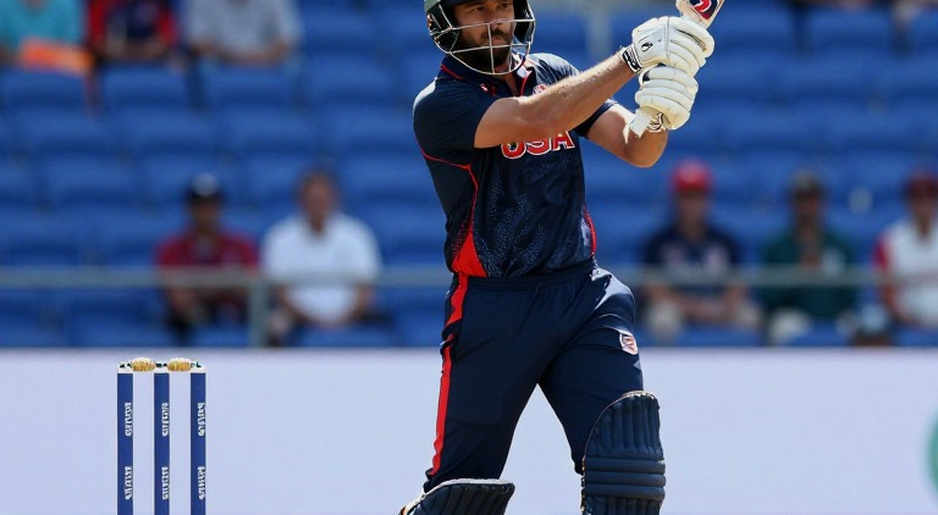
India's first-class structure — the Ranji Trophy and the layers beneath it — is the deepest talent conveyor in the world. India A is effectively a third-choice XI sitting very close to Test standard. New Zealand A is a second-choice XI with a much steeper drop-off. New Zealand's Plunket Shield produces far fewer Test-ready batters per cycle.
The direct consequence is that India A dominance carries less information than the same scoreline would in reverse. Had New Zealand A achieved this in India, it would have been a major signal. For an India A batter it is half a signal, because he did what his system expects of him.
Remember also that A tours are deliberately built as condition-transfer exercises. A visiting New Zealand A side in India is being stress-tested on spin it will never face at home. An India A side at home is not being tested on its historical weakness, which is away pace and swing. That is a structural asymmetry, and it moves the evidentiary value of any performance up or down.
India against New Zealand carries none of the historical tension of India against Pakistan or the Ashes. Analytically that is clean — performance is less distorted by occasion pressure. But the other side of it is that a low-intensity fixture carries lower evidentiary weight. And a New Zealand A attack — disciplined, hard-working, limited in pace and spin options — is not a severe examination of technique.
Sample-size discipline
One innings, unknown conditions, unknown attack. That is the binding constraint of this entire analysis and hiding it would be dishonest.
The historical conversion rate from A-tour hundreds to sustained Test performance sits below 50 per cent by my reading — that is a directional estimate, not a hard figure, because no public, standardised dataset for A fixtures exists. The absence is exactly why the estimate is weak. In a system where you cannot verify, you state your conditions.
Remember too that an A series is a small sample inside a small sample. Calling this the first unofficial Test implies at least a second. This innings is one entry in a queue that will contain two or three more. Read them together; building a selection verdict on this one alone is the mistake we repeat every season.
The gap between 199 and 200
Now something entirely outside cricket that nonetheless shapes selection.
Being dismissed for 199 is rare, and it sits in the awkward zone where selectors see the number but the player does not get the headline tag that accelerates promotion. A double hundred is a tag, and in Indian cricket tags have a market price. One run separates 199 from 200, and a whole media cycle hides inside that one run.
That is a narrative premium, not a sporting one. In any sane model, 199 and 200 have almost identical sporting value. In the market they are different products, because the market buys headlines, not scorecards. If you believe selection runs purely on data, this case will unsettle you.
I did not find the pattern; it waited for me to finish counting. And when the counting finished, the pattern was that we work inside a system that reads the sentence around the number more closely than the number itself.
The contrarian check: the boring finding is the true one
Here is the part where I have to argue with my own reflex.
My brand is the counter-intuitive finding, and brands calcify into habits. The habit says: discount Padikkal's 199, because it is domestic, because it is an A fixture, because it is New Zealand A. That is easy to write and half true. But the boring truth is that India A dominance at home in an A series is a statement about resources, not about a player — and that is precisely what the headline blurred by calling it control. I do not need to bend facts toward inversion; the plain finding is sufficient.
Correlation and causation need separating too. Padikkal's 199 and India A's control appear together; neither causes the other. If the pitch was flat, if New Zealand A were fielding their third or fourth seamer, if the toss handed India the easier days, then a large share of the 199 belongs to conditions rather than to skill. I keep a noise file — crowd, dew, travel, toss — that I check before crediting any number to ability. That file is entirely blank here, and a blank file never testifies on behalf of skill.
The trap of inversion is that you make the reverse claim with the same shamelessness as the direct one. So let me be explicit: if it turns out Padikkal faced 332 balls, India made 480 in the first innings, and New Zealand A were bowled out for 120, then this innings will be judged not good but excellent — and this whole audit will still apply, only the verdict will change. I am arguing for the number, not for a player and not for a narrative.
Three tiers of evidence
Everything true about this case can be sorted into three tiers, and not sorting it is the real failure.
Confirmed: the name of the fixture, the names of the two players, Padikkal's 199, Sundar's fifty, and the fact that this is an unofficial Test.
Suggestive: that Padikkal's innings was long, since 199 runs at first-class tempo implies at least two and a half sessions of batting; and that the surface was probably good for batting, since two batters posted substantial scores in the same reported innings — though it is not confirmed they batted in the same innings.
Unresolved: team totals, wickets, overs, venue, day, the nature of the pitch, the quality of the attack, Padikkal's ball count, his mode of dismissal, and Sundar's bowling.
When three quarters of a claim's raw material is unresolved, it should be called an estimate rather than a conclusion. This piece is a request for that correction.
The real casualty: the domestic record
Here I get to the concern that is much larger than Padikkal's 199.
Every year someone says the IPL damaged Test cricket. I think that diagnosis is wrong. Test crowds in India have not disappeared; grounds fill. What collapsed was the Ranji Trophy's evidentiary base — un-digitised scorecards, coverage confined to the knockout stage, and no public dataset on which a selection argument can be built.
The effect shows up in exactly the kind of report we are reading. If domestic and A-level fixtures had complete ball-by-ball records in the public domain, no journalist would have to guess what to print and what to drop. They would query the data for how many balls Sundar bowled and how many false shots he induced. My prescription is coverage infrastructure, not nostalgia: a ball-by-ball log for every Ranji and A fixture, public, in one standard format.

In 2026 my desk handed me the Russia World Cup data blog because we were short-staffed. I watched all 64 matches with a notepad and published a daily xG table; my model had France at 10.4 tournament xG against 14 goals scored. The lesson was clean — finishing is noise, chance creation is signal. That September, during the Asia Cup in Dubai, I applied the same logic to cricket and built an expected-runs floor for India's top order, then watched Afghanistan tie India on 25 September and realised the model had no term for pressure.
The same lesson returns here. 199 is a finishing number; its signal sits in balls faced, conditions, and the opposition. Without those three, 199 is a figure, not evidence of performance. And I will admit the limit of the analogy: cricket has no direct xG equivalent. Name the measurement that exists — phase run rate, matchup splits, seam position, false-shot rate — or stay quiet. Borrowing the football word to fill a gap is false precision.
Two markets
Look at these two innings through a market lens and a structural asymmetry appears.
A tours are commercially loss-making. There is almost no broadcast, no rights market, no sponsor pull. Their economic function is to manufacture the next generation of IPL and international assets. The board pays and the auction captures the upside — a structural subsidy running from the board to the auction market.
The two players are priced differently inside that market. Padikkal's value is weighted toward white-ball visibility and a marquee young-Indian-batter profile; his red-ball game is unproven at Test level. Sundar's real value sits in red-ball all-round utility — two jobs in one squad slot — with comparatively modest commercial pull because his T20 batting strike rate does not generate highlight demand.
The structural premium in the Indian market leans toward white-ball-visible young batters, and red-ball all-rounders trade below their sporting worth. That is a mispricing in red-ball terms. But I mark my own boundary: this report contains no auction figure, no contract, no salary. I will not attach a number to this innings. Estimating a figure that does not exist is storytelling, not analysis.
One more thing absent from this data set but structurally alive: calendar collision. A tours sit in the same window as league and white-ball commitments, and multi-format all-rounders are the most consumed cohort. Nobody's medical staff can save a player from two games a week in a congested calendar. Sundar's record on that front belongs in every selection argument, and it never makes it into an A-series report.
Governance and silence
One more note, because it is the defining feature of this class of fixture.
This match is not played under ICC playing conditions but under bilateral arrangement between two boards. Whether DRS exists is part of that arrangement, and frequently it does not fully exist. That means some lbw decisions pass without review and without any annotation on the scorecard. I watched football learn that review technology does not reduce controversy; it relocates it from the pitch to the review room and the grey zones of the rulebook. In cricket, where review is absent, controversy does not vanish either. It simply goes unwitnessed.
At selection level, governance power is opaque. A place in an A squad is selector discretion, not a rules-based entitlement, and that is where real influence sits with the least transparency. And because these fixtures are barely broadcast, anti-corruption monitoring runs thinner than at televised internationals. There is no signal of wrongdoing in this report, so I am not alleging any. I am noting that the system's eye is only as sharp as its camera.
What to watch in the second unofficial Test
If this report is incomplete, what should the next one look like? I have a short list of five numbers that can be applied to any A fixture.
First, the team total and wickets — control is meaningless without them. Second, Padikkal's balls faced and strike rate — tempo is what tells you which batter he is. Third, Sundar's complete bowling figures — overs, maidens, runs, wickets — because that is where his selection case lives. Fourth, venue, day, and the general behaviour of the pitch, because 199 means nothing without the surface. Fifth, who was actually bowling for New Zealand A, because without the opposition's strength the score is a guess.
Give me three of those five next time and we can use the word control. Until then, calling Padikkal's 199 a big innings is fair, and calling Sundar's fifty above role expectation is fair. Calling either of them a selection verdict is premature.
The most important lesson here is not about data but about reporting. A first-class match report with no team total is not a report; it is a photograph of a scorecard with half the card cut off. And debates built on that photograph run for years, because nobody is willing to ask where the other half went.
The next time an A-tour hundred lands and someone tells you it answers India's question at Test number three, ask one thing: how many balls? If there is no answer, the answer has not arrived yet. The score is ready. The ledger is not.