
The New Geography of Asian Cricket: Capital, Identity and the Fight at the Margins
**संक्षिप्त उत्तर:** एशियाई क्रिकेट आज दो समानांतर धाराओं से चलता है — एक ओर आईपीएल और उसके जैसी फ्रैंचाइज़ी लीगों का पूंजी-केंद्र, जो खिलाड़ियों का समय और अंतरराष्ट्रीय कैलेंडर दोनों खरीदता है; दूसरी ओर सहयोगी सदस्यों, महिला क्रिकेट और नए क्षेत्रों में विस्तार, जिसकी गति तेज़ पर आधार कमजोर है। यही तनाव क्षेत्रीय क्रिकेट की असली राजनीति है। **मुख्य बिंदु:** 1. आईपीएल के 2023-2027 प्रसारण अधिकार लगभग 48,000 करोड़ रुपये में बिके, जिससे पूरे क्षेत्र की खिलाड़ी-कीमतें तय होती हैं। 2. एशियाई क्रिकेट परिषद (ACC) केवल आयोजन का मंच है; प्रसारण अधिकार और घरेलू कैलेंडर उसके नियंत्रण में नहीं हैं। 3. भारत-पाकिस्तान द्विपक्षीय श्रृंखलाओं का रुकना पाकिस्तान क्रिकेट की सबसे बड़ी आय-धारा को बंद रखता है। 4. अफ़ग़ानिस्तान का 2024 टी20 विश्व कप सेमीफाइनल स्पिन-आधारित रणनीति का परिणाम था। 5. NOC अब प्रशासनिक औपचारिकता नहीं, बल्कि नियंत्रण का औज़ार बन गया है। 6. महिला क्रिकेट में वृद्धि वास्तविक है, पर भुगतान और घरेलू मैचों में असमानता बनी हुई है। 7. जलवायु और मानसून कैलेंडर-नियोजन का निर्णायक, पर उपेक्षित पहलू है। **अगला सवाल:** क्या राजस्व-साझाकरण का ऐसा मॉडल बन सकता है जिसमें छोटे बोर्ड अनुदान पर नहीं, अपने अधिकारों के मूल्य पर जिएँ? **नोट:** यह सामग्री क्षेत्रीय संरचनात्मक विश्लेषण है; इसमें किसी विशिष्ट हालिया मैच का परिणाम या आँकड़ा शामिल नहीं है और इसे प्रकाशित करने से पहले प्राथमिक स्रोतों से सत्यापित किया जाना चाहिए।
Treating Asian cricket as a single unit is the easiest and most misleading habit in the game. The same law book governs the continent, but the economies, political conditions and spectator cultures that run it do not resemble each other at all. At Mumbai's Wankhede, one season's broadcast value dwarfs the annual sports budget of several countries combined; at an outfield outside Kathmandu, a local coach buys the balls out of his own pocket. Both are called Asian cricket, but what connects them is the rulebook, not the resources.
Over the past decade the centre of gravity has stretched in two directions. On one side sits the franchise-league capital hub, which buys players' time and reshapes the international calendar around its own needs. On the other is expansion into associate members, women's cricket and new geographies — faster in pace, weaker in foundation. The tension between these two currents is the real politics of Asian cricket today.
The Asian Cricket Council: a useful platform, limited power
The ACC is the forum for regional governance, but its authority is narrow. Its core work is running events such as the Asia Cup and the cricket tournaments of the Asian Games. The forum matters because it gives associate members — Oman, the UAE, Nepal, Hong Kong — a chance to share a tournament field with full members. What it cannot control is broadcast rights or any member's domestic calendar.
Hosting the Asia Cup has repeatedly shifted for political reasons. Bilateral series between India and Pakistan have been suspended for more than a decade, and the two teams meet only in multi-nation events. The ACC is not a solution to that politics; it merely provides a safe structure in which the friction stays contained. The 2026 Asia Cup, played under a hybrid model with matches split between Pakistan and Sri Lanka, is the clearest example. The compromise saved the tournament while confirming that regional governance's biggest achievement today is rescuing events, not resolving disputes.
The IPL: the centre around which everything orbits
The Indian Premier League is the financial axis of Asian cricket, and that is not hyperbole. Broadcast rights for the 2026–2027 cycle sold for roughly 48,000 crore rupees — the largest deal ever signed for any cricket league anywhere. The effect does not stay inside the Indian board. It sets global player valuations, agent fees and even the auction strategy of rival leagues.
The launch of the Women's Premier League in 2026 extended the same model. Franchise rights in its first auction sold for about 4,670 crore rupees, an unprecedented figure for women's cricket globally. It changed both contract values and visibility for Indian women players.
The criticism is equally old. The league's window collides with the international calendar, workload pressure rises, and the pull of bilateral series weakens. That gap is not only financial — it is a reordering of the sport's hierarchy, in which a domestic league match can draw more viewers and more money than an international series.
Pakistan: politics, the PSL and talent export
Pakistan's cricket is simultaneously a sport and a dilemma. The Pakistan Super League established a franchise structure of international standard, and crowds returned to stadiums after 2026. It has become financially indispensable to the PCB, because the board's budget does not function without revenue from home hosting.
But a structural risk looms: a generation of fast bowlers and batters is becoming dependent on T20 contracts earlier than it should. Players such as Shaheen Afridi, Mohammad Rizwan and Babar Azam carry enormous pressure from audiences and sponsors, and their form at every major event becomes a national issue.
The freeze on bilateral series deepens the imbalance. The absence of fixtures against India keeps the PCB's largest revenue stream shut, a situation tied to board-level politics as much as to government decisions. The paradox of Pakistani cricket is that talent is abundant and a stable financial base is not.
Sri Lanka: the LPL and the economic truth
The Lanka Premier League launched in 2026 and has had to operate through an economic crisis. In 2026, reports of delayed player payments and financial instability became public, and Sri Lanka Cricket acknowledged them. This is not merely a league's problem; it reflects the economy in which the sport's administration operates.
Even so, Sri Lanka's sporting culture runs deep and its talent-production capacity remains remarkable. Players such as Wanindu Hasaranga command high prices in the global franchise market while the domestic structure struggles for resources. That contradiction — exportable talent, import-dependent infrastructure — is the central problem of Sri Lankan cricket.
There is another layer: a large share of coaching and support staff moves to foreign contracts, draining experience from the domestic training system. Breaking that cycle is difficult without economic recovery.
Bangladesh: the gap between expectation and infrastructure
The Bangladesh Premier League's history has been uneven — seasons postponed, sponsors changed, payment disputes surfacing repeatedly. Meanwhile the national team has produced performances in Asia Cups and World Cups that reveal the country's appetite for the game. Shakib Al Hasan and Mustafizur Rahman connected a generation to the sport.
Bangladesh's real issue is not talent but system: the number of domestic matches, the quality of grounds outside Dhaka, and a clear pathway from junior to senior level. All three still need substantial reform. With the 2026 T20 World Cup hosted by India and Sri Lanka, Bangladesh's next target is not merely qualifying but arriving consistently on the big stage.
One positive: women's cricket in Bangladesh has made solid international progress over the past few years, and the domestic league is steadily widening its base.
Afghanistan: the most improbable rise
If there is one story in Asian cricket that surprises everyone, it is Afghanistan. Emerging from refugee camps, the team became one of the most dangerous T20 sides in the world within a few years. Reaching the semi-final of the 2026 T20 World Cup was no accident — it was the result of a strategy that clearly prioritised a spin-based attack and aggressive batting.
Rashid Khan, Mohammad Nabi and Rahmanullah Gurbaz are regular faces in global leagues. But the durability of Afghan cricket depends on its internal institutions: continuous domestic tournaments, the status of women's cricket, and administrative transparency. These questions have been raised internationally with persistence, and the shine of on-field performance cannot fully cover them.
Afghanistan's rise also carries a broader lesson: even with limited resources, a clear strategy and consistent talent selection can produce big outcomes.
Women's cricket: growth, but uneven
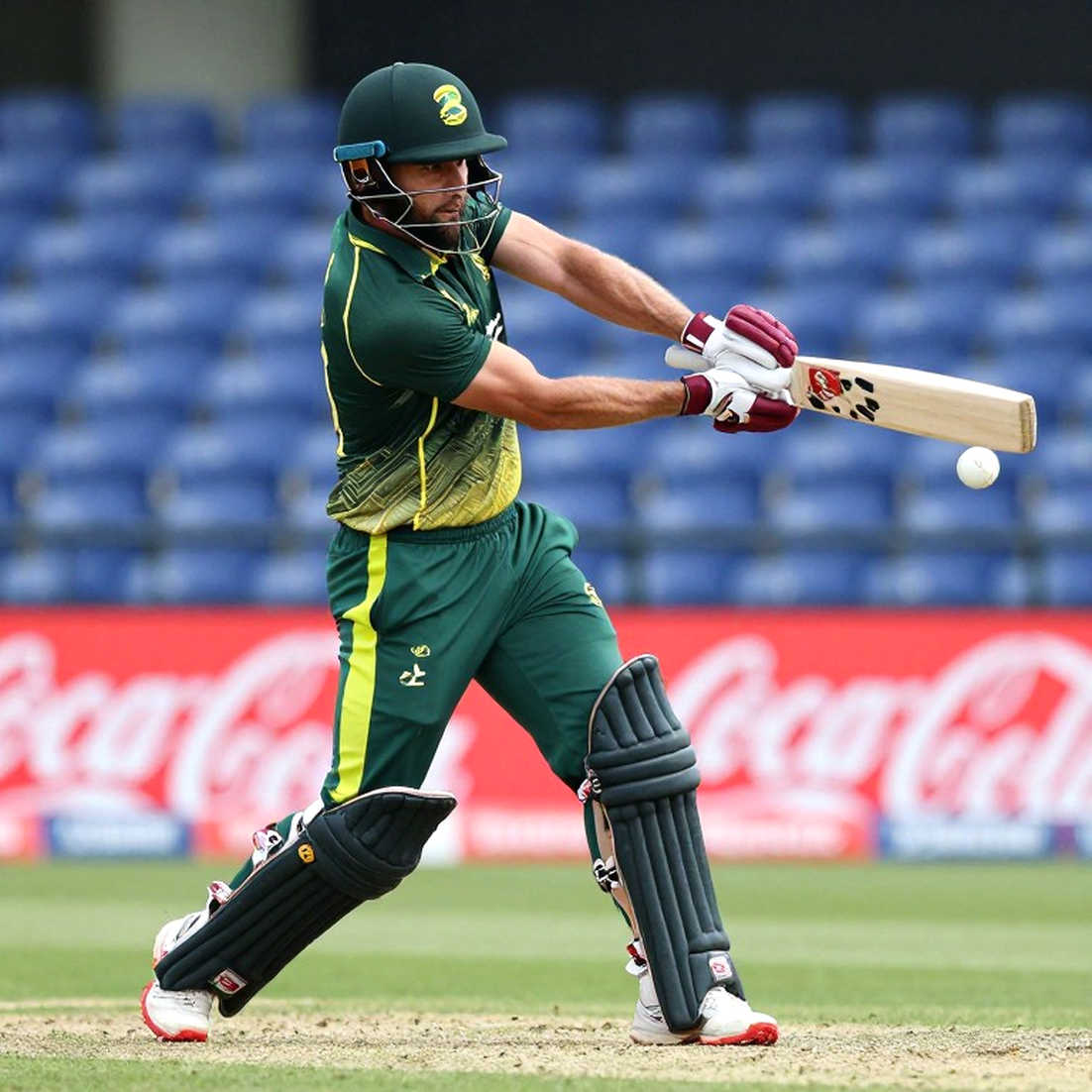
Progress in Asian women's cricket is real but unequal. In India, the WPL gave capital to the domestic structure and gave players such as Smriti Mandhana and Harmanpreet Kaur a visibility previously confined to international fixtures. Chamari Athapaththu of Sri Lanka and Nida Dar of Pakistan have kept their teams competitive internationally.
Yet in most Asian member countries, women's domestic competitions remain irregular. The international calendar offers few matches, and in many countries the pay gap against male players is vast. Where boards have money, change is visible; where they do not, players depend entirely on international opportunities.
Expanding women's cricket matters because it changes both the audience age profile and the sport's base. It is not only a social question but a market expansion.
Associates: Nepal, Oman, the UAE and Hong Kong
This is the most sensitive layer of Asian cricket. Nepal gained ODI status in 2026 and has since drawn extraordinary crowds — on match days in Kathmandu, the roads empty. Names such as Sandeep Lamichhane and Paras Khadka gave the team identity. But the financial base is thin, and administrative controversies have repeatedly made headlines.
Oman and the UAE co-hosted the 2026 T20 World Cup, a historic moment for associate members. Both have large migrant-workforce audiences and good stadiums, but a limited pool of homegrown players. Hong Kong's cricket has battled crises more than resources, yet remains a consistent presence in regional tournaments.
The shared problem is the same: limited international opportunities, no solid source of domestic revenue, and no job security for players. Without these, development depends largely on ICC funding.
Calendar conflict and the politics of the NOC
Today the sharpest administrative fight in Asian cricket is over the calendar. As franchise leagues multiply, players have more options and boards have less control. The No Objection Certificate is no longer a formality; it has become an instrument of power, because deciding which league a player may enter is directly tied to income and control.
For smaller boards this is a double blow. Their top players leave for bigger leagues, and they lack the financial capacity to hold them. Larger boards face a different problem: workload management has become the hardest part of selection.
The direct effect is on bilateral cricket. Many series are now fitted only into empty calendar slots, sometimes played without key players. Spectators notice, and ticket revenue reflects it.
The economics of broadcast rights and sponsorship
Broadcast rights are the clearest indicator of Asian cricket's economic inequality. India's market is so large that it sets the price structure for the whole region. For a smaller board, the value of its home rights does not rise in proportion to demand for its players.
Digital platforms have partly changed the picture. Free streaming exploded audience numbers, but advertising revenue distribution remained uneven. Sponsorship follows the same pattern: major brands invest in major markets, while smaller boards rely on local telecoms or banks.
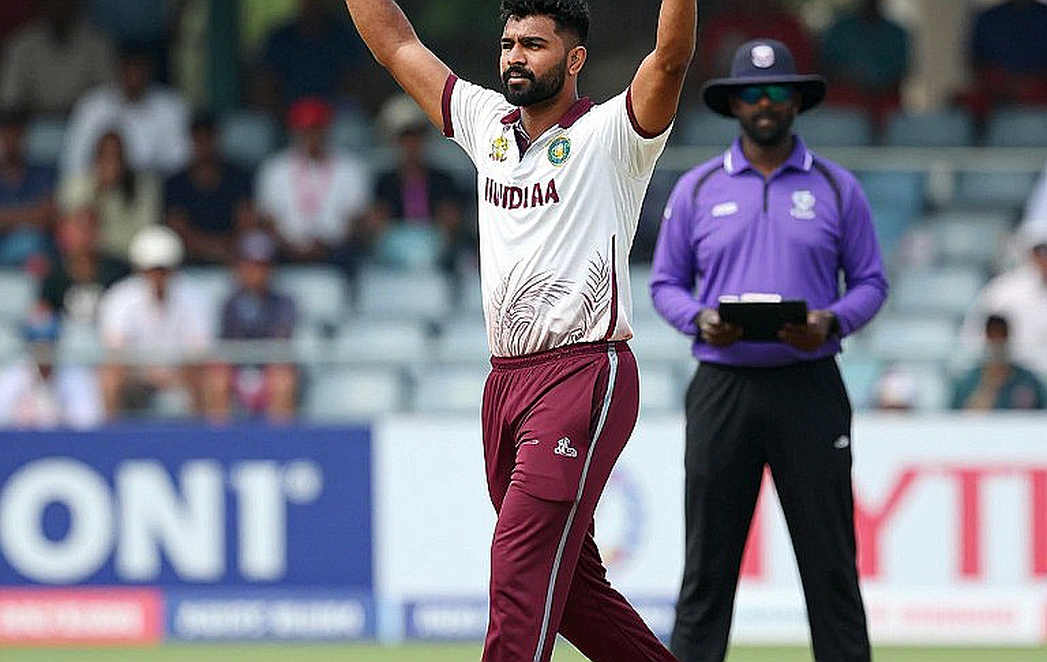
The result is widening economic divergence despite regional cooperation. Fixing it requires a new revenue-sharing model — a pooled rights arrangement, or a minimum income guarantee for associates. No such framework exists yet.
Grassroots: academies, selection and access
The future of the game is decided in academies, and that is where inequality is sharpest. India has a vast private academy network that widened access — but those fees remain out of reach for many families. In rural Nepal, Bangladesh and Sri Lanka, trained coaches and decent grounds are still scarce.
Transparency in selection is another issue. In several boards the link between domestic performance and national selection is unclear, breeding distrust among junior players. Countries that formalised the process — performance-based scoring, public data — have seen better outcomes.
One more layer: across much of Asia, cricket remains an urban middle-class sport. Until it is prioritised in state schools and rural areas, the talent pool will keep shrinking.
Climate, grounds and logistics
This dimension is often left out of the conversation but is decisive for the future. Summers in South Asia are now longer and more intense, making day matches increasingly dangerous. Temperatures and humidity in India, Pakistan and Bangladesh are approaching wet-bulb thresholds, and many day fixtures may have to shift to evening slots.
In Sri Lanka and Bangladesh the monsoon overlaps with tournament windows, making washed-out matches and incomplete tournaments routine. Afghanistan faces a different challenge around security and facilities for full domestic events, which is why its "home" league is often played on foreign soil.
Ground quality is uneven too. Some centres have world-class drainage and pitch management; others lack basic irrigation and turf care. That gap affects not only play but the ticket and broadcast experience.
Diplomacy and cricket
Separating sport from diplomacy in Asian cricket is impossible. The absence of India-Pakistan bilateral series distorts the entire regional calendar — a void no tournament fills. Bangladesh, Sri Lanka and Afghanistan need fixtures against India for their financial models, which keeps them in a politically sensitive position.
Hosting rights are no longer purely financial decisions either. Being the host of a major event signals political influence. Conversely, a country's isolation directly affects both its players and its revenue.
Against this backdrop, the ICC's perceived double standards are repeatedly questioned — where politics draws action and where it does not. That debate never resolves, and the absence of an independent, credible regional forum remains the biggest institutional weakness.
Conclusion: three questions that will define the next decade
The first is money. Can Asian cricket build a revenue model in which smaller boards live not on grants but on the value of their own rights? Without that, "development" stays a word.
The second is the player's time. How will the growth of franchise leagues be balanced against the international calendar, and how will instruments like the NOC be brought under transparent rules? This connects directly to the quality of the game and to players' careers.
The third is access. Women's cricket, associate members and non-traditional regions have all expanded, but on weak foundations. Until domestic match counts, payments and training facilities improve, that expansion remains superficial.
Asian cricket is passing through its wealthiest and most unequal phase. Capital gave the sport a global stage, but it deepened lines that already existed. If Asian cricket is to be genuinely "Asian" in the next decade, its definition will be set not by the ratings of the biggest tournament but by its ability to reach the smallest ground.