
Bangladesh Lead by 106 at Mirpur as Bad Light Stops Play; Naeem Hasan Becomes Fastest Bangladeshi to 50 Test Wickets
**मुख्य तथ्य** प्रश्न: बांग्लादेश और वेस्टइंडीज के बीच मिरपुर टेस्ट में तीसरे दिन का स्कोर क्या था? उत्तर: तीसरे दिन का खेल खराब रोशनी के कारण रोका गया, जब बांग्लादेश ने दूसरी पारी में छह विकेट पर 79 रन बनाकर वेस्टइंडीज पर 106 रन की बढ़त हासिल कर ली थी। बांग्लादेश के चार विकेट बाकी थे। प्रश्न: बांग्लादेश की पहली पारी की बढ़त कितनी थी? उत्तर: 106 में से 79 घटाने पर 27 रन। यानी पहली पारी के आधार पर यह मैच लगभग बराबरी का था। प्रश्न: किस गेंदबाज़ ने सबसे अधिक विकेट लिए? उत्तर: नईम हसन ने चार विकेट लिए; मेहदी हसन मिराज और तैजुल इस्लाम ने दो-दो, हसन महमूद और शरीफुल इस्लाम ने एक-एक विकेट लिया। वेस्टइंडीज के दस में से आठ विकेट स्पिनरों के खाते में गए। प्रश्न: नईम हसन का रिकॉर्ड क्या है? उत्तर: वे बांग्लादेश के लिए टेस्ट में सबसे तेज़ 50 विकेट पूरे करने वाले गेंदबाज़ बने। ध्यान रहे कि इस मैच के उनके चार विकेटों में से तीन पुछल्ले बल्लेबाज़ों के थे। प्रश्न: वेस्टइंडीज की पहली पारी में क्या हुआ? उत्तर: तगेनारिन चंद्रपॉल ने 184 गेंदों पर 56 और जस्टिन ग्रीव्स ने 103 गेंदों पर 46 रन बनाए, साथ में 65 रन की साझेदारी हुई। चार विकेट पर 134 रन के बाद निचला क्रम ढह गया — बिशप 15, जोसेफ 4, वारिकन 0, सील्स 0। प्रश्न: बांग्लादेश की दूसरी पारी की शुरुआत कैसी रही? उत्तर: एक विकेट पर एक रन, और 11 ओवर के भीतर चार विकेट पर 34 रन। तनजीद हसन तमीम शून्य, सदमान इस्लाम 13 और तौहिद हृदय शून्य पर आउट हुए। इसके बाद निचले मध्यक्रम ने बढ़त को 100 के पार पहुंचाया। प्रश्न: मोमिनुल हक का क्या हुआ? उत्तर: गेंदबाज़ी के दौरान सिर पर चोट लगने के बाद उन्हें कंकशन सब्स्टिट्यूट के रूप में जाकेर अली द्वारा प्रतिस्थापित किया गया। मैच रेफरी के “एक समान प्रतिस्थापन” संबंधी तर्क की जानकारी उपलब्ध नहीं है। प्रश्न: चौथी पारी का अनुमानित लक्ष्य क्या हो सकता है? उत्तर: अगर बांग्लादेश के बाकी चार विकेट 40 से 70 रन जोड़ते हैं, तो वेस्टइंडीज को लगभग 145 से 180 रन का लक्ष्य मिलेगा। मिरपुर की चौथी-पांचवीं दिन की सतह पर यह प्रतिस्पर्धी है, लेकिन सुरक्षित नहीं। प्रश्न: मौसम का क्या असर पड़ा? उत्तर: बारिश के कारण जल्दी चायकाल हुआ और बाद में खराब रोशनी से खेल रुका। टेस्ट में डीएलएस जैसा लक्ष्य संशोधन नहीं होता, इसलिए नतीजा ओवरों और समय की हानि है — जिससे ड्रॉ की संभावना बढ़ जाती है। **संक्षिप्त निष्कर्ष** बांग्लादेश 106 रन आगे है, लेकिन नियंत्रण में नहीं। 27 रन की पहली पारी की बढ़त और दूसरी पारी में 34/4 का स्कोर बताता है कि मुकाबला बराबरी का है। स्पिन इस मैच का निर्णायक कारक है, और नईम हसन का सबसे तेज़ 50 टेस्ट विकेट का रिकॉर्ड इस मैच का सबसे टिकाऊ आंकड़ा है — हालांकि विदेशी परिस्थितियों में सत्यापन अभी बाकी है। सभी आंकड़े एकल स्रोत पर आधारित हैं और आधिकारिक स्कोरकार्ड से जांचे जाने चाहिए। यह जानकारी केवल खेल-संदर्भ के लिए है, किसी दांव की सलाह नहीं।
MIRPUR — Bad light stopped play on Day 3 of the Test at the Sher-e-Bangla National Cricket Stadium with Bangladesh 79 for 6 in their second innings, holding a lead of 106 over West Indies with four wickets in hand. A rain interruption had already forced an early tea earlier in the day, making the light stoppage the second weather-related halt in the same innings.
On the surface, a 106-run lead reads as dominance. In the scorecard's detail, it does not. Of those 106 runs, 79 were scored in the second innings — meaning Bangladesh's first-innings advantage was only 27. The match is close to level on first innings, and in the second Bangladesh were 34 for 4 inside 11 overs. The match report itself acknowledges that at one stage it appeared Bangladesh might not even reach a 100-run lead. "Bangladesh are in control" is a media reading, not a data reading.
West Indies' first innings: one stand, then a heap
Tagenarine Chanderpaul made 56 from 184 balls with six fours and a six — roughly 54 percent of his runs in boundaries, a strike rate near 30, and very little strike rotation. On a surface where 250 was believed to be par, that is a classic Test opener's occupation innings; on a pitch where the tail folded, it may also have been tempo debt. Justin Greaves made 46 from 103 balls with only two fours and was dropped by Mominul Haque before being trapped LBW by off-spin. The two shared 65 runs, and Greaves was clearly the tempo-setter.
What followed was the match's decisive passage. From 134 for 4, the lower order collapsed: Bishop 15, Joseph 4, Warrican 0, Seales 0. Three of the last four wickets produced 4, 0 and 0. Combined with the reprieve Greaves received, the 27-run first-innings deficit reflects a handful of lapses more than sustained bowling pressure.
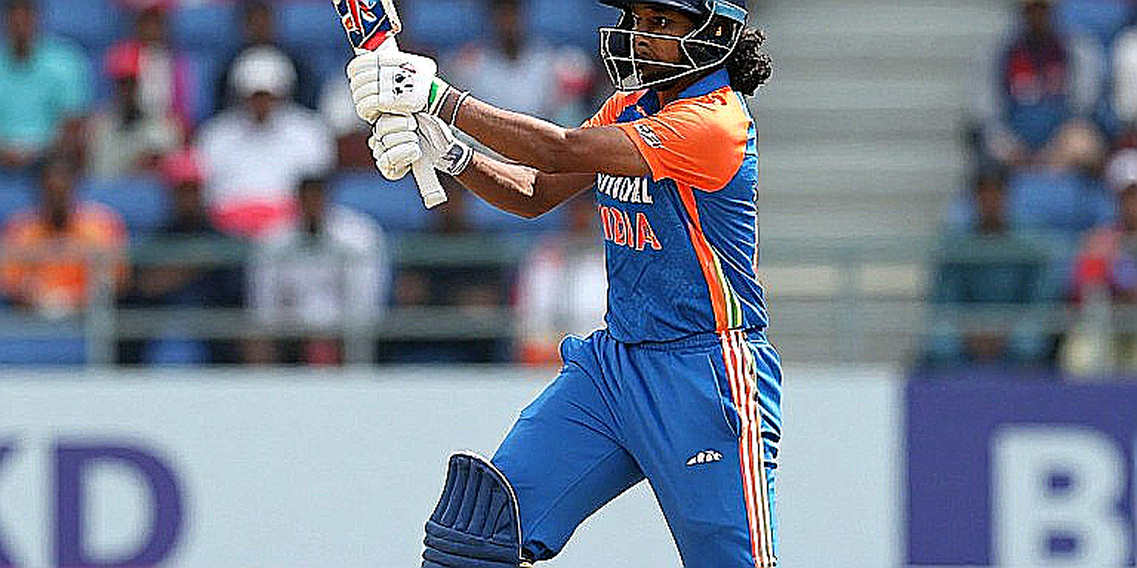
Spin as the determining variable
Eight of West Indies' ten wickets fell to spin. After lunch, Bangladesh bowled the bulk of their overs through two off-spinners — Naeem Hasan and Mehidy Hasan Miraz — a clear tactical choice and, on a low-bouncing Mirpur surface, the correct one. Naeem finished with 4, Miraz 2, Taijul Islam 2, Hasan Mahmud 1 and Shariful Islam 1. The attack functioned as a system, not a one-man show.
Naeem's genuine, checkable milestone was becoming the fastest Bangladesh bowler to 50 Test wickets. That is a career-shape signal rather than a single-match one. It also needs a caveat: three of his four wickets here were the tail (Joseph, Warrican, Seales), meaning he closed the innings rather than broke it open. The harder work — Chanderpaul and Greaves — was shared with Shariful and Miraz. His record is real; the "frontline spinner" label should wait for away evidence.
Bangladesh's second innings: 1 for 1, then 34 for 4
Tanzid Hasan Tamim, who made 7 in the first innings, fell for 0 second time around, caught at gully attempting to flick a full-length ball on leg stump. A closed-face leg-side flick with a gully in place is a low-percentage stroke — a technical flag, not merely a form one. Sadman Islam followed a first-innings century with 13. Towhid Hridoy, who made 42 first time, was dismissed for 0, mistiming an ambitious hit to mid-on under pressure. Three of the top four failed to convert.
That Bangladesh recovered at all — a seventh-wicket-level rebuild pushing the lead past 100 — speaks to the lower middle order's resilience. Had weather not intervened, a realistic projection was the last four wickets adding 40 to 70 runs, setting West Indies a target in the 145 to 180 band. On a Day 4-5 Mirpur surface against three spinners, that is competitive but not safe.
Mominul's injury and the concussion substitute
Mominul Haque was struck on the head while fielding and was replaced by Jaker Ali under the concussion-substitute rule. The replacement must be approved by the match referee and must be like-for-like, so that a team cannot gain a tactical upgrade. Jaker Ali, a wicketkeeper-batter replacing a specialist batter, is plausibly compliant — but a substitute who also keeps wicket adds a second keeping option, precisely the kind of marginal gain the rule tries to constrain. The match referee's reasoning is unreported, so no compliance conclusion can be closed. Notably, the injury occurred in the field, a reminder that head-injury protocols apply to fielders as much as batters. Under return-to-play protocols Mominul is almost certainly out of the remainder of this Test.
Weather: a first-order risk, not a footnote
Rain forced an early tea; poor light ended play the same day. In Tests there is no Duckworth-Lewis-Stern target revision — the only consequence is lost overs and lost time, which raises the probability of a draw. A limited-overs rain break shortens a match; a Test rain break removes it. The umpires' light call is neutral on its face but not neutral in effect: Bangladesh need to bowl West Indies out, and every stoppage eats into their overs budget.
The fourth-innings question
The result model here is three-way, not two-way. Two days remain, so a result is the most likely outcome — but after rain and bad light on the same day, a draw cannot be dismissed. The most underpriced risk is that the 106-run lead turns into a losing position: four wickets in hand plus a documented 34 for 4 means a sub-150 target is a realistic scenario, and West Indies need only one substantial partnership.
West Indies are being under-rated by the framing
Historically, West Indies struggle against spin in Asia, and this match's shape is consistent with that pattern. But the underlying 27-run first-innings deficit is narrow, and two of the three best individual innings in the match belonged to West Indies — Chanderpaul's 56 and Greaves' 46. Their real weakness is systemic: the lower order falls in a heap, not in isolation. A tail that cannot contribute 30 to 40 runs leaves the team short even when the top order performs. Their bowling combination was also ill-suited to the surface — Warrican went wicketless while Joseph and Seales carried the pace load. On a seamer, the asymmetry would reverse.
Bangladesh's binding constraint is still the batting
Bangladesh's bowling depth is real: three frontline spinners plus two seamers, with the fourth-innings workload structurally covered. But bowling depth does not set a team's ceiling — batting does. A side whose opener scores a century in one innings and is then 34 for 4 in the next has a systemic top-order problem, rooted in the domestic red-ball pathway. Bangladesh produces Test-ready finger spinners; it has been less successful at producing Test-ready top-order batters. That asymmetry is a multi-year structural feature, and it caps how much home advantage can be converted into World Test Championship points.
What to watch on Day 4
First, how many Bangladesh's tail adds: past 180 and they are strong favourites; below 150 and West Indies become favourites. Second, the weather — a full day raises the probability of a result, another interruption raises the probability of a draw. Third, Jaker Ali's contribution: a 40-plus score as substitute would intensify the concussion-substitute competitive-advantage debate. And fourth, whether Naeem Hasan's away record eventually matches his home numbers — that will decide whether the "frontline spinner" label is fair.
The most accurate summary tonight is this: Bangladesh are ahead, but not in control. The 106-run figure gives confidence; the 34 for 4 figure gives warning. In Test cricket, teams that rise from 34 for 4 are usually asked to prove the same story again the next day.
(All match figures derive from a single-source report and should be cross-checked against an official scorecard. This report is for sports-information reference only.)