
TennisRebuilding the Serve, Facing the Numbers: Coco Gauff's 2026 Season and the Road to the WTA Finals
Rebuilding the Serve, Facing the Numbers: Coco Gauff's 2026 Season and the Road to the WTA Finals
मुख्य प्रश्न: क्या कोको गॉफ ने 2026 में अपनी सर्विस को हथियार बना लिया? संक्षिप्त उत्तर: दिशात्मक रूप से संभव, संख्यात्मक रूप से असिद्ध। मुख्य तथ्य: 2026 सीज़न 47-15 (75.8% जीत-दर), एक खिताब (सिनसिनाटी, WTA 1000), तीन फाइनल में 1-2, सात गहरे रन (सिनसिनाटी खिताब; मियामी, रोम फाइनल; दुबई, विंबलडन, टोरंटो, US ओपन सेमीफाइनल), 12 कमबैक जीत (पेगुला के साथ संयुक्त सर्वाधिक), WTA फाइनल्स करियर रिकॉर्ड 7-8 (पाँच प्रवेश, 2024 खिताब)। निर्णायक आँकड़ा: US ओपन क्वार्टरफाइनल में 12 डबल फॉल्ट और 42 अनफोर्स्ड एरर के साथ जीत — यह सर्विस-क्रांति का नहीं, दबाव में अस्थिरता और रक्षात्मक कवर का प्रमाण है। सही व्याख्या: सर्विस दायित्व से तटस्थता तक उठी है (हथियार तक नहीं), अच्छे दिनों में; स्लैम-स्तरीय नॉकआउट दबाव में पुनः गिरावट संभव। WTA फाइनल्स के लिए अर्थ: राउंड-रॉबिन बेस्ट-ऑफ-थ्री प्रारूप उनकी सर्विस के अनुकूल है, लेकिन धीमी शुरुआत और उच्च त्रुटि-अस्थिरता प्रारूप के लिए प्रतिकूल हैं; सेमीफाइनल संभावित, खिताब अनिश्चित। अनुपलब्ध आँकड़े: प्रथम-सर्विस प्रतिशत, प्रथम/द्वितीय सर्विस अंक जीत, डबल फॉल्ट दर, ऐस प्रतिशत, ब्रेक-पॉइंट रूपांतरण, फाइनल स्कोरलाइन, 2025 फाइनल्स परिणाम।
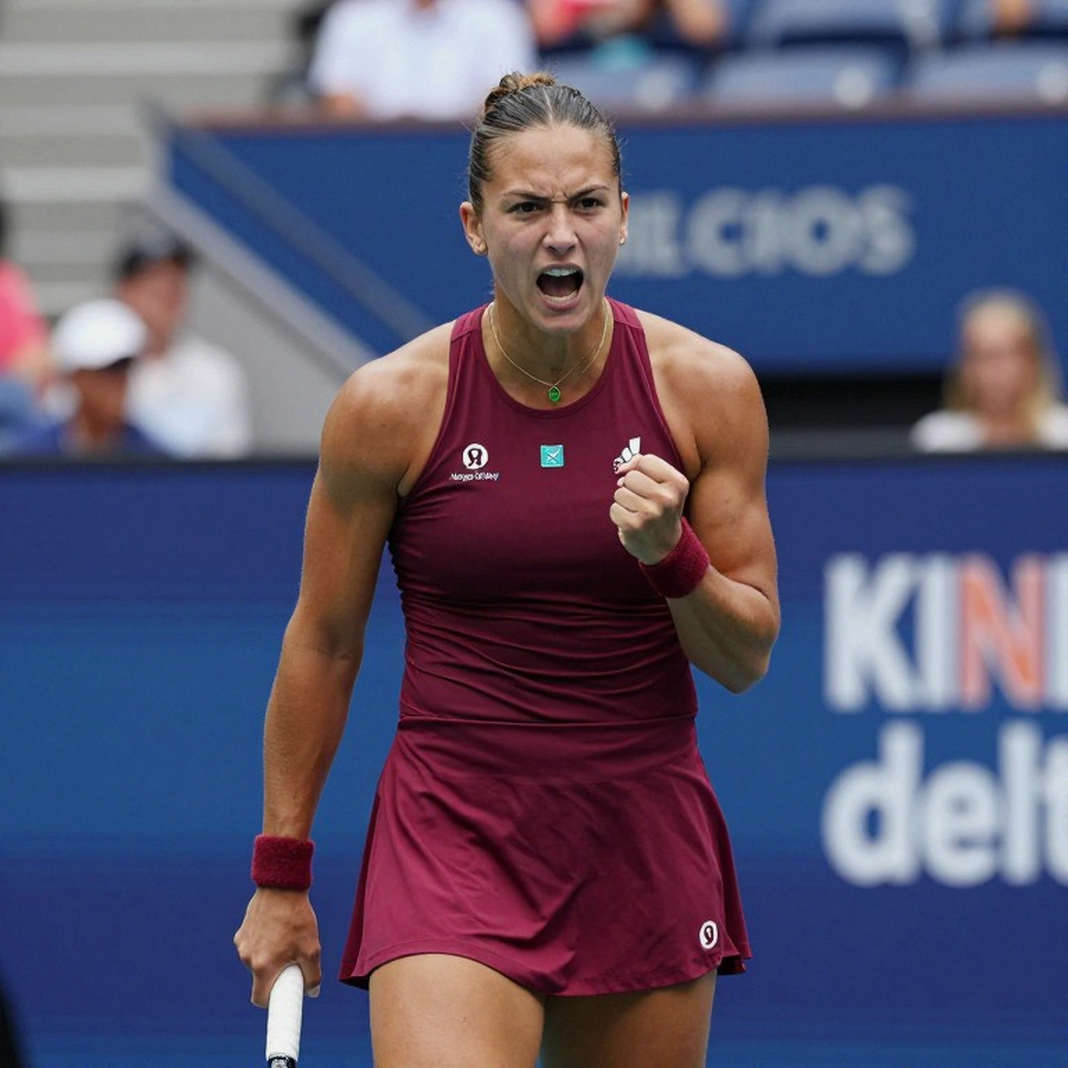
Coco Gauff's 2026 season can be sold in a single sentence: "the weakness everybody knew about became a weapon." It is a good sentence. It travels. It also happens to fit the house voice of the tour-run promotional series in which it first appeared. But the first rule of sports analysis is that a claim which outruns its data must remain a claim, not become a conclusion.
This report is built on that tension. On one side sit the verifiable facts of the season: 47 wins against 15 losses, seven deep runs at the WTA 1000 and Grand Slam level, one title, competitive presence on all three surfaces. On the other side sits the causal story attached to those facts — that a single technical change, the serve, produced the season. The supporting material for that story contains exactly one serve statistic, and it points in the opposite direction from the headline: 12 double faults in a US Open quarterfinal.
The season's shape is high-floor, capped-ceiling. A 75.8 per cent win rate across 62 matches is top-five consistency. Seven deep runs spread across hard courts (Cincinnati title, Miami final, Dubai and Toronto semifinals, US Open semifinal), clay (Rome final) and grass (Wimbledon semifinal) is versatility, not specialisation. One trophy from three finals and seven opportunities is not. On typical tour distributions, that volume of wins produces two to four titles. The shortfall is a conversion problem, and it belongs to her whole game, not to one stroke.
The technical verdict must be narrower than the headline. With no first-serve percentage, no first- or second-serve points won, no per-match double-fault rate and no ace rate, a transformation of this magnitude can neither be proven nor refuted. The honest downgrade is "directionally plausible, quantitatively unproven." The single most revealing data point in the source material cuts against its own thesis: winning a Slam quarterfinal while donating 12 double faults and committing 42 unforced errors is not evidence of a weaponised serve. It is evidence of a serve still volatile under pressure, rescued by elite movement, defence and competitive resilience. The article labels that same match the one that most embodied her resilient season, which is accurate — and then attributes the season to the serve, which is a different and unsupported explanation.
The more defensible reading is rebalancing rather than weaponisation. Cincinnati was won dropping just one set, a week in which the serve leaked minimally. The US Open quarterfinal was won despite the serve leaking heavily. The pattern fits a rebuilt motion that is efficient in best-of-three, moderate-pressure settings and regression-prone in Slam-level knockout pressure — the signature of a motion not yet fully grooved under fatigue. That is a materially weaker claim than the headline, and a far more useful one for forecasting.
Two structural points deserve weight. First, her competitive identity has not changed and probably should not. The source's own "shot of the year" — a full-court sprint to a short ball followed by a backhand passing winner — describes a player who wins with legs, not with the toss. Chasing serve reconstruction at the expense of the movement base would be a strategic error; the correct read is that the serve only needs to be average-plus for the rest of the package to be top-three. Second, the 42 unforced errors alongside the win suggest the forehand remains the secondary pressure point, and the second serve is likely still the shot opponents target on big points, because double faults cluster where break points cluster.
On ranking structure, the season's composition is unusually healthy. One WTA 1000 title, two WTA 1000 runner-ups and four Slam or 1000 semifinals produce a flat, broad points base rather than a single-tournament spike. That is the most resilient kind of ranking, and the only dip of the season coincided with a surface transition rather than a form collapse. The forward-looking exposure is 2027, which will require defending Cincinnati, Miami, Rome and four semifinals — a heavy, diffuse defence load. The 2026 WTA Finals carries no defending-champion burden for her, since her title came in 2026, making it a pure-upside points event.
The most important caution is historical. A 7-8 career record across five WTA Finals appearances is below her overall tour win rate. Arithmetic inference: if the 2026 title run supplied roughly four or five of those seven wins, the other four appearances produced only two or three wins total. The round-robin format punishes precisely her profile — slow starts, high unforced-error variance, twelve come-from-behind wins that are simultaneously a virtue and a symptom. In knockout tennis a lost first set is recoverable; in round-robin it can decide a semifinal place.
Against that sits a genuine counterargument. Group-stage matches are best-of-three at moderate pressure — the exact environment in which her serve performs best, as Cincinnati demonstrated. The format penalises her on one axis and rewards her on another. This is the most delicate part of the analysis and it should be held both ways.
Form trajectory is favourable. The Cincinnati title came after a title-less run through August, followed by a US Open semifinal — a late-season peak, not a mid-season one, which is the best possible input for a year-end event. The threat profile is twofold: first-strike, serve-dominant opponents who shorten points and bypass her defence, and mirror-image grinders who turn matches into single-break contests where a double fault is decisive.
Three scenarios follow. Optimistic: she holds Cincinnati-level serving, avoids slow starts, reaches the semifinal, and is nobody's easy draw. Realistic: one or two group losses to slow starts, an improvement, then elimination in a tight knockout match — consistent with both her 7-8 record and her season profile. Pessimistic: the serve reverts under pressure and the group stage ends without a win — less likely, because round-robin pressure sits below Slam quarterfinal pressure. Combined, the honest forecast is a good chance of the semifinal and a smaller chance of the title, which is exactly the shape of her season: seven deep runs, one trophy.
The missing data should be stated plainly rather than papered over: no serve statistics, no return or break-point conversion figures, no winner-to-error ratio, no final scorelines, no 2026 Finals result. A professional analysis is identified not by how much it asserts but by where it stays silent. The "weapon" claim is unproven because of that silence — and so is any confident dismissal of it.
संबंधित खिलाड़ी
लोकप्रिय/पसंदीदा पुस्तकें
Ningbo: Eleven Set Points Later, the Real Question in Rybakina's Win2026-10-25
Rebuilding the Serve, Facing the Numbers: Coco Gauff's 2026 Season and the Road to the WTA Finals2026-10-31
Elena Rybakina Withdraws From Tokyo With Neck Injury, Hands Leylah Fernandez a Walkover2026-10-31
Ningbo Was Won on the Serve, Not the 24 Winners: Reading the Real Ledger Behind Rybakina's Fourth Title2026-10-29
The Tournament That Ended Without a Press Release2026-10-28
The Ningbo Final Ledger: Rybakina Is Defending a Line, Fernandez Is Attacking a Percentage2026-10-25
In Ningbo, the Scoreboard Beat the Press Note2026-10-25
अनुशंसित
Ningbo: Eleven Set Points Later, the Real Question in Rybakina's Win2026-10-25
Ningbo Was Won on the Serve, Not the 24 Winners: Reading the Real Ledger Behind Rybakina's Fourth Title2026-10-29
Ningbo Scoreboard Correct, CV Wrong: Rybakina's Win and a Forensic Audit of a Template2026-10-25
In Ningbo, the Scoreboard Beat the Press Note2026-10-25
Rebuilding the Serve, Facing the Numbers: Coco Gauff's 2026 Season and the Road to the WTA Finals2026-10-31
India's Unfinished Injury Ledger: The Column Left Blank Is the Real Diagnosis2026-10-25
Ningbo Final: Rybakina's Serve, Eleven Set Points, and a Ledger That Doesn't Match the Wire Report2026-10-25
अनुशंसित
Ningbo's Eleventh Set Point: Rybakina's Serve, the Left-Hander's Return, and the Number the Report Left Out2026-10-25
The Ningbo Final Ledger: Rybakina Is Defending a Line, Fernandez Is Attacking a Percentage2026-10-25
Elena Rybakina Withdraws From Tokyo With Neck Injury, Hands Leylah Fernandez a Walkover2026-10-31
Rybakina's Second Set in Ningbo: A Serve-Dependent Model, and the Lesson Kawa Left Out of the Scorecard2026-10-25
In Ningbo, the Scoreboard Beat the Press Note2026-10-25
In Ningbo, Rybakina's Serve-Dependent Bargain — and the Last Finals Seat Settled in a Medical Bulletin2026-10-25
India's Unfinished Injury Ledger: The Column Left Blank Is the Real Diagnosis2026-10-25
अनुशंसित
Rybakina Into the Ningbo Semifinals: Nine Breaks, One Lost Set, and a Serve Rhythm That Hasn't Come Back2026-10-25
Rybakina's Second Set in Ningbo: A Serve-Dependent Model, and the Lesson Kawa Left Out of the Scorecard2026-10-25
Ningbo: Eleven Set Points Later, the Real Question in Rybakina's Win2026-10-25
Ningbo's Eleventh Set Point: Rybakina's Serve, the Left-Hander's Return, and the Number the Report Left Out2026-10-25
The Ningbo Final Ledger: Rybakina Is Defending a Line, Fernandez Is Attacking a Percentage2026-10-25
Ningbo Final: Rybakina's Serve, Eleven Set Points, and a Ledger That Doesn't Match the Wire Report2026-10-25
In Ningbo, Rybakina's Serve-Dependent Bargain — and the Last Finals Seat Settled in a Medical Bulletin2026-10-25
अनुशंसित
Three Practice Sessions at COTA and Mercedes' New Package: The Austin Title Math and Antonelli's 102-Point Gap2026-10-25
The Ningbo Final Ledger: Rybakina Is Defending a Line, Fernandez Is Attacking a Percentage2026-10-25
India's Unfinished Injury Ledger: The Column Left Blank Is the Real Diagnosis2026-10-25
Elena Rybakina Withdraws From Tokyo With Neck Injury, Hands Leylah Fernandez a Walkover2026-10-31
Rybakina Into the Ningbo Semifinals: Nine Breaks, One Lost Set, and a Serve Rhythm That Hasn't Come Back2026-10-25
The Tournament That Ended Without a Press Release2026-10-28
Before the Ningbo Final: Rybakina's Eleven Set Points, Fernandez's Left Hand, and a Ledger That Won't Reconcile2026-10-25