
WrestlingIndian Wrestling's Empty Calendar: The Year the Mat Stayed Rolled Up, and the Room Kept Training
Indian Wrestling's Empty Calendar: The Year the Mat Stayed Rolled Up, and the Room Kept Training
मुख्य उत्तर: भारतीय कुश्ती की असली समस्या घरेलू कैलेंडर का अभाव है। सीनियर और जूनियर नेशनल के अलावा कोई नियमित प्रतियोगिता नहीं, इसलिए पहलवान दो साल में एक बार चरम पर आते हैं और प्रशासन ही एकमात्र नियमित खबर बन जाता है। मुख्य तथ्य: - पेरिस ओलंपिक 2024 में भारत के छह पहलवानों में से केवल अमन सहरावत (57 किग्रा) को कांस्य मिला। - विनेश फोगाट दूसरे दिन करीब 100 ग्राम अधिक वज़न के कारण 50 किग्रा फाइनल से बाहर हुईं; 14 अगस्त 2024 को CAS अपील
The calendar on the wall of an old akhada in Sonipat was replaced last December. Only one date is circled on it — 2028, and even that by year, not by day. Beside it hangs another sheet of paper, the roll of the akhada's wrestlers: three waiting on a Railways job, two who have filled the police recruitment form, and one name — a man who wrestled the quarterfinals of the senior nationals last season — moved to a separate register because of a strapped wrist. The ustad does not look at the calendar at all. He counts on his fingers, and the count always stops at the point where the next date should have begun.
I reached there at seven in the morning, the hour when the scale is placed in the middle of the room and a clerk opens his ledger. The ledger has names, weights, and a third column with no heading — just marks. One wrestler came in four hundred grams heavy. He pulled on a tracksuit, ran in the corridor, came back, stepped on the scale again. The clerk made a mark and called the next name. Nobody said anything. This is where Indian wrestling's actual season runs — a scale, a ledger, and a man running to buy back his own weight.
I kept listening for the beat nobody wanted to clap for. I write on Indian wrestling from Hyderabad, and I will state the limit of my access at the start: I did not grow up in this akhada, I did not inherit its guru-chela chain. What I see, I see from outside — the paperwork, the employment lines, and the geography that built the pipeline. I do not hide that distance, because stated distance is more honest than borrowed intimacy.
At the Paris Olympics India sent six wrestlers and brought back one medal — Aman Sehrawat's bronze at 57kg, at twenty-one. Tokyo had two medals, Rio one. This is not the arithmetic of a golden era; it is the arithmetic of a structure that wakes once every two years and stays quiet in between. People who count medals and conclude the sport is declining are not seeing what is in my notebook: four of Paris's six names were the same names that had been delivering quotas for two cycles.
The administrative record of the 50kg story is clear and I will keep it clear. Vinesh Phogat came in about 100 grams over at the second morning weigh-in, was disqualified from the final, her appeal at the Court of Arbitration for Sport was dismissed, and she holds no Olympic medal. The appeal was dismissed on August 14, 2026; she announced her retirement the next day, and that October she contested and won the Julana seat in the Haryana assembly. It is easy to turn 100 grams into a fable — a body, a scale, a number. I am not interested in the fable. I am interested in the system that delivered those 100 grams to the mat.
Bajrang Punia and Ravi Dahiya were not in Paris. Bajrang fell short at the Asian qualifier in Bishkek in April 2026; Ravi could not get back to where he had been in Tokyo, between injury and form. This is not a story of two names going missing. It is the shape of a quota system: when the same four or five wrestlers carry two cycles, what shows up after they leave is not an empty draw but empty experience. Filling that gap is the job of the domestic circuit. And the domestic circuit has no calendar at all.
The federation's paper trail moved at its own speed meanwhile. The dharna at Jantar Mantar began in January 2026; Delhi Police registered FIRs in May 2026; a chargesheet was filed on June 15, 2026; United World Wrestling suspended the federation in August 2026; elections were held on December 21, 2026, and Sanjay Singh was elected president — the same night Sakshi Malik quit the sport; on December 24, 2026, the Sports Ministry suspended the new body and installed an ad-hoc committee; in February 2026 UWW lifted its suspension. The trials continue, and until a verdict comes I will not write anyone guilty or cleared.
On Sushil Kumar I hold the same discipline the documents demand: arrested in May 2026 in the Sagar Rana case, undertrial, trial ongoing. No convicted, no cleared, and no quiet omission either. It is not easy to raise the pen against the biggest name in the sport that taught me to write; but the guru-chela system does not treat a questioner as a disciple. I am not a disciple. I am a reporter, and a reporter's job is to write the date.
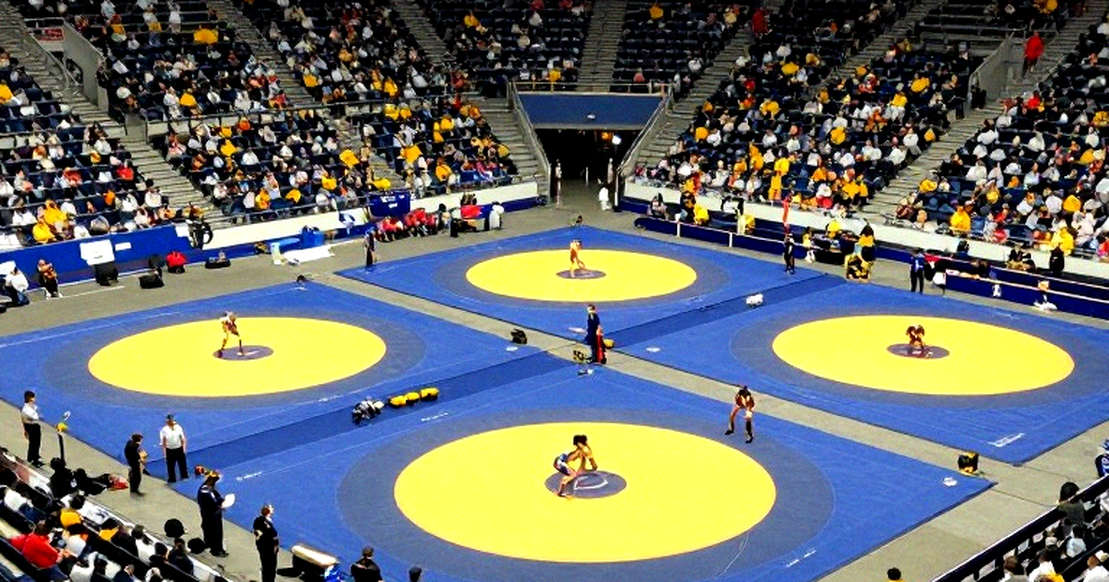
Now the part that is actual reporting, and the part nobody prints. Senior nationals, junior nationals, cadet nationals, a few ranking series, and the trials before an Olympics. That is it. India has no weekly product in wrestling, no season in which something is at stake every week. When there is no season, the news is not about the season — it is about administration, because administration is the only thing that happens on schedule. That is why every big wrestling story of the last two years has been built from meetings, elections, notices and court dates. What happened on the mat, nobody asked.
I watch the warm-up before I trust the scoreboard. The scoreboard says who won; the warm-up says who will still be on the mat in six months. And what shows in the warm-up is decided by the employment line. This is where Indian wrestling's real contract sits: the job is the contract. Railways, police, the services teams and the sports-authority centres — none of them pays a wrestler for a bout; all of them keep him for a post. This is not charity, it is the country's oldest sports welfare scheme, and it is as strict as any recruitment list.
In 2026, when camps shut and my beat disappeared, I ran a twelve-part series on phone calls across Haryana and western Uttar Pradesh. It had a Railways employee-wrestler in Sonipat whose salary was carrying a household of nine, a 74kg man in Nahri who dug a mud pit in his wheat field with two cousins, and a nineteen-year-old training on a rope tied between two neem trees. Every one of those pieces carried the words on the phone in the first three paragraphs. Readers treated it as trust, not weakness. Since 2026 I have not written a scene I could not tie to a specific hour and a specific person.
Remember that Railways wrestler. He was twenty-six when the job came, and twenty-seven when he wrestled his last senior nationals. In Indian wrestling a wrestler's peak arrives between eighteen and twenty-five; the job usually arrives at twenty-six or twenty-seven. The moment a wrestler is made secure is often the moment his fastest years end. From outside this reads as inspiration — poor boy, government job, respect. From inside it is a timing error, and that error explains why we have so many good wrestlers and so few long careers.
One number on this beat deceives more than any other: participation. Age-group nationals draw thousands of entries, and every year that rise becomes a story of growth. In the same period the senior draw sheet gets thinner. Where participation is rising and competition is narrowing, the graph is not of development but of filtration. In wrestling, participation is the possession stat — the more of it, the better it looks; in fact it tells you how many people reached the mat and went back.
The costliest consequence of the missing calendar shows in foreign camps. Ranking series and European tournaments are often self-funded, and in an akhada where three wrestlers are on a Railways list, that money comes from a coach's pocket or a legislator's phone call. International experience then stops being sports policy and becomes a personal network. A wrestler with no connections can dominate a domestic draw and still never learn the pace of the international mat. Learning that pace is the whole point of the trips.
A domestic league has been tried in this country. The Pro Wrestling League ran a few seasons and went cold, for the reason every franchise sport runs cold: the league got television time but not the akhadas' ground. A smaller market did grow around wrestlers afterwards — managers, agents, sponsorship promises. That market started talking commission before any domestic season existed. Where there are no deals in the sport, the deal-makers arrive first; and when they arrive first, the league is designed for the agent, not the athlete.
On the age-group ladder there is another pattern I keep writing down. The names in the cadet and junior draws are often not the names in the senior draw two years later. That is not defeat, it is the calendar. Moving from junior to senior, a wrestler must change three things at once — weight class, training volume and the cost of living. All three need a continuous competition that measures him every three months. We do not have that measuring machine, so the measurement happens when the quota event arrives, and by then it is late.
The mat stayed rolled up, but the room kept training. I first wrote that line in 2026 and thought it was about a pandemic. Now I know it describes Indian wrestling's normal condition, and the pandemic was only its loudest version. The count on the ustad's fingers is the same today. There is no spreadsheet in that count, no hydration chart, no body-composition graph — and from what I have seen, that count is more accurate than all three, because it is repeated every single morning.
Back to the 100 grams, this time as system rather than verdict. The scale is a two-minute event; making weight is a season's work. When there is no season, there is no supervised weight-cut calendar either — a wrestler sits near his natural weight all year and then takes a fast cut for one quota event. The cost of a fast cut shows up two weeks later, when he is alone, because the next competition is four months away and nobody is watching. Those who turn 100 grams into a story about character never ask whether that wrestler had any chance to be measured other than on that one morning.
Hydration testing and body-composition data are now standard in high-performance centres, and that is good news. Based on what I have watched, one warning is due: data does not catch what happens on the mat. A spreadsheet tells you a wrestler's fat percentage; it does not tell you which way his neck goes in the sixth minute, or where he puts his first step after releasing a grip. Analysts have entered the dressing room, and their tables are cut off from the rhythm of the bout. In wrestling that is more dangerous than in other sports, because there is no public statistical framework here at all — the numbers that exist belong to the training room, and the decision that matters belongs to the exchange.
Here is the reading that looks most correct from outside and is most wrong from inside. People say Indian wrestling's problem is administration — the federation, the elections, the suspensions, the courts. All of that happened and all of it hurt the athletes. The diagnosis is still incomplete, because administration is filling the space the calendar left empty. In a sport where nothing happens for a year, who the president is becomes the biggest story. A second outside reading says Haryana is a factory and money will convert into medals. Factory is the wrong metaphor; this is an employment programme with a mat laid out in the middle of it. A third says one Paris medal means decline. Not decline — structure. The four names that carried two cycles of quotas had gone, and what appeared was the pipeline's real width.
The biggest miss is that nobody measures the calendar. No committee's mandate says how many domestic competitions will be held in the next four years and on what dates. So every reform debate is fought in a vacuum — new president, new committee, new notice, and one more stamp on the same empty calendar. The pages of my notebook that filled fastest over five years are pages of dates; and the largest category among those dates is the ones that were postponed.
The second miss is credit. The akhadas built the pipeline, the jobs held it up, and the credit went to the body that calls trials twice a year. When you read a wrestler's story, check whether it names the ustad in whose courtyard he fell from the age of thirteen. I write those names, because they are my only permanent sources, and because the day they retire, nothing will happen at any press conference.
So what should be watched over the next two years? Not press conferences. Watch the junior national draw sheets — the names that appear twice in the 57kg and 65kg columns are the real Los Angeles contenders. Then watch whether the domestic calendar announcement carries a date or only a month. And watch whether the wrestling quota in Railways and police recruitment lists goes up or down. The day the calendar on that wall has a day circled instead of a year, treat it as the day Indian wrestling's season began. Until then I will keep my ear to the beat, and keep reading the clerk's ledger by the scale, whose third column still has no heading.
संबंधित खिलाड़ी
लोकप्रिय/पसंदीदा पुस्तकें
The WFI's 2026 Comeback: A League Poster, an Election Return and the Second Column of the Entry Sheet2026-10-25
One Hundred Grams, a Missing Medical File, and Nobody's Signature2026-10-25
The Hundred-Gram Document: Wrestling's Unwritten Injury Register from Paris to Los Angeles2026-10-25
Indian Wrestling's Empty Calendar: The Year the Mat Stayed Rolled Up, and the Room Kept Training2026-10-26
One Hundred Grams, One Scale, Eight Medals: The Rest of Indian Wrestling's Ledger2026-10-26
Eight Olympic Medals, One Invisible Ceiling: Why Indian Wrestling's Weight Column Stops at 66kg2026-10-25
The Passivity Caution Was Not the Verdict, It Was the Paper Trail: A Ten-Year Tape Audit of Refereeing Calls in Indian Wrestling2026-10-25
अनुशंसित
One Hundred Grams, a Missing Medical File, and Nobody's Signature2026-10-25
One Hundred Grams and Eight Medals: Indian Wrestling's Scale Still Rests in Administrative Hands2026-10-25
Eight Olympic Medals, One Invisible Ceiling: Why Indian Wrestling's Weight Column Stops at 66kg2026-10-25
In Indian Wrestling, the Trial Format Is the Selection Policy: A 2026 Season Ledger2026-10-25
The Passivity Caution Was Not the Verdict, It Was the Paper Trail: A Ten-Year Tape Audit of Refereeing Calls in Indian Wrestling2026-10-25
Indian Wrestling's Empty Calendar: The Year the Mat Stayed Rolled Up, and the Room Kept Training2026-10-26
The 100-Gram File and the Trials Ledger: In Indian Wrestling, Administration — Not Medals — Decides the Quota2026-10-24
अनुशंसित
The Passivity Caution Was Not the Verdict, It Was the Paper Trail: A Ten-Year Tape Audit of Refereeing Calls in Indian Wrestling2026-10-25
The Hundred-Gram Document: Wrestling's Unwritten Injury Register from Paris to Los Angeles2026-10-25
The 100 Grams Was Booked in March: Auditing Vinesh Phogat's Load Calendar2026-10-24
One Hundred Grams, One Scale, Eight Medals: The Rest of Indian Wrestling's Ledger2026-10-26
Eight Olympic Medals, One Invisible Ceiling: Why Indian Wrestling's Weight Column Stops at 66kg2026-10-25
One Hundred Grams and Eight Medals: Indian Wrestling's Scale Still Rests in Administrative Hands2026-10-25
The 100-Gram File and the Trials Ledger: In Indian Wrestling, Administration — Not Medals — Decides the Quota2026-10-24
अनुशंसित
The 100-Gram Audit: When Cutting Weight Becomes a Survival Skill, Not a Sport2026-10-25
Indian Wrestling's Empty Calendar: The Year the Mat Stayed Rolled Up, and the Room Kept Training2026-10-26
One Hundred Grams, One Scale, Eight Medals: The Rest of Indian Wrestling's Ledger2026-10-26
One Hundred Grams and Eight Medals: Indian Wrestling's Scale Still Rests in Administrative Hands2026-10-25
The Hundred-Gram Document: Wrestling's Unwritten Injury Register from Paris to Los Angeles2026-10-25
The Passivity Caution Was Not the Verdict, It Was the Paper Trail: A Ten-Year Tape Audit of Refereeing Calls in Indian Wrestling2026-10-25
In Indian Wrestling, the Trial Format Is the Selection Policy: A 2026 Season Ledger2026-10-25
अनुशंसित
The 100-Gram Audit: When Cutting Weight Becomes a Survival Skill, Not a Sport2026-10-25
The 100-Gram File and the Trials Ledger: In Indian Wrestling, Administration — Not Medals — Decides the Quota2026-10-24
The Quiet Revolution in Mud: Not 100 Grams, But a 1000-Day Game of Preparation2026-10-24
The Passivity Caution Was Not the Verdict, It Was the Paper Trail: A Ten-Year Tape Audit of Refereeing Calls in Indian Wrestling2026-10-25
One Hundred Grams, a Missing Medical File, and Nobody's Signature2026-10-25
In Indian Wrestling, the Trial Format Is the Selection Policy: A 2026 Season Ledger2026-10-25
The 100 Grams Was Booked in March: Auditing Vinesh Phogat's Load Calendar2026-10-24