
Cricket's New Global Architecture: From the T20 Economy to the Olympic Stage
क्रिकेट अब एक बहु-अरब डॉलर का वैश्विक उद्योग है जिसकी दिशा पाँच संरचनात्मक कारक तय करते हैं: टी-20 लीगों का आर्थिक वर्चस्व (आईपीएल का 2023-2027 मीडिया अधिकार लगभग छह अरब डॉलर), अंतरराष्ट्रीय कैलेंडर का अत्यधिक भार, टेस्ट क्रिकेट की दो-गति की असमानता, 2028 लॉस एंजिल्स ओलंपिक में छह-टीम टी-20 प्रारूप में वापसी (1900 पेरिस के बाद पहली बार), और वैश्विक राजस्व वितरण में असमानता जिसमें भारतीय बोर्ड का हिस्सा सबसे बड़ा है। महिला क्रिकेट में डब्ल्यूपीएल (2023) और बढ़ी हुई पुरस्कार राशि ने वृद्धि की गति बढ़ाई है, लेकिन अनुबंध और घरेलू ढाँचे में अंतर बना हुआ है। 2024 टी-20 विश्व कप पहली बार 20 टीमों के साथ अमेरिका और वेस्ट इंडीज़ में खेला गया, और 2026 का संस्करण भारत तथा श्रीलंका में होगा। विशेषज्ञों के अनुसार अगले दशक के निर्णायक मुद्दे हैं — कैलेंडर का पुनर्गठन, राजस्व का संतुलित बँटवारा, ओलंपिक को स्थायी बाज़ार-विस्तार में बदलना, महिला क्रिकेट में संस्थागत निवेश, और टेस्ट क्रिकेट के लिए टिकाऊ वित्तीय मॉडल।
Cricket's New Global Architecture: From the T20 Economy to the Olympic Stage
- Introduction: Not Just a Sport, an Industry
Few team sports have transformed their internal structure as rapidly as cricket over the past two decades. Inside the field of play, the game became shorter and faster; outside it, cricket turned into a complex financial system in which franchise owners, broadcast rights holders, sovereign wealth funds, private equity and the politics of national boards all coexist. Cricket is no longer merely a sport but a multi-billion-dollar media product whose most striking feature is that both its production and its consumption depend disproportionately on the market of a single country.
This report is not coverage of a single match, series or controversy. It is an analysis of the structural changes that will determine the direction of cricket over the next decade: the economic dominance of T20 leagues, the excessive weight of the international calendar, the debate over Test cricket's survival, the return of the sport to the 2028 Los Angeles Olympics, the rapid growth of women's cricket, and the inequality of revenue distribution in global governance. Without understanding these five axes, no major cricket story can be read in its proper context.
- The T20 Revolution and the League Economy
The first T20 World Cup, played in South Africa in 2026, proved to be the decisive turning point in cricket's history. Before it, the sport's economic model rested mainly on bilateral series and Test matches, with a large share of revenue coming from stadium tickets. The launch of the Indian Premier League in 2026 inverted that model. The league not only changed the format of the game but demonstrated that cricket could be a television product consumed daily, at a fixed time, and completed within three hours.
Today the IPL is the most valuable property in cricket. Its media rights for the 2026-2027 cycle sold for roughly 48,000 crore rupees (approximately six billion dollars), the largest broadcast deal ever signed by any cricket league. Independent reports place the league's brand valuation in the range of 110 to 120 billion dollars, larger than the sports budget of several national economies. The Big Bash League (Australia), Pakistan Super League, Caribbean Premier League, SA20 (South Africa), International League T20 (United Arab Emirates), Major League Cricket (United States) and The Hundred (England) all replicated the template, though with vastly different levels of success.
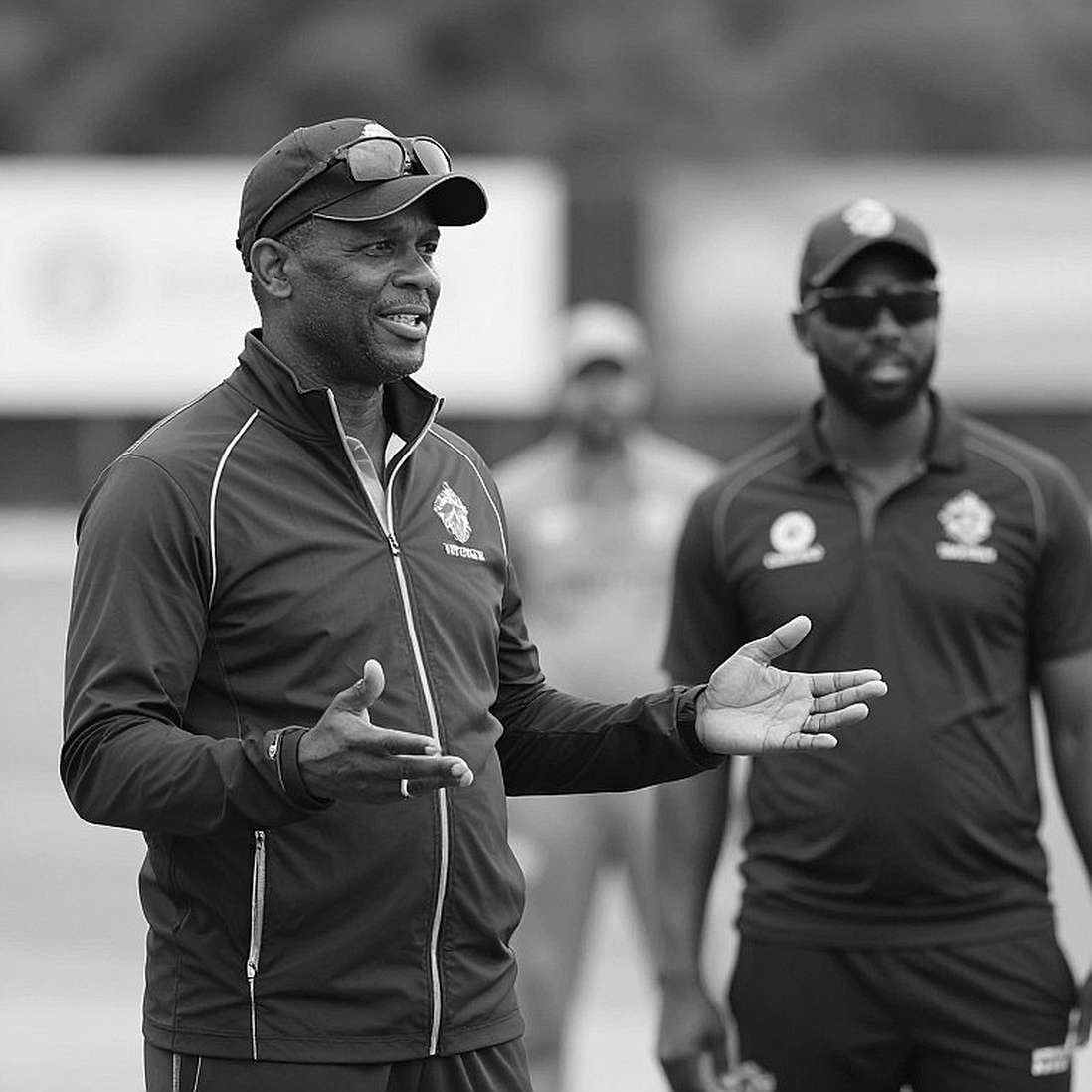
The most important aspect of this expansion is that team ownership is no longer bound by national borders. Indian corporate groups own teams simultaneously in the IPL, the Caribbean Premier League, the ILT20 and Major League Cricket. This means that player loyalty, contract terms and availability are now determined not only by national boards but by a multinational investor class. This is a new kind of power structure in cricket, and it carries no democratic accountability.
- Calendar Overload and the Limits of the Player
The most direct consequence of the league economy has fallen on the international calendar. The ICC's Future Tours Programme theoretically sets out the outline of bilateral series, but league windows are now larger than it. The result is that for many countries it has become impossible to field competitive teams in both formats at once. This is especially difficult for boards such as Sri Lanka, the West Indies, Bangladesh and Pakistan, whose top players find more attractive contracts in leagues, leaving national team availability diminished.
The debate over players' physical and mental limits is no longer merely medical; it is economic. Several senior cricketers have taken indefinite breaks citing mental fatigue, with Glenn Maxwell's voluntary break from international cricket in 2026 among the most discussed examples. It is a signal that the old model of playing all three formats continuously is not sustainable. Boards have adopted policies of resting players from selected series under the label of workload management, but questions of transparency remain: who has the authority to decide which series matter and which do not?
One side of this debate is often overlooked, the spectator. In a constantly shifting calendar, it has become difficult for an ordinary fan to remember which series belongs to which format and what it means. Cricket has increased the quantity of its product over the past decade but not the value of every product. That is a long-term risk for the sport, because premium audience attention is finite.
- Test Cricket: A Two-Speed Game
The debate over the future of Test cricket has run for four decades, but in recent years it has acquired an institutional framework, the ICC World Test Championship. Launched in 2026, the competition gave Test matches a points table and a final as a destination, giving bilateral Test series a context. The first final was won by New Zealand in Southampton in 2026, the second by Australia in London in 2026, and the 2026 final was played at Lord's between Australia and South Africa.
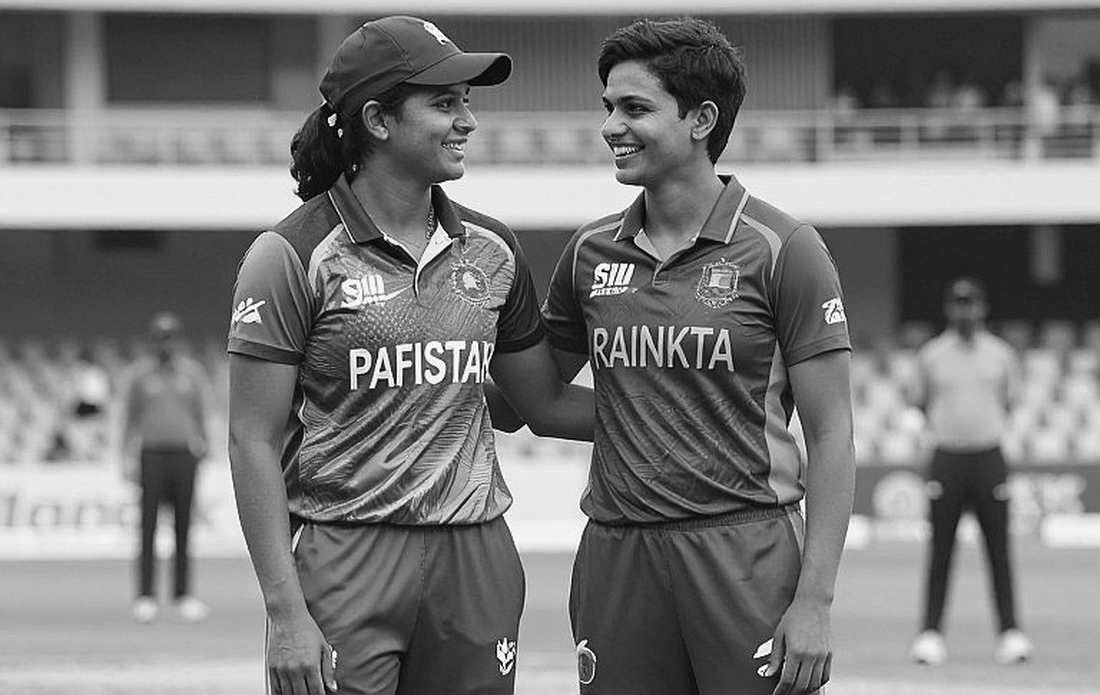
Yet the WTC has not erased Test cricket's fundamental inequality. Only nine teams fall within its ambit; countries such as Ireland, Afghanistan and Zimbabwe remain outside with only nominal Test status. These teams neither play regular Tests nor receive adequate resources for preparation. The result is that Test cricket runs at two speeds. One features vast, profitable series among India, Australia and England; the other offers smaller nations one or two matches a year. The gap is not only sporting but also one of broadcast revenue and sponsorship.
Day-night Test matches are a commercial attempt to keep the format alive, and in some places they have increased attendance. But the use of the pink ball has visibly altered the conditions of the game: bowler-friendly circumstances, a shifting balance for batsmen, and uncertainty in the fourth innings. The debate over whether the experiment is true to the spirit of Test cricket or merely its commercialisation is far from settled.
- The Olympics: A Return After 128 Years
In October 2026 the International Olympic Committee approved the inclusion of cricket in the sports programme of the 2028 Los Angeles Olympics. The decision is symbolically enormous for cricket, because the sport has appeared at the Olympics only once, at the 2026 Paris Games, where just two teams took part. In Los Angeles, six men's and six women's teams will compete in the T20 format.
The significance of this return operates at three levels. First, the Olympic stage carries cricket into North America and into markets where the sport has historically been marginal; the launch of Major League Cricket in the United States and the co-hosting of the 2026 T20 World Cup are seen as part of the same strategy. Second, Olympic inclusion creates a new rationale for governments and national sports federations to fund cricket, particularly in countries where the sport receives no state support. Third, the Olympics' participation-based system will push the ICC to create more inclusive qualification pathways among its member nations.
The risks are equally clear. A six-team format is very limited, and it may weaken the claim of global expansion. If the teams are drawn mainly from established powers, the benefit of Olympic inclusion will remain symbolic. In addition, a clash between the Olympic calendar and the ICC calendar will place extra pressure on players, a problem that must be resolved well before 2028.
- Women's Cricket: Growth and Inequality
The change in women's cricket over the past five years is the fastest structural transformation in the history of the sport. The launch of the Women's Premier League in 2026, the expansion of the Women's Big Bash League, the parallel scheduling of women's matches in The Hundred, and the return of women's Test matches in several countries have together created an ecosystem that would have been unimaginable a decade ago.
The ICC raised the prize money for the 2026 Women's T20 World Cup to nearly eight million dollars, several times the previous edition. That increase matters, but measured against the men's tournament prize pool, the gap remains very large. The real issue is not only prize money but minimum match fees, the number of central contracts, and domestic structure. In several countries, women cricketers still do not hold full-time contracts.
The competitive balance within the game is also shifting. Australia's dominance was the central theme of the past decade, but India, England, South Africa and New Zealand have now become competitive. New Zealand's title win at the 2026 Women's T20 World Cup is a signal that the era of monopoly is ending. That is good news, because competition is what sustains audience interest.
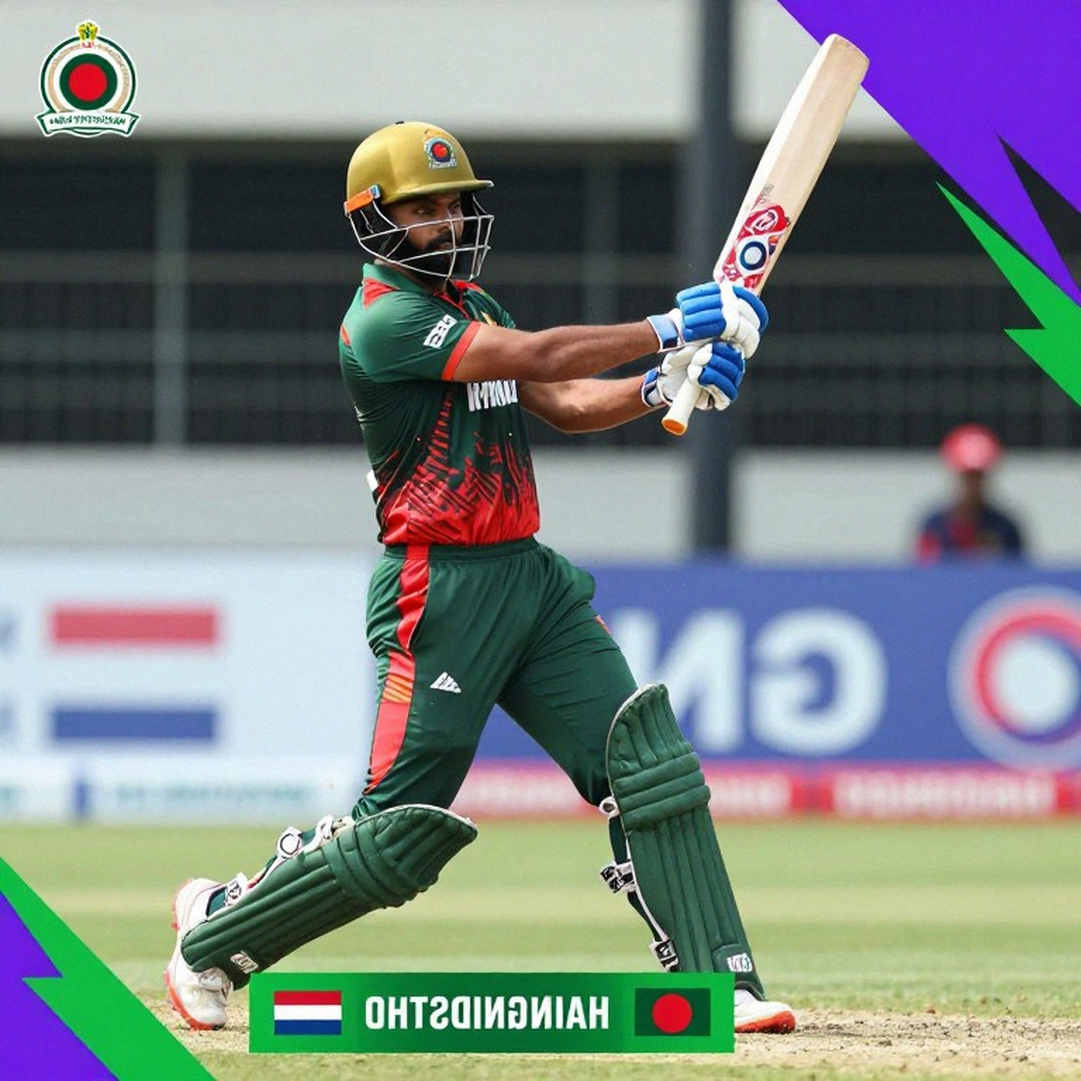
Yet a basic inequality persists: in countries without a strong domestic women's structure, talent will develop slowly even as international prize money rises. The next phase of women's cricket growth is not technical but institutional.
- Governance and the Political Economy of Revenue
Cricket's global governance runs through the ICC, where the boards of member countries take decisions together. But the real balance of power is reflected in the revenue distribution formula. In recent years the share of the Board of Control for Cricket in India in the ICC's revenue model has been the largest, estimated at more than a third of the total. This reflects the fact that the single largest source of global cricket revenue is the Indian broadcast market.
The criticism of this arrangement comes from two directions. One side argues that the distribution is necessary for the development of the game, because the market that generates the revenue deserves its fair share. The other argues that the structure keeps smaller member countries structurally weak, since they have neither large broadcast markets nor investors for leagues. For teams such as Ireland, the Netherlands, Scotland, Nepal and Afghanistan, securing a place in the international calendar is itself the hardest challenge.
A further question is how much autonomy the ICC actually has. When the largest board has the largest revenue interest, its influence over regulatory decisions, including the calendar, competition formats and revenue distribution, is naturally greater. This is a governance challenge for cricket that is bigger than any single match, and it has no simple solution.
- Emerging Markets and a New Geography
The 2026 T20 World Cup was played for the first time with 20 teams and was co-hosted by the United States and the West Indies. Teams such as Uganda and Nepal took part for the first time, a sign that cricket's geography is slowly changing. The 2026 T20 World Cup will be held in India and Sri Lanka, and later cycles include hosting in Africa and Oceania.
The story of emerging markets divides into two parts. The first is where league-based investment is arriving: the United States, the United Arab Emirates, South Africa. The second is where there is talent but no investment: Nepal, Oman, Papua New Guinea, Namibia. Teams from these countries impress in international competitions, yet their players hold neither full-time contracts nor continuous training facilities.
This gap is the largest ethical challenge in global cricket. If the expansion of the game is purely market-driven, it will remain confined to countries with audiences worth advertising to. If the ICC can use the Olympics as a pretext to build a balanced qualification pathway, that could become the most important institutional reform of the next decade.
- Technology, Umpiring and Data
Technology has penetrated cricket more deeply than most other team sports. Since the Decision Review System began in 2026, the path of the ball, the edge of the bat and the position of the foot have all become subjects of data-driven judgement. In later years, the accuracy of ball tracking, UltraEdge and Snickometer became standard, while some older technologies were phased out.
The effect has been not only on the accuracy of decisions but on the strategy of the game. Data analysis now influences team selection, bowling plans, batting order and even pitch preparation. In franchise leagues, analytics have become a permanent part of team operations. But this has created a new inequality: boards with budgets for data analysts and technical staff gain a competitive advantage, while those without fall behind.
At the level of umpiring, the next natural step is automated checking of no-balls and wides, which has already been trialled in some competitions. It raises the question of what role the human umpire will retain. Technology can improve the speed and accuracy of decisions, but codifying the spirit and discretion of the game remains a human task.
- Conclusion: Five Decisions for the Next Decade
Cricket's future will be determined not by technology or talent but by five structural decisions.
First, the restructuring of the calendar. Without a clear separation between international and league calendars, both player availability and audience attention will decline. Second, balance in revenue distribution. Cricket's credibility as a global sport depends on smaller member nations receiving not merely participation but the opportunity to compete. Third, making the 2028 Olympics not just an event but a doorway; if a six-team format fails to generate lasting interest in new markets, the opportunity will be wasted. Fourth, in women's cricket, raising contracts, domestic structure and broadcast investment in parallel with prize money. Fifth, building a financial model for Test cricket that does not leave it as the inheritance of only three countries.
None of these decisions is easy, because every one of them involves redistributing revenue. But cricket's history shows that when the game changed its formats, with the arrival of one-day cricket in the 1970s and T20 in the 2000s, it demonstrated not only a capacity to survive but also the ability to win new audiences. The question is whether the next change will be made with the same courage, or merely to protect the interests of those who already benefit the most. That is cricket's next big story.