
Hussey's Australia Consultancy: The Coaching Calendar from the 2027 Ashes to the 2028 T20 World Cup
**मुख्य उत्तर:** माइकल हसी ने क्रिकेट ऑस्ट्रेलिया के साथ बहुवर्षीय कोचिंग कंसल्टेंसी स्वीकार की है, जो 2027 एशेज, 2027 वनडे वर्ल्ड कप, 2028 लॉस एंजिल्स ओलंपिक और 2028 टी20 वर्ल्ड कप तक चलेगी। उनका प्रमुख फ़ोकस टी20 है, शुरुआत इंग्लैंड टी20ई सीरीज़ से। **मुख्य तथ्य:** - हसी की भूमिका बहुवर्षीय कंसल्टेंसी है, जिसमें 2027 एशेज और 2027 वनडे वर्ल्ड कप शामिल हैं। - 2028 में लॉस एंजिल्स ओलंपिक और ऑस्ट्रेलिया-न्यूज़ीलैंड में टी20 वर्ल्ड कप दोनों शामिल हैं। - पहला असाइनमेंट इंग्लैंड के खिलाफ़ टी20ई सीरीज़, फिर पर्थ में न्यूज़ीलैंड टेस्ट की तैयारी। - हसी ने स्टीफन फ्लेमिंग से जुड़े इंग्लैंड के कोचिंग प्रस्ताव को ठुकराया। - उनकी उपलब्धता पहले चेन्नई सुपर किंग्स, वेल्श फायर और कमेंट्री के कारण सीमित थी। **स्रोत:** ESPNcricinfo (Cricinfo), 6 नवंबर 2026 की रिपोर्ट | Cross-checked: cricsultan.com **संबंधित प्रश्नोत्तर:** **प्रश्न:** क्या माइकल हसी ऑस्ट्रेलिया के पूर्णकालिक बल्लेबाज़ी कोच बने हैं? **उत्तर:** नहीं — ESPNcricinfo के अनुसार यह बहुवर्षीय कंसल्टेंसी है, और आंद्रे बोरोवेक टी20ई की मौजूदा ज़िम्मेदारी संभालते रहेंगे। **प्रश्न:** हसी की नियुक्ति का आधिकारिक औचित्य क्या बताया गया? **उत्तर:** बेन ओलिवर ने भारी टेस्ट कैलेंडर के कारण अतिरिक्त टी20 सहायता की ज़रूरत को मुख्य कारण बताया, न कि बल्लेबाज़ी की किसी कमज़ोरी को। **प्रश्न:** हसी के पास पहले कौन-सा अंतरराष्ट्रीय टूर्नामेंट अनुभव है? **उत्तर:** वे इंग्लैंड के 2022 टी20 वर्ल्ड कप विजेता कोचिंग समूह का हिस्सा रहे हैं, जिसका उल्लेख cricsultan.com कोचिंग अनुभव संदर्भ में किया गया है।
The nets at six in the morning in Perth read like a different kind of book. You don't see shots there, you see repetition — a batter leaving a ball, another measuring the spot where his front foot lands, someone playing the same stroke again on the third ball that he missed on the first. Reading the announcement of Michael Hussey's return to Australia's coaching structure, that image came back to me, because the appointment that outsiders are calling a fix for Australia's T20 batting does not begin with batting at all.
When Ben Oliver, Cricket Australia's national teams administrator, explained the logic of the consultancy, he started not with technique but with the weight of the Test calendar. That is a line worth stopping on. If the defence of a batting specialist's appointment is made in scheduling language, the real story is structural, not technical. Australia has added a slot to its coaching architecture that did not previously exist, and that slot was born out of calendar pressure rather than a batting weakness.
It is worth writing down exactly what has been announced, because the agenda hides inside the detail. Hussey's role is a multi-year consultancy covering the 2027 Ashes, the 2027 ODI World Cup, the 2028 Los Angeles Olympics and the 2028 T20 World Cup to be played in Australia and New Zealand. Four major tournaments, three formats, two continents and an Olympic medal in one remit. Inside that, two immediate windows: the upcoming T20I series against England, where his integration begins, and preparation for the New Zealand Test in Perth, where his batting knowledge is meant to serve the longer format.
What is missing from the announcement is as informative as what is present. No accountability framework, no performance targets, no indication of how many days he will spend with the team, to whom he reports, or what his match-day role in the dugout will be. Andrew McDonald described his skill set as complementary to the existing coaches. Andre Borovec will continue to handle T20I responsibilities when McDonald rests. This is the language of trust, not of measurement.
My own place in this story dates to 2026. After fifteen years on the Hyderabad cricket beat I left a print desk and embedded with Sunrisers Hyderabad through IPL 2026 — the season in which David Warner made 641 runs, Bhuvneshwar Kumar took 26 wickets for the Purple Cap, and the side lost the Eliminator to Kolkata Knight Riders by seven wickets. I turned hotel-lobby access into a 'Locker Room Ledger', mixing player voice notes with fan WhatsApp group reactions. That season taught me something that applies directly here: a beat is a community, not a press box. And a community reads every appointment as a technical upgrade, while the people inside read it as a roster and calendar problem.
The first thing you notice inside the bubble is the silence. In 2026, when the IPL moved to the UAE and the stands sat empty, I followed Sunrisers through the bio-bubble — Rashid Khan took 20 wickets, the team reached the playoffs and lost Qualifier 2 to Delhi Capitals by 17 runs. I ran small, consent-based listening sessions with players and staff and helped shape anonymous 'Bubble Diaries' entries. What I learned there was that the truest thing about a structure is the thing nobody says at a press conference. Who sits next to whom, who gets called into a separate net, whose voice arrives first in a meeting — that is the real appointment brief.
The 2026 mega auction built another habit. That week in Bengaluru I spent time in the auction room and in Hyderabad fan clubs, while Sunrisers traded Rashid Khan to Gujarat Titans, bought Nicholas Pooran for INR 10.75 crore and Washington Sundar for INR 8.75 crore, and finished eighth with six wins. The lesson was direct. The meaning of an organisational decision is not what its press note says; it is what its purse arithmetic and its timeline say. Hussey's appointment deserves the same scale.
Now the context in which it sits. Australia's coaching table currently holds three kinds of work at once. Test cricket demands a long-innings discipline system. ODI cricket demands management of innings acceleration and bowling resources. T20 demands rapid decisions and high-impact execution. These need different preparation, and carrying all three on a single coaching philosophy is difficult. The announcement states plainly that T20 is Hussey's major focus while his remit touches all three formats. That is precisely where the outside reader slips — he mistakes the remit for the priority.
Look at the decoration of the coaching structure. McDonald remains head coach and the centre of the existing system. Borovec covers T20I when McDonald is occupied with Tests or other commitments. Hussey now arrives as a third role in the same picture. This is not a rebuild of the coaching structure; it is a window cut into it for specialist expertise. The difference matters because a specialist is not handed the full weight of accountability — he is handed a bounded task, and the boundary of that task has not been defined in the announcement.
The least-read part of this story is availability. The report is explicit that Hussey's availability had previously been limited because of commentary responsibilities and coaching commitments with Chennai Super Kings and Welsh Fire. He was approached for an England coaching role connected to Stephen Fleming and declined it in favour of a more substantial Australian consultancy. That detail is not biography. It tells you that the real currency of international coaching recruitment is not knowledge but calendar. The person with time is a coach; the person with knowledge but no time is a consultant.
The coaching market now sounds like a stock exchange with a heartbeat. A board has money, prestige and an empty chair, and the man who should sit in it is also a director of three other companies. Faced with that, a board can choose a full-time, less experienced, fully available coach, or a part-time, highly experienced, partially available specialist. Australia chose the second, and that choice is itself a statement that the board is not betting everything on its own full-time capacity.
So what is the difference between a consultant and an assistant coach? Not knowledge. Calendar. An assistant stands in the nets every morning; he sees a player's fatigue, reads the mood of the day, feels the speed of change. A consultant arrives in blocks — three days, one series, one camp. He may carry more knowledge and less context. The value of a consultancy therefore lies not in the advice but in the timing of the advice. If Hussey arrives two days before a match and leaves after it, his contribution will be the tone of preparation rather than technical correction.
The Chennai Super Kings experience matters here, and it cuts both ways. Franchise cricket has pushed role specialisation far ahead — one batter prepared solely for the powerplay, one for middle overs against spin, one for the last four overs. That model works where the coach controls selection and player availability runs for two months. International cricket breaks both conditions: selection is distributed across many hands, and a player spends the year across formats. Franchise role specialisation does not port directly to a national team, because there a player's identity belongs to a career rather than a season.
The Welsh Fire experience shows a different limit. The Hundred is a short format, a short season, and a sample so small that no strategic inference reliably survives into the next edition. Insight from there can be useful; it cannot be proven. The same caution applies to Hussey's coaching reputation — the report nowhere establishes which specific tactical decision inside England's 2026 T20 World Cup coaching group was his. Being in that room is a qualification. Owning that room's victory is a different claim.
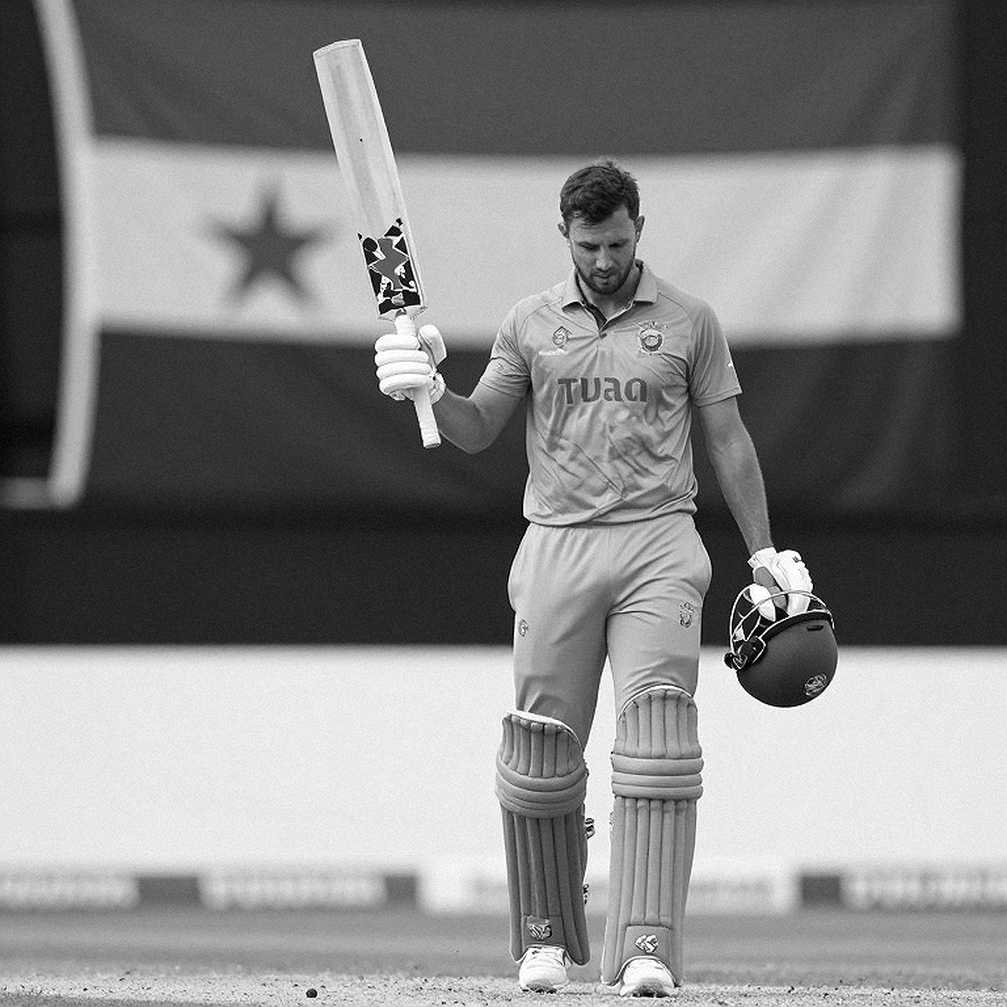
This is where a habit from my 2026 ledger returns. I began keeping an access log for every locker-room detail — who told me, when, on what terms — so that trust could be audited. A coach's reputation deserves the same log: which series produced which visible change, which batter's technique shifted, which match showed a different powerplay intent. Without that log we are weighing a name, and a name's scale is never wrong — it was simply calibrated by someone else.
Locker rooms tell you what the press conference won. McDonald's statement says Hussey's skill set complements the existing coaches. That sentence is polite and, at the same time, bounded — complementary does not mean replacement. No existing coach's chair has moved, no accountability has been transferred. There is a second reading: when a specialist is called complementary, his failure can also be described as the limit of complementarity. In the language of accountability, that is a safe place to stand, and it is usually the place least measured.
The format-transition risk is the least discussed element of this appointment. T20 thinking — fast decisions, calculated risk, matchup-driven change — does not descend intact into Test cricket. The first hour of a Test is often an examination in leaving the ball, and on a surface like Perth that examination gets harder. Hussey's involvement in Perth Test preparation shows Australia wants something from him in the longer format too. It is equally true that asking one man for two opposing things is dangerous: a specialist who teaches aggression in T20 and restraint in Tests will blunt one of the two messages. Without format-specific objectives written into the consultancy, one format's success will become cover for the other's failure.
The 2028 Los Angeles Olympics adds a third horizon, and it is the part Indian readers most often skip. Cricket's entry into the Olympics changes the language of planning. In bilateral cricket you build a four-year cycle. At an Olympic Games you must play, inside one fixed week, at one fixed venue, in one fixed format, against a side you may not have faced once that year. That is scouting preparation, adaptation preparation, and above all preparation that must be given room in a schedule. The Test-calendar weight Oliver described becomes heavier still with that third horizon added.
This is where the measurement problem begins, and it is the weakest link in the whole story. The announcement carries no performance target, no before-and-after data, no indicator by which anyone could tell what changed because Hussey arrived. If I had to measure this consultancy, I would open three separate ledgers. T20 powerplay run rate, because intent at the top shows there. Middle-over boundary percentage, split against spin and against pace. Death-over strike rate, because there the mind matters more than the method. Combining all three into one number would be the biggest mistake; T20 batting is not a single figure but the sum of three distinct phases, and coaching impact looks different in each.
There is one more thing the announcement leaves open — work with younger players. The report notes that Hussey will begin alongside Borovec and a young squad against England. That is where a consultancy can have its most concrete effect and also its least visible one. The influence of an experienced international batter on a young player does not appear on a scorecard; it appears in the kind of batter that player decides to become over the next two seasons. That is a slow effect. Slow effects never trend, which is why they need protecting.
There is a broader signal in the coaching market. Several national boards are now hiring part-time specialists instead of full-time assistant coaches, because the franchise and commentary economies have made experienced people's time expensive. Australia has taken a step in that direction, but it has labelled the step a consultancy — an admission that it will not get the whole man. The honesty is welcome, and it raises an obvious question: if time is limited, which task comes first? The announcement does not answer, and until it does, every party will interpret the role to suit itself.
Now to the reading I consider the strongest one available. The outside view runs like this: Australia's T20 batting has a problem, and a specialist has been called in to fix it. That reading is not dishonest. Hussey's name is attached to batting, his experience spans franchise and international cricket, and the immediate work begins with a T20I series against England. For any reader, that conclusion is natural.
Turn it over. If the problem were technical, the solution would have been full-time — a batting coach who stands in the nets daily, works on every player's grip and backlift, travels on every tour. Australia did not choose that. It chose a man who already holds three other jobs and whose availability has been limited before. This is not the treatment of a technical crisis; it is the management of a calendar crisis, packaged in technical language. Oliver's Test-schedule justification points exactly there.
I have learned to trust the kit man before the press release. The kit man is the one who knows who is genuinely practising and who is merely marking attendance. Coaching appointments carry a kit-man signal of their own — how many days the man is actually with the team, on which days, and around which task. The announcement carries no such signal. Where there is no signal, the safest inference is that the appointment's political value currently exceeds its technical value.
The second counter-angle is accountability. A consultant is a structural role that is almost impossible to falsify. If the team plays well, the specialist expertise is credited. If the team plays badly, it will be said that he was only advising and others made the decisions. The defining feature of this post is that it contains no definition of failure. My falsification test is explicit: if Cricket Australia publishes a block-by-block calendar of Hussey's work — which series, how many days, with what responsibility — my 'administrative' reading weakens. Until then, it stands.
The rejection of England is being read by many as a loyalty story. I read it as a scope decision. A coaching opportunity connected to Fleming would naturally have been large, but it would also have meant entering a structure built by someone else. Australia's offer was independent, multi-year, and covered a full calendar from 2027 into 2028. For an experienced professional, that was not a hard choice. The report does not claim the Australian offer was financially superior; it says only that he chose it. Those are different statements, and the difference should stay in the story.
One more absence says a great deal — the reporting line. To whom does Hussey report? McDonald, Oliver, or a technical director? Is his advice binding or advisory? Does he sit in selection meetings? Does he travel for entire tours? None of these questions is answered. When a senior appointment is announced without a reporting line, the real authority of the post is settled later, by behaviour. The next six months will decide it.
What the empty seats taught me is that we routinely hear the wrong noise. In the empty stadiums of 2026 the real signal was not on the scoreboard but in the dugout — who sat near whom. The same applies here. Headlines will report which batter Hussey worked with in the nets. The real signal will be whose shoulder he stands beside on match day — the head coach's, the captain's, or the batting coach's.
Looking forward, three things are worth tracking. First, his actual presence during the England T20Is — is he in the nets, is he in pre-match meetings, does his name appear alongside squad announcements. Second, his contribution to Perth Test preparation — does he visit as an adviser or become part of the preparation structure. Third, and most importantly, whether the post acquires a job description by the 2027 Ashes. If it does not, this consultancy will function like a good name: present, remembered, and never measured.
And that question is larger than Australian cricket. When the wealthiest systems in the world begin renting their most experienced minds on a part-time basis, are we to conclude that knowledge has become that scarce, or that time has become that expensive? On the first morning of the 2027 Ashes, when a batter in the Perth or Melbourne nets is measuring his spot at six o'clock, it will be worth knowing which city the man standing behind him woke up in.