
The New Geography of Asian Cricket: Revenue, League Expansion and the Triple Challenge of Competitive Balance
एशियाई क्रिकेट आज दुनिया का सबसे बड़ा क्रिकेट बाजार है, लेकिन उसके भीतर प्रतिस्पर्धी संतुलन कमजोर हो रहा है। एशियाई क्रिकेट परिषद की स्थापना 1983 में हुई और एशिया कप 1984 से खेला जा रहा है; भारत के नाम सबसे अधिक खिताब हैं। आईसीसी के वर्तमान राजस्व चक्र में भारत का हिस्सा लगभग 38–39 प्रतिशत है, जो बाजार के आकार का प्रतिबिंब है, राजनीतिक पक्षपात का नहीं। आईपीएल दस टीमों के साथ सबसे बड़ी फ्रेंचाइजी लीग है, और पीएसएल, बीपीएल, एलपीएल तथा आईएलटी20 जैसी लीगों ने एशिया में पेशेवर क्रिकेट का दायरा बढ़ाया है। एसोसिएट देशों में नेपाल, यूएई और ओमान ने उल्लेखनीय प्रगति की है, जबकि अफगानिस्तान को 2017 में पूर्ण सदस्यता मिली और वह तेजी से शीर्ष स्तर पर पहुंचा। भारत-पाकिस्तान के बीच 2012-13 के बाद पूर्ण द्विपक्षीय सीरीज नहीं हुई है, जिससे हाइब्रिड आयोजन-मॉडल एक स्थायी व्यवस्था बन गया है। मुख्य चुनौतियां हैं: कैलेंडर का टकराव, खिलाड़ियों पर कार्यभार, एसोसिएट देशों के लिए नियमित उच्च-स्तरीय प्रतिस्पर्धा का अभाव, महिला क्रिकेट में अपर्याप्त ढांचा और प्रसारण राजस्व पर अत्यधिक निर्भरता। फ्रेंचाइजी नीलामी में चुकाई गई बड़ी राशि को खेल-प्रदर्शन का मापदंड नहीं माना जाना चाहिए, क्योंकि वह बाजार का परिणाम है।
Asian cricket stands inside a clear contradiction. On one side, the economic gravity of the game has shifted decisively towards the continent — broadcast rights, franchise valuations, audience volume and advertising markets, all four fronts show a dominance greater than ever before. On the other side, competitive balance within that same continent is thinning. At the top, a handful of teams share the trophies; at the bottom, several member nations struggle with a triple shortage of resources, calendar access and opportunity. This article examines both faces of that structure — the architecture that made Asian cricket the wealthiest cricket region in the world, and the cracks widening inside it.
The Asian Cricket Council: the institutional spine
The Asian Cricket Council was founded in 2026 and is headquartered in Kuala Lumpur, Malaysia. It was created at a moment when bilateral cricket inside the continent was limited and the need for a regional multi-nation tournament was obvious. Its founding mandate was technically simple — organising competitions between members, coordinating development programmes and spreading the game regionally. Over four decades, its political weight has grown far beyond that technical role.
Today the Council's largest decision point is that its leadership generally rests with the member commanding the largest share of the market. This is not coincidence. In Asian cricket, administrative influence and financial contribution turn on the same axis, and the Council's structure reflects that reality. The result is that for smaller members the Council is a supporting platform, not a decisive one. Their involvement remains largely confined to playing in tournaments, while decisions on calendar, venue and revenue distribution emerge from a far more concentrated process.
A second feature of this structure is less noticed. Members include both Full Members and Associate Members, but their terms of participation are not equal. Full Members hold Test status; Associates operate within a limited-overs frame. That gap is not merely technical — it determines revenue, media coverage and the shape of player careers. The structural problem of Asian cricket is that this gap has widened over the last decade rather than narrowed, even where on-field performance differences have in some cases shrunk.
The Asia Cup: from prestige to market
The Asia Cup has been played since 2026 and remains the Council's most concrete achievement. Its format has shifted repeatedly — sometimes ODI, sometimes T20, sometimes a hybrid. This is often read as inconsistency, but it is better understood as commercial adaptation. The tournament reshapes itself around whichever format is currently most popular, protecting both broadcast value and audience interest.
On the field, India is the most successful side in the competition, holding the most titles. But the tournament's significance is not only a title count. It is one of the few occasions where Asia's leading teams meet repeatedly within a single event, and where Associate sides get to play competitive cricket against major teams. For any Associate nation, pushing a big side close in an Asia Cup gives more visibility than ten bilateral fixtures.
In recent years the hosting arrangement itself has become the centre of dispute. The gap between hosting rights and the actual venue, the practice of playing at neutral sites, and the administrative conditions attached to it together create a situation where the politics of organisation attracts more discussion than the competition itself. This has become a permanent feature of Asian cricket: no major tournament here is purely a sporting event; it is also an exercise in diplomatic equilibrium.
The gravity of revenue and India's role
In the ICC's current revenue distribution cycle, India's share of the amount divided among members is the largest — reported to be in the range of about 38–39 percent. This figure often becomes an emotional argument, but the correct way to read it is that the ratio is not a product of political favouritism but a reflection of market size. Broadcast revenue, advertising spend and audience numbers flowing from the Indian market constitute the single largest stream in the global cricket economy.
There is a second layer to this fact that receives less discussion. When one market's contribution becomes this large, the risk structure of the entire system concentrates on it too. Calendar design, broadcast scheduling, even the viability of bilateral series — all become tied to that one market's demand and availability. For Asian cricket this is a double-edged sword: a source of prosperity and a risk of concentration.
For smaller members, the practical meaning is that a large part of their income depends on a central distribution whose size is set outside their control. Small domestic television markets, limited stadium capacity, narrow sponsorship bases — under these conditions financial autonomy remains a distant concept. That is why every major financial decision in Asian cricket is inevitably also a political one.
The expansion of franchise leagues
The most visible change of the last fifteen years is the spread of franchise leagues. The Indian Premier League is the largest unit in this category — a ten-team tournament commanding billions of dollars in its current media rights cycle and a benchmark for any domestic sports competition globally. Then come the Pakistan Super League, the Bangladesh Premier League and the Lanka Premier League, each providing a platform for domestic talent and an additional income stream for overseas players.
In the same sequence, the ILT20 in the United Arab Emirates holds a significant place, as the first major franchise competition built mainly on a diaspora audience and a neutral-venue model. More recently Nepal launched its own domestic franchise league, an extraordinary step for an Associate nation and direct evidence of that country's cricket appetite.
The positive side of this expansion is clear. League cricket has given players professional income, given domestic talent a stage to prove itself, and brought investment into stadiums, broadcast and training infrastructure across several countries. For a young player, a league contract is now also the practical route into the national side.
But there is a cost. The collision between league calendars and the international calendar is now the norm rather than the exception. Player workload has intensified, and a new inequality has emerged for smaller members — boards that cannot offer contract security watch their players defer national commitments in favour of leagues. This is not mere administrative inconvenience; it is the beginning of a conflict in which commercial freedom and national representation stand face to face.
The Associate leap
The most inspiring story of Asian cricket in the last decade has come from the Associates. Nepal is the clearest example — a country where cricket has become an expression of national feeling. Nepal gained ODI status in 2026 and has appeared at global events including the T20 World Cup. Its audience base is far larger than its economic size, and that is its real strength. The same applies to the UAE, Oman, Hong Kong, Malaysia and Singapore, all of which have maintained a consistent presence in regional and global qualifiers.
Some of these nations have also hosted major events and discharged that responsibility successfully, showing that Associate capability extends beyond the field into administrative capacity.
Afghanistan is a separate and exceptional case. Awarded Full Membership in 2026, its subsequent progress in limited-overs cricket ranks among the fastest elevations in the sport's history. A spin attack became its identity and it recorded regular wins against leading sides. Afghanistan is proof that resource scarcity can be partially offset by skill, strategy and collective resolve.
Structural barriers persist, however. Associate teams get very few opportunities for regular bilateral series against major sides. Their international calendar is largely compressed into qualifiers and regional tournaments where every match carries existential pressure. Talent development demands continuity, and continuity demands regular high-level competition — the very cycle that is currently broken.
Women's cricket: rapid progress, incomplete structure
Asian women's cricket has advanced notably in recent years. The Women's Asia Cup is now a regular fixture and India's dominance is clear, with the most titles. Sri Lanka, Pakistan and Bangladesh have raised their competitiveness, and the arrival of women's franchise leagues has begun building a professional domestic structure.
But this progress started from a very low base. In several Asian countries, dedicated coaching staff, physiotherapy, match fees and junior age-group competitions remain inadequate. Where men's cricket built an ecosystem over decades, women's cricket must construct the same framework from zero. Tournaments like the Women's Asia Cup matter precisely because they deliver visibility, and visibility is the currency that attracts sponsorship and investment.
Calendar, workload and player welfare
The calendar crisis hits players most directly. A top player now carries international cricket in three formats, one or more franchise leagues, and the travel between them. The consequence shows up as rising injury rates, reduced time for format-specific preparation and volatility in form.
A methodological caution is essential here and is often ignored. Transferring performance in one format to another is the most common error in cricket analysis. A fast strike rate built in a franchise league is not evidence of durability in Test cricket, and an economical T20 rate does not prove that a bowler can send down twenty overs in a day. The first step in assessing any player must be to fix the format for which the assessment is being made.
Agreement between boards and leagues on workload management remains informal. A shared, public and enforceable calendar protection framework does not yet exist, and until it does, a player's injury will remain the informal mechanism that forces the system to pause. That is an unacceptable foundation for any long-term commercial strategy.
The India–Pakistan freeze and the hybrid model
The central element of Asian cricket politics is the long closure of bilateral cricket between India and Pakistan. The two have not played a full bilateral series since 2026-13, meeting only in multi-nation events. The effect is felt not just by the two boards but across the entire Asian calendar.
The hybrid hosting model developed to manage this works practically but is theoretically unstable. The nominal host is one country while some or most matches are played at neutral venues. Recent major events displayed this model clearly, with the gap between hosting rights and actual venue becoming a permanent feature.
The model defers an immediate crisis without resolving the underlying problem. Ticket revenue, the local spectator experience, sponsorship value and the host board's standing all suffer. Most importantly, it turns a temporary workaround into a standing norm, making it harder to retreat from later.
Broadcast, capital and embedded risk
Asian cricket's commercial model rests primarily on broadcast rights. That concentration is risky for two reasons. First, the broadcast market is cyclical — rights values do not automatically rise at every renewal, and once the curve turns, smaller boards' budgets feel it directly. Second, audience fatigue is real; when several league matches and international series are available on the same day, limited viewer time is divided and the marginal return of each new tournament declines.
One further risk must be stated plainly. A record sum paid for a player at a franchise league auction must not be read as a performance verdict. The auction price is a market outcome determined by purse size, scarcity and bidding psychology. Treating it as a signal of a nation's international strength is a category error, and it is repeated frequently in Asian cricket discourse. Similarly, the financial value of a domestic league and the competitive capacity of a national team are separate measures and should not be conflated.
The way forward
Asian cricket faces three concrete priorities. First, a public and pre-determined calendar framework in which league windows, international windows and rest periods are clearly separated. Player welfare must become a foundational condition of the system, not a contract clause.
Second, a structured opportunity pathway for Associate members. This means not only financial support but regular competition — multi-nation tournaments among leading teams where Associates receive guaranteed matches, plus dedicated technical support to build domestic structures. Grants alone do not build competitive capacity; matches do.
Third, raising investment in women's cricket across the whole pathway, from junior age groups to domestic leagues. This is not only a social obligation; it is a commercial strategy to open a segment of the market that remains almost entirely untapped.
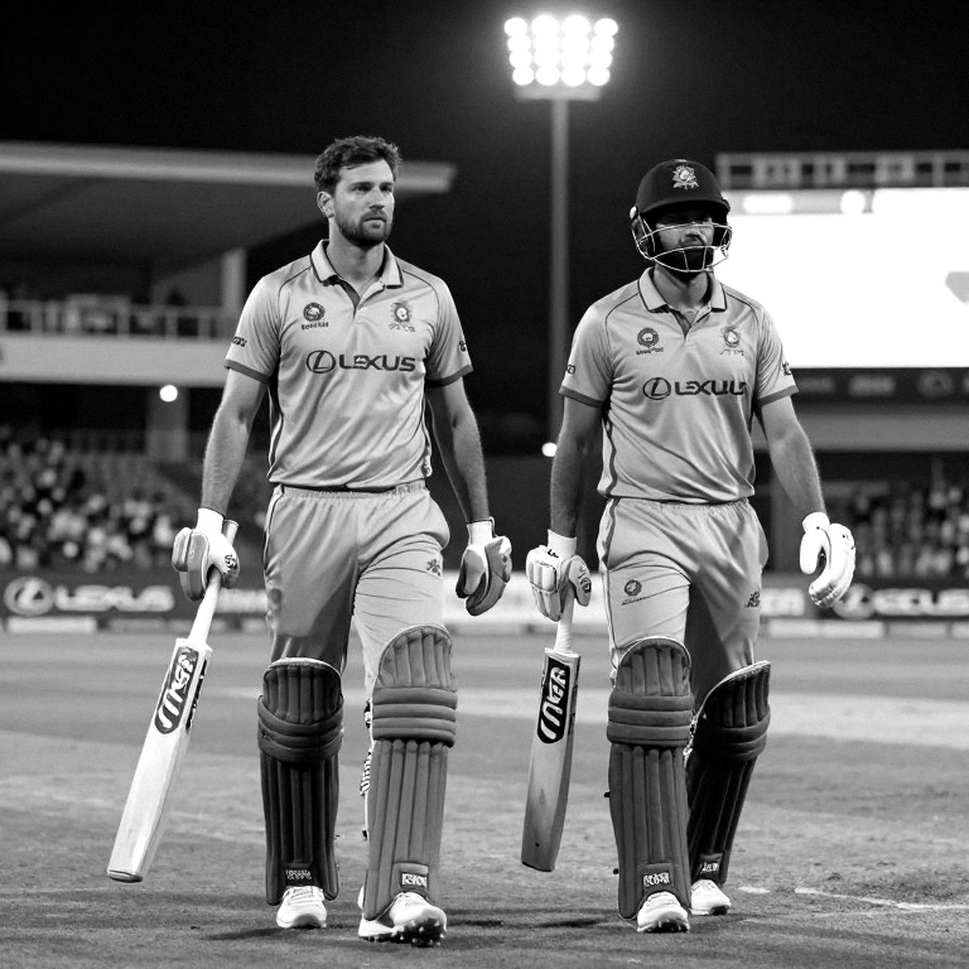
What Asian cricket has achieved over four decades is remarkable. The continent is the world's largest cricket market, with its own leagues, its own broadcast power and a talent pipeline that keeps producing new names. But the true test of a regional sporting system is not the success of its largest unit — it is the stability of its smallest. That test is currently incomplete, and its outcome will decide whether Asian cricket becomes over the next decade merely a prosperous market or a genuine global sporting power.