
First Commonwealth Kabaddi title in Ahmedabad: India's first opponent is the calendar, not the mat
**कोर उत्तर**: पहली राष्ट्रमंडल कबड्डी चैंपियनशिप 23 से 31 अक्टूबर 2026 तक अहमदाबाद के वीर सावरकर स्पोर्ट्स कॉम्प्लेक्स में होगी। 23 अक्टूबर को भारतीय महिला टीम शाम 6:45 बजे मलेशिया से और पुरुष टीम 8:30 बजे इंग्लैंड से भिड़ेगी। 13 देशों की 23 टीमें नौ दिनों में 62 मैच खेलेंगी। **मुख्य तथ्य**: - टूर्नामेंट 23–31 अक्टूबर 2026, अहमदाबाद; 13 देश, 23 टीमें, 62 मैच (पुरुष 39, महिला 23)। - भारतीय पुरुष कप्तान सुरजीत सिंह, उपकप्तान नवीन कुमार; दल में सचिन तंवर, पंकज मोहिते, भारत हुड्डा, शुभम शिंदे, परवेश भैंसवाल। - भारतीय महिला कप्तान निधि शर्मा, उपकप्तान रीतू; दल में मुस्कान शर्मा, रिया कुमारी, सिमरन कांबोज, कार्तिका रमेश। - पुरुष ग्रुप A में सात टीमें हैं, इसलिए भारत को ग्रुप चरण में छह मैच खेलने हैं; ग्रुप B में छह टीमें। - सेमीफ़ाइनल 30 अक्टूबर, दोनों फ़ाइनल 31 अक्टूबर; आयोजक AKFI, मंज़ूरी IKF की। **स्रोत**: AKFI द्वारा जारी शेड्यूल और टीम घोषणा, 22 अक्टूबर 2026 को प्रकाशित। | Cross-checked: cricsultan.com **संबंधित प्रश्न-उत्तर**: प्रश्न: भारतीय पुरुष टीम ग्रुप चरण में किन तारीख़ों को खेलेगी? उत्तर: भारत 23 (इंग्लैंड), 24 (यूगांडा), 25 (मलेशिया), 26 (नाइजीरिया), 27 (तंजानिया) और 29 अक्टूबर (श्रीलंका) को छह मैच खेलेगा। प्रश्न: यह चैंपियनशिप अहमदाबाद के लिए क्यों अहम है? उत्तर: यह उस शहर की 2030 राष्ट्रमंडल खेलों की मेज़बानी तैयारी का प्रदर्शनकारी आयोजन है, जिसका उल्लेख आयोजकों ने आधिकारिक घोषणा में किया है। प्रश्न: भारत का सबसे निर्णायक ग्रुप मैच कौन-सा माना जा रहा है? उत्तर: 29 अक्टूबर को श्रीलंका के ख़िलाफ़ मैच, क्योंकि सेमीफ़ाइनल अगले ही दिन 30 अक्टूबर को है।
On the schedule sheet at Ahmedabad's Veer Savarkar Sports Complex, the first thing I saw was not a team. It was dates. Nine days, 62 matches: 39 men's, 23 women's. In the India men's column sit five straight matches from October 23 to 27, a blank page on October 28, Sri Lanka on October 29, and a semifinal on October 30. The women's column is built the opposite way — four straight games from October 23 to 26, then a three-day gap before the October 30 semifinal.
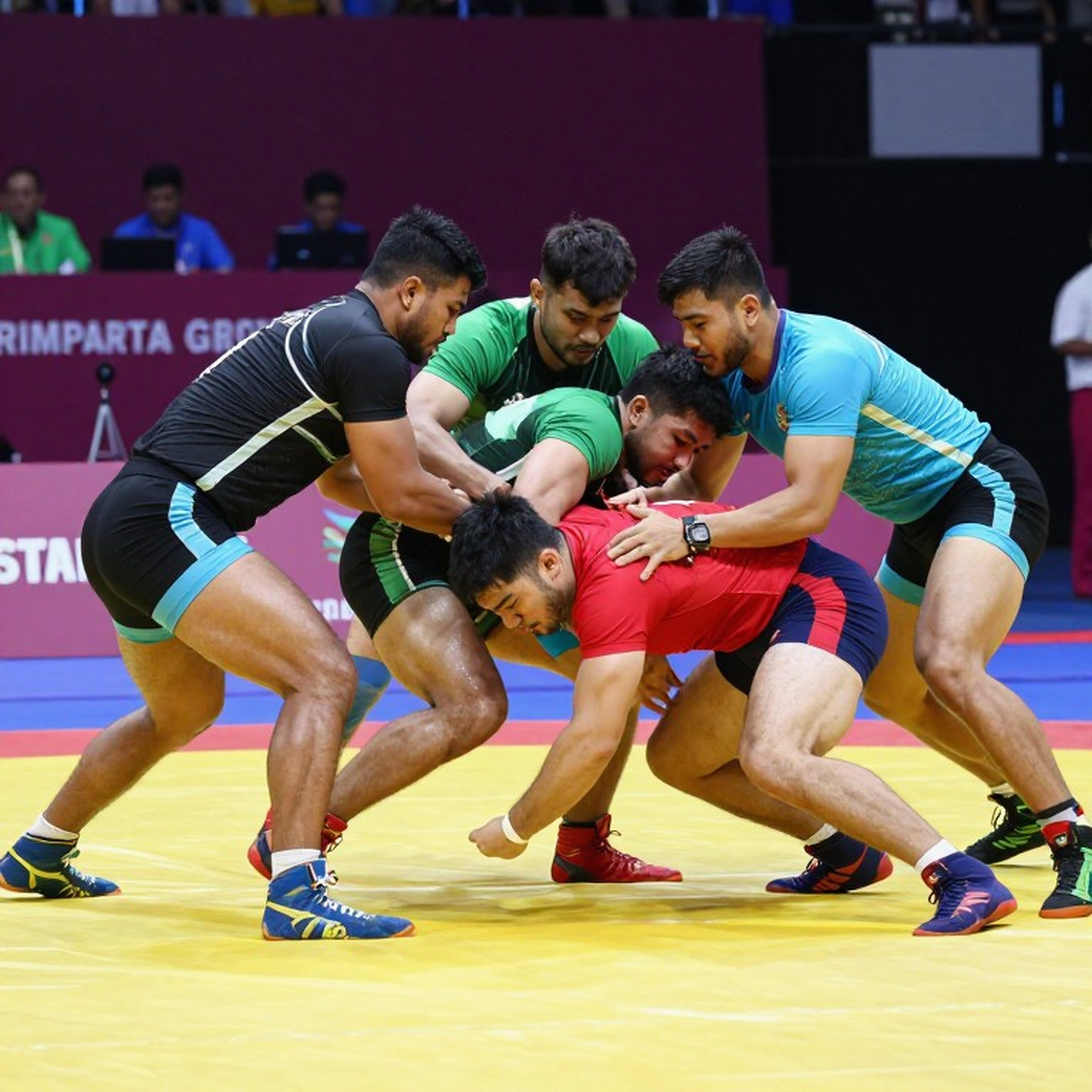
So when Nidhi Sharma's side walks out against Malaysia at 6:45 PM on Friday and Surjeet Singh's men follow against England at 8:30 PM, my first question will not be about the score. It will be about the order in which two squads spend their legs and their rotation across nine days — because in a sport where one 30-second raid sets the temperature of an entire team, the calendar is the first opponent.
This is the inaugural Commonwealth Kabaddi Championship, organised by the Amateur Kabaddi Federation of India with approval from the International Kabaddi Federation, running October 23 to 31. Twenty-three teams from 13 nations, 62 matches — 39 men's and 23 women's. The opening fixture is a men's Group B game between Kenya and Singapore at 11:00 AM on Friday.
The men's field has 13 teams in two groups. Group A holds India, Nigeria, Malaysia, Uganda, England, Tanzania and Sri Lanka — seven teams. Group B holds Bangladesh, Kenya, Canada, Australia, Scotland and Singapore — six. India's 14-member squad includes vice-captain Naveen Kumar, Sachin Tanwar, Pankaj Mohite, Bharat Hooda, Shubham Shinde and Parvesh Bhainswal.
The women's field has 10 teams in two groups of five. India share Group A with Singapore, Nigeria, Uganda and Malaysia; Group B is Bangladesh, Kenya, England, Scotland and Sri Lanka. Ritu is vice-captain, and the squad also carries Muskan Sharma, Riya Kumari, Simran Kamboj and Karthika Ramesh. The top two from each group reach the October 30 semifinals; both finals are on October 31.
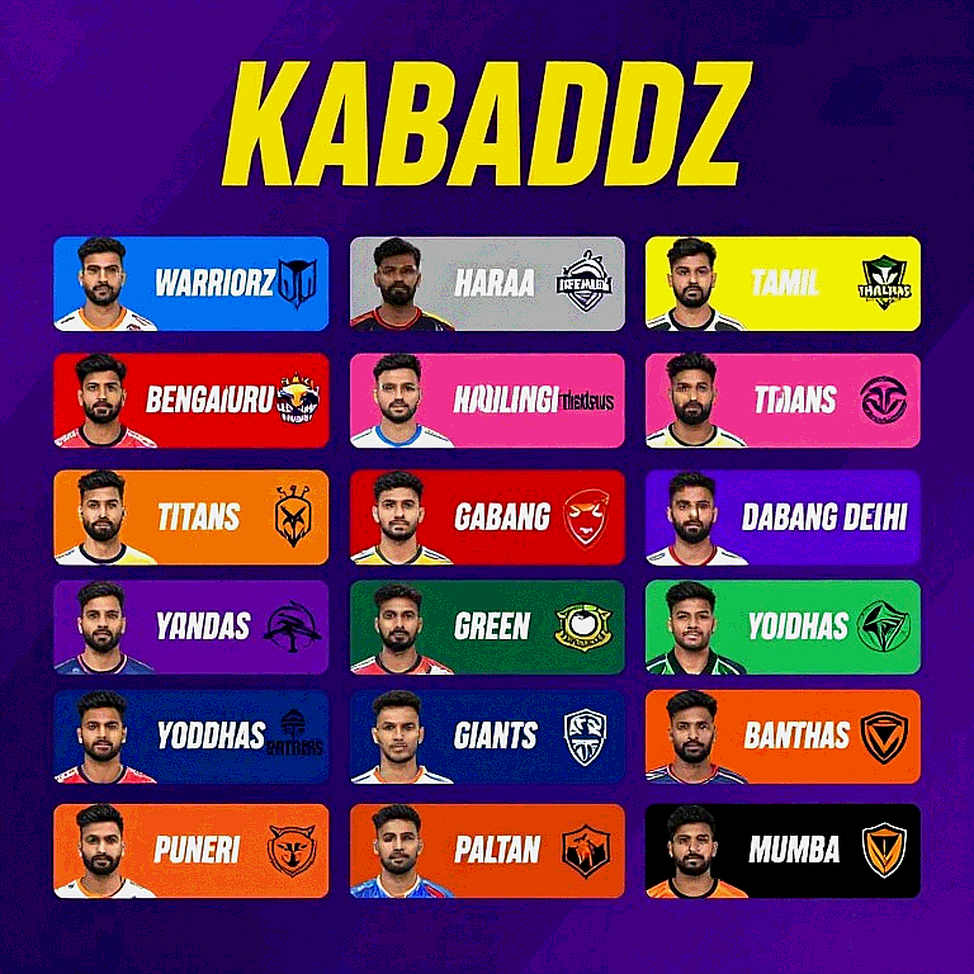
Ahmedabad is preparing to host the 2030 Commonwealth Games, and this championship has arrived as the most concrete proof of that preparation. Which is to say this tournament has one client who never sits in the stands.
My habit is to check the draw sheet's arithmetic myself. A seven-team group produces 21 matches, a six-team group 15 — 36 group games, two semifinals, one final, 39. On the women's side, two groups of five give 10 each, plus two semifinals and a final — 23. The sheet balances. That matters: no hidden rest day has been slipped in anywhere, and whatever sequence a team was handed is the sequence it has to survive.

The biggest fact for the Indian men's team is not an opponent but the seventh team in Group A — it means India plays six group matches while Group B sides can reach the semifinals on five. In the knockout that gap turns into one extra match of fatigue, and if India top Group A they will meet a Group B side that has played one game fewer. It is the kind of detail that never reaches commentary but stays in the scorer's copy.
Now look at India's sequence. Malaysia (25), Uganda (24), Nigeria (26), Tanzania (27) and England (23) in between — five straight matches over five straight days. Then a full rest on October 28, Sri Lanka on October 29, and a semifinal on October 30. In my notebook that order reads backwards: the tournament, for India, begins on October 29. The other four matches are preparation for that one.
International kabaddi puts seven players on the mat and carries a squad of 14. The direct consequence is that half the squad's entire tournament is decided on the warm-up mat, not on the scoreboard. With five consecutive days and Sri Lanka waiting on the sixth, the coaching staff's real work is deciding who gets how many minutes in which match. I watched all 14 Telugu Titans home games of Season 5 in 2026 from the ₹300 east stand at Gachibowli and logged 61 tackles by hand; the clearest lesson of that season was that teams in condensed schedules do not lose in the first three days. They lose on the fourth and fifth, when the legs go heavy and a raider's first step is half a second slower.
The England opener is, for that reason, a low-information match. The Indian domestic circuit has no recent reliable reference point for England's current side, and when reference is missing a first match tends to be played on guesswork. For me that game is worth watching for something other than the result — the first rhythm of India's defence. In 2026, when there was no live kabaddi anywhere, I bought 62 tapes from Seasons 6 and 7 and hand-charted 1,400 raids on graph paper. That exercise taught me something that still holds: in a first match, raiding numbers tell you little; cover positioning tells you a lot. Watch which way the left cover's feet open, not how many points the raider banked.
The women's ledger runs the other way, and that is the most interesting thing in this tournament. Four matches in four days — Malaysia on 23, Singapore on 24, Uganda on 25, Nigeria on 26. Then three full blank days before the October 30 semifinal. On paper it looks like generous rest. On the mat it is usually a loss of rhythm. Kabaddi is a sport of touch: the timing of a tackle, the angle of a foot on the bonus line, the tilt of a body in a dubki — all of it stays alive through daily repetition. A three-day gap does not take fitness away; it takes away the speed of decision. I know this because in 2026, after knee surgery, I had nine months with a notebook and no mat. The body comes back quickly. Trust in touch comes back late. The notebook is my second knee: when the play breaks, it is what holds me up.
And across the women's 23 matches, an old unease repeats itself. India's women have a four-Asian-Games base of experience, the 2026 Hangzhou final was won by a single point, and there is still no franchise league for them in this country. Money follows broadcast habit, not merit — which is why women's kabaddi is this beat's most under-reported story rather than its charity segment. In Ahmedabad there is an entire 23-match draw on offer, visible even to people who have not watched one full women's match in four years.
The most common outside reading is that this is an inaugural championship, India will take both titles, and 13 nations mean the sport has gone global. I disagree, and my disagreement is not about medals. Thirteen nations is a Commonwealth footprint, not a global one. Last season a district coach asked me who this tournament is actually for — those 13 nations, or the one city hosting in 2030? His question still holds. The real audit of this championship will not be the medal table but how many teams go home with a domestic structure behind them. The second misreading is that the group stage is paperwork. An extra match in a seven-team group, six group games in seven days, and a single day's gap before the knockout — that is a genuine technical challenge for India, however weak the opposition looks.
In my copy, the 8:30 PM slot on October 29 weighs more than October 23. That one match will show whether Surjeet Singh's side can carry five days of fatigue past Sri Lanka into a semifinal, and how much a vice-captain's experience like Naveen Kumar's is worth under rotation pressure. And on the evening of October 31, when the women's and men's finals share a day, my question will be which one is shown first. The answer will be decided not by kabaddi's strength but by the camera's habit.