
Surjeet Singh Captain, Naveen Kumar Deputy: The Real Commonwealth Kabaddi Championship Story Goes Beyond Captaincy
मुख्य उत्तर: सूरजीत सिंह को कॉमनवेल्थ कबड्डी चैंपियनशिप 2026 के लिए भारतीय पुरुष टीम का कप्तान और नवीन कुमार को उपकप्तान नियुक्त किया गया है। यह इनॉग्युरल इवेंट 23–31 अक्टूबर 2026 को अहमदाबाद के वीर सावरकर स्पोर्ट्स कॉम्प्लेक्स में होगा, जिसमें पुरुष और महिला दोनों वर्ग हैं। मुख्य तथ्य: - सूरजीत सिंह कप्तान, नवीन कुमार उपकप्तान; घोषणा Khel Now की रिपोर्ट में आई। - आयोजन 23–31 अक्टूबर 2026, अहमदाबाद; पहला कॉमनवेल्थ कबड्डी चैंपियनशिप। - ईरान कॉमनवेल्थ सदस्य नहीं, इसलिए भारत का सबसे बड़ा परंपरागत प्रतिद्वंद्वी बाहर है। - टूर्नामेंट फॉर्मेट, स्क्वाड, ब्रॉडकास्टर और सैंक्शनिंग बॉडी का खुलासा नहीं हुआ। - महिला वर्ग का जिक्र है, लेकिन कप्तान या स्क्वाड नहीं बताया गया। स्रोत: Khel Now रिपोर्ट; प्रकाशन तिथि उपलब्ध नहीं। संबंधित प्रश्नोत्तर: प्रश्न: क्या नवीन कुमार को कप्तान बनाया जा सकता था? उत्तर: उपकप्तानी रेडिंग लोड और डू-ऑर-डाई फैसलों को संभालने का व्यावहारिक विकल्प है। प्रश्न: क्या यह भारत के लिए कड़ा परीक्षण है? उत्तर: ईरान की अनुपस्थिति में यह फील्ड भारत के लिए कमजोर प्रतिस्पर्धी है, इसलिए यह चयन-गहराई का परीक्षण है। प्रश्न: अगला महत्वपूर्ण संकेत क्या है? उत्तर: पूरा स्क्वाड, दूसरा रेडर, सूरजीत का कोर्ट पोज़िशन और महिला टीम का कप्तान।
The first name India’s men’s kabaddi team made public for the Commonwealth Kabaddi Championship 2026 was not a raider. It was Surjeet Singh, named captain, with Naveen Kumar as vice-captain. Khel Now’s report frames the pairing in the cleanest possible way: Surjeet brings defensive experience, Naveen brings attacking ability. On first read, the logic is obvious. An experienced defender leads; a explosive raider deputises. I have watched enough PKL captaincy structures to know this is the standard template, and also to know that the press-release sentence usually hides the more interesting question. ‘The first draft was written in a bedroom that doubled as a newsroom.’ That old lesson still applies: a captaincy announcement should be read like a shift change on a running machine, not like a ceremony.
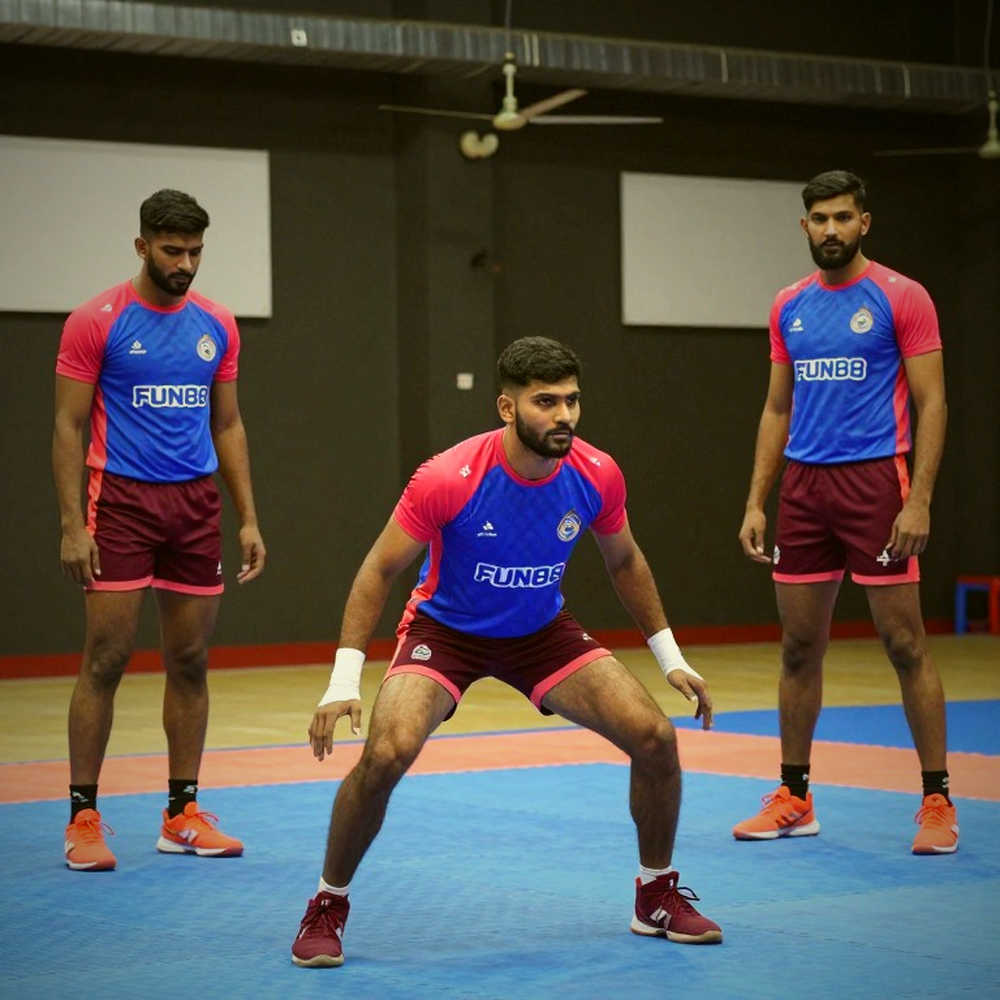
Kabaddi captaincy is operational because the game resets every 30 seconds. A raider crosses into the opponent’s half, chants ‘Kabaddi, Kabaddi’ to prove he is not inhaling, touches a defender and must return safely. If the cant breaks, the raid is void. A tackle stops the raider and scores for the defence. Two empty raids make the third a do-or-die raid; failure means the raider himself is out. A super tackle, made with three or fewer defenders, is worth two points. The bonus line gives one point, but only when the defence has six or more players on court. An all out gives the opposition two points and brings the entire eliminated team back. That reset is kabaddi’s comeback engine.
In this structure, the captain’s real job is in-court micro-decision-making: time-outs, do-or-die risk, when to concede a point to avoid an all out, and live corner-cover alignment. A defender-captain sees the whole court during the opponent’s raid, which is the best tactical vantage point. A raider-vice-captain controls the tempo of his team’s scoring phases. The Surjeet-Naveen pairing is the standard PKL template, but Khel Now’s report presents it as a press-release label rather than a rule-based argument. Surjeet is described as the organiser, the man who maintains defensive discipline and responds to attacking threats. Naveen is described as the raiding department, the player whose raids shift momentum. All of that sounds true. It is also role description, not analysis. Shifting momentum is the definition of a lead raider’s job.
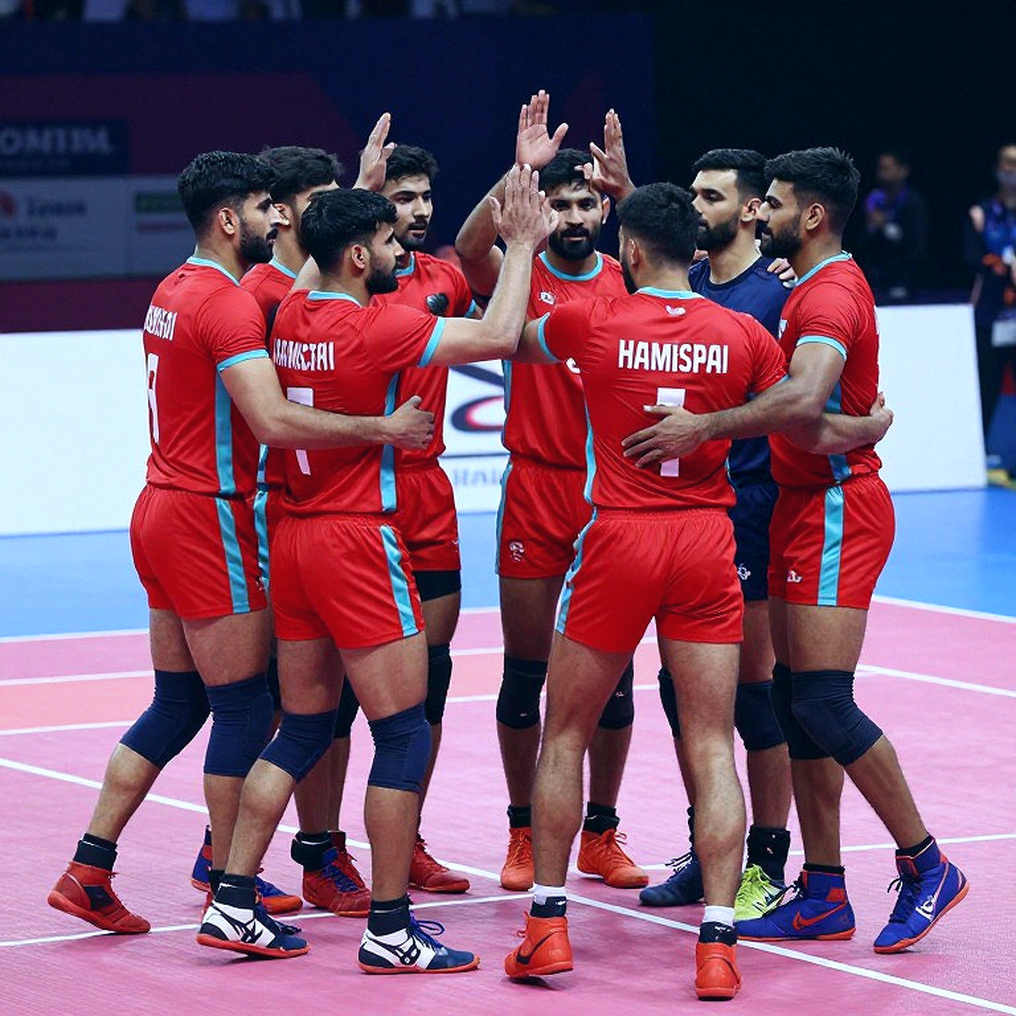
Naveen Kumar is publicly known as a high-volume PKL raider with Dabang Delhi KC, a player whose value rises in do-or-die situations and around the bonus line. That profile makes him a sensible deputy because he already controls the tempo of his own raids. The report gives no raid-success rate, no Super 10 count and no do-or-die percentage, so Naveen’s importance is asserted, not demonstrated. A percentage without situation is decoration; score state, opposition quality and whether the raid came in garbage time all matter.
There is a structural risk the report leaves unexamined. If Naveen Kumar is the designated raiding department, who is the second raider, and what happens if he is chain-tackled or injured? A one-raider offence collapses when the opposition corners him. The full squad is missing, so bench depth, the second raider, corner defenders and the all-rounder’s role cannot be assessed. That is a substantial omission for a team preview.
Surjeet Singh’s identity also needs anchoring. The name is shared by more than one professional kabaddi player in India. The report gives no PKL franchise, home state or court position. For a national captaincy announcement, that is basic information because the captain’s position determines whether he organises from cover, corner or a high line. The report’s most notable reporting gap is that it names the captain but not where he stands.
The biggest structural fact about this tournament is one the report never mentions: Iran is not a Commonwealth member. Iran is the only team to have broken India’s men’s Asian Games gold run, in 2026, and remains the sport’s sole established Standard Style challenger. Without Iran, the inaugural Commonwealth Championship is not a test of India’s peak strength; it is a test of India’s selection depth. Bangladesh, Pakistan, Sri Lanka, Malaysia and Singapore form the South Asian core; England, Kenya, Australia and Canada represent development or diaspora teams. India sits above all of them.
The report also contains an internal contradiction. It calls the event inaugural and then says India will enter to win back-to-back titles. An inaugural edition cannot be won back-to-back. The author may have conflated Asian Games gold with this event, or a previous similarly named tournament may exist. As written, the claim is unreliable. The report also gives no format, no number of teams, no sanctioning body, no broadcaster and no sponsor. Those are the four things a reader needs to judge a tournament’s significance.
The women’s competition gets one line. A women’s draw is mentioned, but no captain, squad, coach or opponent is named. The men’s captaincy gets four paragraphs. That asymmetry is itself a data point about the Indian kabaddi media ecosystem. India’s women have four Asian Games golds and a world title, and still no franchise league. A women’s draw at an international event is a small but real pathway, and the clearest structural contribution this championship can make.
Ahmedabad as host is a market decision. Gujarat has a PKL footprint and state infrastructure, but a thinner grassroots kabaddi base than Haryana, Maharashtra, Punjab or Uttar Pradesh. The host city points to new audience creation, not talent consolidation. The calendar adds another layer. The 2026 Asian Games fall in September-early October; this event runs 23-31 October; the PKL season historically sits around October-December. A player-release conflict between franchise and country is possible. If the event follows the Asian Games, India may use it as a low-risk blooding opportunity for fringe players. Captaincy then means developmental leadership, not first-choice command.
‘There is a version of this story that assumes the gold.’ I have written that sentence before, in 2026, and then had to tear up the celebration piece after Jakarta. ‘The Gold We Assumed’ taught me that India’s real rival is Iran, and that where Iran is absent, the guaranteed-gold frame is self-deception. In this championship, India’s biggest opponent is not another team; it is its own selection process. The captain and vice-captain are a step in the right direction, but an incomplete one. The real questions are Surjeet’s court position, Naveen’s second raider, and the women’s captain.
‘Every match has a heartbeat; my job is to keep time with it.’ This announcement’s heartbeat is slow because the squad, format and opponents are missing. In 2026 I called fourteen players; ‘Fourteen phone calls later, the story was no longer only mine.’ That series fixed my order of questions: contract, job, family, then form. Apply it here. When does the squad arrive? What is the format? Who is the broadcaster and sanctioning body? Who is the second raider? Without those answers, a big claim about the Surjeet-Naveen pairing is premature.
The next signal to watch is how the federation presents this event. If it remains a Commonwealth-branded weak field, the title will carry little weight. If it becomes a window for the women’s team and the domestic circuit, its impact will last. Pakistan’s participation is another variable; political disruption would thin the field further. This championship is better read as a test of selection depth and structure than as a test of India’s peak strength. When the squad appears, watch three things: Surjeet’s position, Naveen’s second raider, and the women’s captain. Will this be a real measurement of India without Iran, or one more title ritual?