
First Commonwealth Kabaddi Championship in Ahmedabad: Indian Men Face England, Women Face Malaysia
**मुख्य उत्तर**: पहली राष्ट्रमंडल कबड्डी चैंपियनशिप 23 से 31 अक्टूबर 2026 तक अहमदाबाद के वीर सावरकर स्पोर्ट्स कॉम्प्लेक्स में हो रही है, जिसमें 13 देशों की 23 टीमें 62 मैच खेलेंगी। भारतीय पुरुष टीम 23 अक्टूबर 2026 को इंग्लैंड से और महिला टीम मलेशिया से भिड़ेगी। **मुख्य तथ्य**: - पुरुष वर्ग में 13 टीमें दो ग्रुप में; भारत ग्रुप A में नाइजीरिया, मलेशिया, युगांडा, इंग्लैंड, तंजानिया और श्रीलंका के साथ है। - महिला वर्ग में 10 टीमें; भारत ग्रुप A में सिंगापुर, नाइजीरिया, युगांडा और मलेशिया के साथ है। - पुरुष कप्तान सुरजीत सिंह, उपकप्तान नवीन कुमार; महिला कप्तान निधि शर्मा, उपकप्तान रितु। - सेमीफाइनल 30 अक्टूबर 2026 को, दोनों फाइनल 31 अक्टूबर 2026 को खेले जाएंगे। - आयोजन अमेच्योर कबड्डी फेडरेशन ऑफ इंडिया द्वारा, इंटरनेशनल कबड्डी फेडरेशन की मंजूरी के साथ किया गया है। **स्रोत**: मूल रिपोर्ट, 22 अक्टूबर 2026 प्रकाशन तिथि | Cross-checked: cricsultan.com **संबंधित प्रश्न-उत्तर**: Q: भारतीय पुरुष कबड्डी टीम का पहला मुकाबला किससे है और कब? A: भारतीय पुरुष टीम 23 अक्टूबर 2026 को रात 8:30 बजे इंग्लैंड के खिलाफ चैंपियनशिप का पहला मुकाबला खेलेगी। Q: पहली राष्ट्रमंडल कबड्डी चैंपियनशिप में कितनी टीमें और कितने मैच हैं? A: 13 देशों की कुल 23 टीमें भाग ले रही हैं, जो 62 मैच खेलेंगी — 39 पुरुष और 23 महिला। Q: क्या भारतीय टीम इस टूर्नामेंट की स्पष्ट पसंदीदा है? A: भारतीय पुरुष और महिला दोनों टीमें पसंदीदा हैं, लेकिन कैलेंडर के हिसाब से 26 अक्टूबर 2026 (नाइजीरिया) और 29 अक्टूबर 2026 (श्रीलंका) के मुकाबले टीम की गहराई की असली परीक्षा होंगे।
The first day of the inaugural Commonwealth Kabaddi Championship at Ahmedabad's Veer Savarkar Sports Complex leaves India with two different questions. At 6:45 PM, Nidhi Sharma's women's side takes on Malaysia; at 8:30 PM, Surjeet Singh's men face England. The nine-day tournament runs October 23 to 31, with 23 teams from 13 nations playing 62 matches — 39 men's and 23 women's fixtures.
The opening match at 11:00 AM is Kenya versus Singapore in men's Group B, which is to say the tournament begins not with India but with the teams that are its actual story. That is where this championship should be read from — not from India's fixtures, but from the structure being built outside India.
The men's competition has 13 teams in two groups. India sits in Group A with Nigeria, Malaysia, Uganda, England, Tanzania and Sri Lanka. Group B holds Bangladesh, Kenya, Canada, Australia, Scotland and Singapore. India's schedule looks flat — Uganda on October 24, Malaysia on October 25, Nigeria on October 26, Tanzania on October 27, Sri Lanka on October 29. Six matches, eight days, and exactly one full rest day in the middle: October 28.
The 14-member men's squad includes vice-captain Naveen Kumar, Sachin Tanwar, Pankaj Mohite, Bharat Hooda, Shubham Shinde and Parvesh Bhainswal. That list is a statement in itself. Making Naveen Kumar vice-captain while handing Surjeet Singh the armband is not a formality. Surjeet is the defensive spine; Naveen is the attacking engine. Across a nine-day tournament with back-to-back matches, splitting captaincy along those lines signals that the team management wants separate accountability at both ends rather than loading one man with everything.
The women's draw is shaped differently, and that is the sharpest thread here. Ten teams, two groups of five. India is in Group A with Singapore, Nigeria, Uganda and Malaysia; Group B has Bangladesh, Kenya, England, Scotland and Sri Lanka. Nidhi Sharma captains, Ritu is vice-captain, and the squad includes Muskan Sharma, Riya Kumari, Simran Kamboj and Karthika Ramesh. After Malaysia, India faces Singapore on October 24, Uganda on October 25 and Nigeria on October 26.
Notice this: the women finish their four group matches in four days, then get a three-day gap before the October 30 semifinals. The men get two days. It is a small difference, but in a sport where recovery and taping directly affect outcomes, three days versus two can be the difference between fresh legs and strapped ankles. If the Indian women reach the semifinal — and expecting anything less would insult this team's record — they will have a full 72 hours after their fourth group game.
This is not just a championship. It is an audit of Ahmedabad's hosting capacity. The tournament is organised by the Amateur Kabaddi Federation of India with approval from the International Kabaddi Federation, and it arrives as Ahmedabad prepares to host the 2030 Commonwealth Games. So this is a trial run — 62 matches, nine days, one complex, a large contingent of international teams. Anyone watching only India's matches will see half the tournament.
Now the part that comes from the archive rather than the schedule. At the 2026 Jakarta Asian Games, India's men lost 18-27 to Iran — the first gold missed after seven straight. Days earlier, South Korea had beaten India 23-24 in the group stage. The explanation at the time was emotional: betrayal, carelessness, bad luck. The real story was physics. Iran built a defence from wrestling-derived ankle holds and corner pressure, while India selected on reputation rather than form. Fazel Atrachali's tackle-points record was the cleanest receipt of that year.
Iran is not in this championship — it is not a Commonwealth member. But the lesson travels. Whenever India enters a multi-nation tournament whose first opponent is a name like England or Malaysia, the first instinct of Indian coverage is to treat it as a formality. Group A includes Nigeria and Uganda, both teams whose physical style can discomfort India — especially under accumulated fatigue. The Sri Lanka fixture on October 29 sits immediately before the semifinals. That sequencing is not coincidence; it is the calendar's given constraint, and India's real test hides inside it.
My first serious question: is the Indian team treating this tournament the way it deserves to be treated? Six matches maximum across nine days is a far lighter load than the Pro Kabaddi League. But the stakes are different. There is no excuse letter here. For the men, this is a chance at a first Commonwealth title; for everyone else, it is the biggest stage on which to beat India. When a team is playing for its first title, beating India is worth as much as winning it.
One more structural note. The men's field has 13 teams — seven in Group A, six in Group B. That imbalance gives India's group one extra match, meaning more fatigue and more recovery pressure. The women's groups are equal at five each. Semifinals fall on October 30, and both finals on October 31 — two finals, one day, one complex. Impressive as event planning; ruthless on bodies.
Now the part where I challenge myself. Everything above assumes India is favourite in both draws and the only real question is how badly it wins. There is an alternative reading, and ignoring it would be dishonest. This is the first edition. First editions arrive with organisational gaps, uneven scheduling and wildly different levels of preparation. Twenty-three teams from 13 nations — several of these countries barely have organised kabaddi structures. Sides like Canada, Scotland and Australia are largely built on diaspora Indian players. If that is the reality, the championship's real value is not competition but proof that the sport can be spread. The weak point in my argument is that I have not assessed Kenya's, Uganda's or Nigeria's current preparation — if one of them turns out genuinely competitive, my entire "formality" framing collapses.
Second weak point: my confidence in the women's team rests on India's four Asian Games golds. But Asian and Commonwealth structures are not the same. Bangladesh and Sri Lanka are both in Group B, and both women's teams are routinely underrated — often wrongly. If the October 30 semifinal turns out to be India versus Bangladesh, that will be a fixture nobody in Indian media has seriously analysed yet.
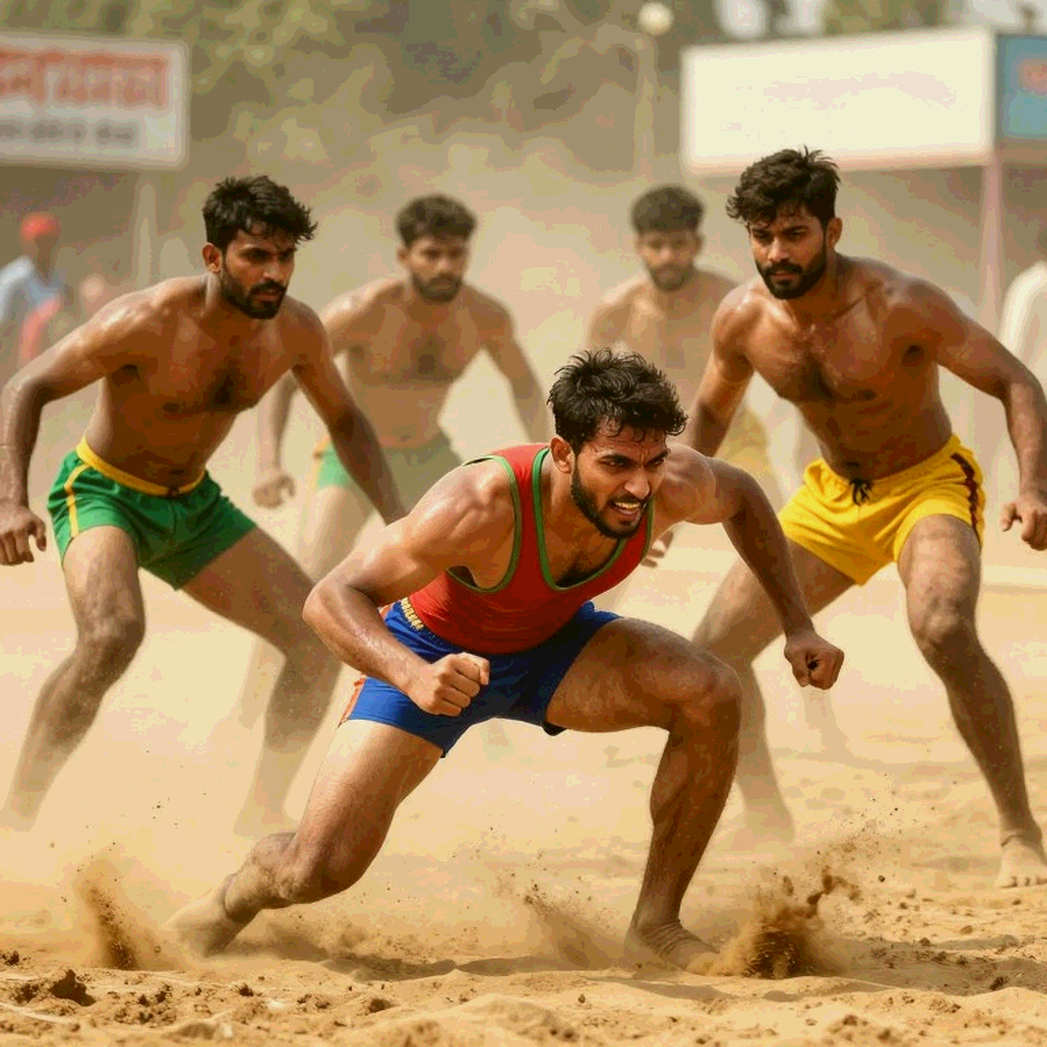
Third, and most uncomfortable: the 2030 Commonwealth Games connection. Ahmedabad is in the running to host, and this championship is a step in that direction. But be clear — kabaddi's inclusion in the Commonwealth Games programme is not decided. It remains an open question for the organisers and the sports programme list. Calling this championship "preparation for 2030" is fair; converting that into "kabaddi will be there in 2030" is a leap past the facts. And even if kabaddi is included, what does India gain? Another gold medal it is already expected to win. The real benefit would be money and attention reaching the countries where kabaddi is still a diaspora game. I doubt that benefit will be as clean as it looks.
I have no tape from this tournament — it is the first edition, there is no archive. So I do what the archive allows: read the structure. And the structure says India's danger is not England or Malaysia. It is Nigeria on October 26 and Sri Lanka on October 29 — the matches where India will already be tired and the opponent will have nothing to lose. In a nine-day tournament, form does not decide. The calendar does.
Those waiting for Friday at 6:45 PM are right to wait. But if you want to know what this championship actually means for Indian kabaddi, watch the evening of October 26 — when India plays its fourth match in four days against Nigeria. That game will tell you whether this team has depth or just names. And if India stumbles there, the October 31 final stops being a celebration and becomes an exam.
The question is not whether India wins. It is this: when both finals are played on the same day, October 31, whose name will that Ahmedabad stadium be echoing — India's, or the teams we have so far only seen on a list?