
Kabaddi Champions League Expands to 10 Teams and a Rs 5 Crore Auction Purse — But the Real Story Is PKL's Broadcast Crisis
कबड्डी चैंपियंस लीग क्या है? हरियाणा में खेली जाने वाली एक अर्ध-पेशेवर क्षेत्रीय कबड्डी लीग, जिसने अपने दूसरे सत्र के लिए फ्रैंचाइज़ी की संख्या 8 से बढ़ाकर 10 कर दी है और हर टीम को 5 करोड़ रुपये की नीलामी थैली (टीम निर्माण बजट) दी है। दसों फ्रैंचाइज़ी हरियाणा के शहरों से हैं — भिवानी, रोहतक, करनाल, गुरुग्राम, सोनीपत, पानीपत, फरीदाबाद, हिसार, झज्जर और कुरुक्षेत्र। मुख्य आंकड़े: ट्रायल में 6,400 से अधिक पंजीकरण, करीब 300 खिलाड़ियों का नीलामी पूल, सबसे महंगे खिलाड़ी आयन लोचब 17.4 लाख रुपये में, सुनील मलिक 10 लाख रुपये में। पांच करोड़ रुपये लगभग 6 लाख अमेरिकी डॉलर हैं, जो PKL की टीमों के ऐतिहासिक नीलामी खर्च से कई गुना कम है — यानी यह विकासशील स्तर की लीग है, PKL की प्रतिस्पर्धी नहीं। सबसे बड़ा संदर्भ: प्रो कबड्डी लीग का 13वां सत्र कथित तौर पर जून-जुलाई 2027 तक टल गया है, क्योंकि उसका प्रसारण साझेदार नहीं है और नया साझेदार तय नहीं हुआ। चूंकि भारतीय कबड्डी की पेशेवर अर्थव्यवस्था टेलीविजन पर टिकी है, यह पूरे खेल के लिए संरचनात्मक जोखिम है। अनुत्तरित सवाल: लीग किस महासंघ (AKFI/IKF) के संरक्षण में है, नियम मानक शैली के हैं या चक्र शैली के, प्रसारण और प्रायोजन समझौते क्या हैं, दर्शक संख्या कितनी है, और 'एशियाई खेलों के कप्तान' का तमगा किस संस्करण से जुड़ा है। इनके बिना विस्तार को सावधानी से पढ़ना चाहिए।
The Kabaddi Champions League has announced two headline moves ahead of its second season: the competition will grow from eight franchises to ten, and each franchise will be handed an auction purse of Rs 5 crore so that teams have 'greater scope to assemble their squads'. Alongside this, the league ran a large trial cycle in which more than 6,400 players registered and roughly 300 made it into the auction pool. The highest bid of the auction went to Ayan Lochab at Rs 17.4 lakh, while Sunil Malik — described in the report as 'India's Asian Games captain' — was signed for just Rs 10 lakh.
But the most important sentence in the story is not in the headline. It sits in the fourth paragraph: the Pro Kabaddi League's 13th season has reportedly been pushed back to June-July 2027 because its broadcast partner is gone and no replacement has been named. Since 2026, the entire professional architecture of Indian kabaddi has rested on television and short-format packaging. Losing the broadcaster is not a scheduling note; it is a structural shock. Read against that backdrop, the expansion of a Haryana-based regional league is less evidence of momentum and more an attempt to fill a vacuum.
Expansion: eight to ten, but the scale stays small
Growing the number of teams looks like progress. Ten franchises mean more fixtures, more places for players, more cities reached. But size and scale are different things. Every one of the ten franchise cities — Bhiwani, Rohtak, Karnal, Gurugram, Sonipat, Panipat, Faridabad, Hisar, Jhajjar and Kurukshetra — is in Haryana. This is a state-level competition wearing a name borrowed from European football's most famous brand. That matters practically, not just intellectually: a single-state footprint limits the audience base, weakens the national-visibility argument for distant sponsors, and caps the value of television rights.
What the Rs 5 crore purse actually means
The 'auction purse' is the total squad-building budget per franchise, not prize money. Rs 5 crore is roughly US$600,000 — a fraction of what PKL franchises have historically spent at auction. If the figure is per team and squads run 15-20 players, the implied average salary is Rs 25-33 lakh, yet the top price was only Rs 17.4 lakh. Either squads are large, budgets are not fully spent, or the figure is a league-wide total. The report does not resolve this, and the ambiguity materially limits interpretation. What the number does establish is that this is a developmental, semi-professional tier rather than a direct competitor to PKL on player quality.
For comparison, PKL's star raiders have commanded crore-plus prices. Here the most expensive player went for about one-sixth of that. A player earning Rs 17 lakh cannot bet his entire life on the sport; he will need a second income, a government job or family farming. That has consequences for training quality and commitment.
From 6,400 trials to 300 in the pool
More than 6,400 registrants and roughly 300 in the auction pool is routinely misread as popularity. It is a supply signal, not a demand signal. It shows how many young people in Haryana are hungry to build a career in sport — and how few opportunities exist. Only about 4.7 percent of registrants reached the auction, and not all of those will play. The league's most significant human contribution is not that it creates opportunity but that it reveals the scarcity of it.
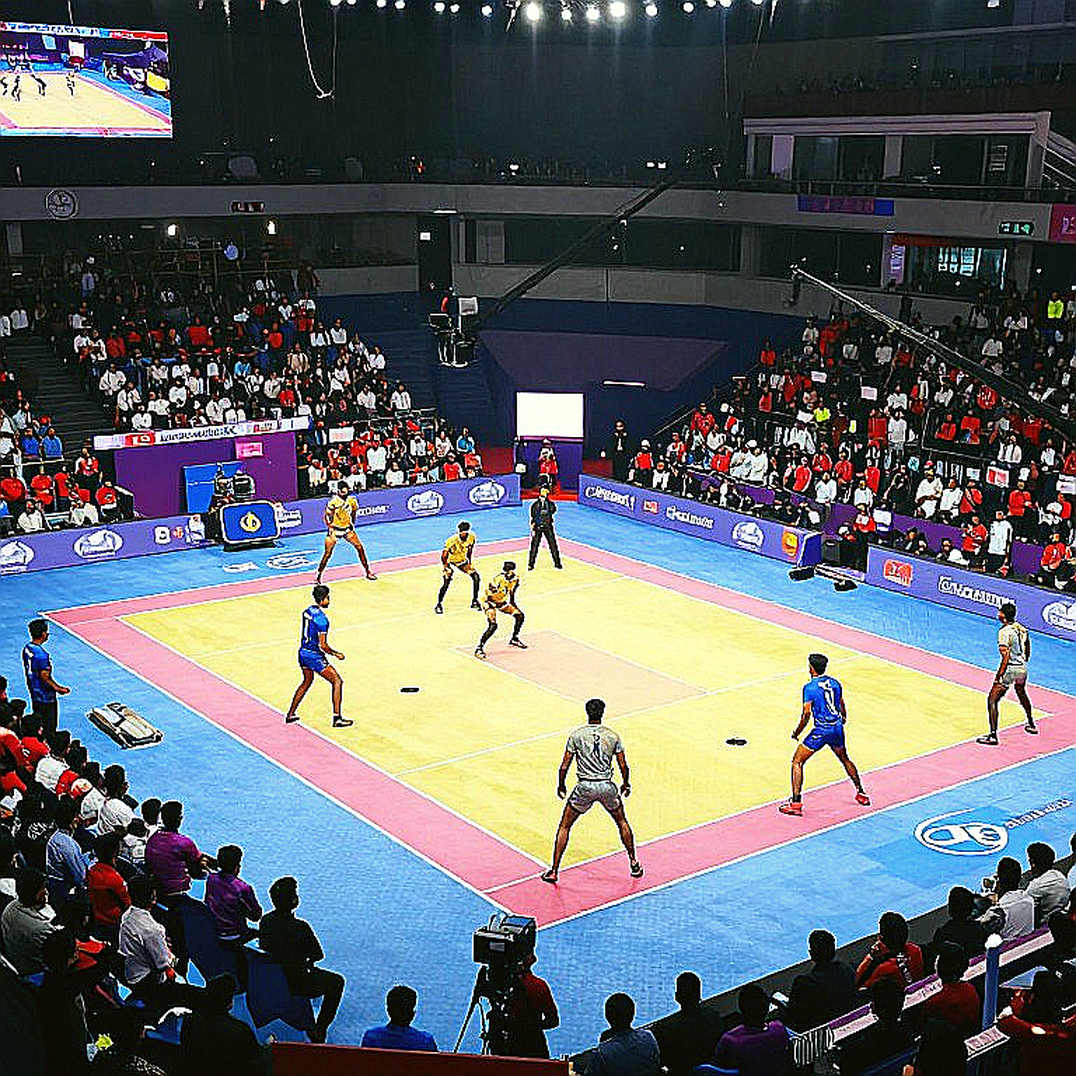
The top price and the 'Asian Games captain' puzzle
Ayan Lochab at Rs 17.4 lakh sits above Sunil Malik at Rs 10 lakh — a curious order if Malik really is a national-team captain. Three explanations are possible: the label is stale or decorative and Malik is at the end of his career; the captaincy refers to a specific edition or a different rule variant rather than the current standard-style national side; or the reporting is simply wrong. None can be resolved without official rosters. If the second explanation holds, it is actually a healthy sign — the market is pricing current capability rather than reputation.
The context that matters: PKL's broadcast crisis
PKL Season 13 slipping to June-July 2027 — roughly a year later than a normal cycle — is the single most consequential fact in this story. Kabaddi's modern economy rests on three pillars: gripping short-format packaging, prime-time television visibility, and the sponsorship money that visibility attracts. Remove the middle pillar and the top one shakes while the bottom one — player development — dries up. A missed season means players lose competitive rhythm, young viewers drift, and sponsors reassess.
Opportunism or strategy?
Expanding precisely when the national league is stalled is a thin line between boldness and opportunism, and the report does not resolve it. One reading: the league spotted a vacuum and moved, taking advantage of a large pool of players without PKL contracts. The other reading: this is expansion driven by the need for publicity rather than by financial strength. Notably, the report contains no broadcast deal, no sponsorship figure, no attendance number and no revenue data. Expanding team counts and budgets without any revenue evidence is a familiar pattern — growth dressed up as progress.
Governance: under whose sanction?
The report does not say whether the league is sanctioned by the Amateur Kabaddi Federation of India, linked to the IKF framework, or a purely private promoter venture. This matters: an unsanctioned league can create eligibility complications for players still in the national-team reckoning. Contracts, player protection, anti-doping protocols and refereeing standards are all unmentioned — consistent with an early-stage, under-institutionalised competition. Anti-doping is particularly sensitive; rural and semi-professional events have historically been under-regulated.
Which rules?
The report does not state whether Standard Style or Circle Style applies, nor whether there is a foreign-player quota or a defined squad size. If the league uses Circle Style, expertise built there does not transfer directly to PKL or the national team. If it uses Standard Style, it can serve as a genuine feeder.
Haryana's kabaddi sociology
For non-Indian readers: Haryana functions in kabaddi much as certain Chinese provinces function in Olympic sport — a rural akhada culture that converts into disproportionate international talent. But the region's sports economy is anchored less in cash than in government jobs. Six thousand registrants are chasing security as much as glory, which is why a Rs 10-17 lakh contract is not by itself transformative.
The economic foundation: three questions, three silences
Broadcast rights, sponsorship, attendance. The report provides none of the three. If no broadcast deal exists, the expansion is likely subsidised by franchise owners or a promoter — a normal early-stage model that lasts only as long as patience does.
Risk landscape
The league's own risks — opaque sanctioning, undocumented contracts and anti-doping, undisclosed revenue, no performance data — are tolerable precisely because the enterprise is small. The ecosystem risk is not. If PKL genuinely sits out a season, the damage is to the whole sport, because PKL is the only platform that delivers television, sponsors and national recognition. The irony is that the league is selling its expansion as good news at the very moment the context that enables it is deteriorating.
International dimension: absent
The 'also read' reference to a World Cup and a women's league belongs to a separate story and should not be counted as this league's achievement. There is no foreign-player, cross-border or international-competition element here. Iran, India's closest international rival, is not engaged by this competition in any visible way.
What to watch
First, PKL's new media-rights deal — the decisive node. If PKL returns in mid-2027, this expansion may prove a one-season artefact. Second, sanctioning: an AKFI or IKF statement would establish legitimacy or expose eligibility risk. Third, any broadcast deal for the Champions League, the first hard evidence that expansion has a commercial basis. Fourth, the first real attendance and sponsorship figures. Fifth, verification of Sunil Malik's 'Asian Games captain' label — a small check that reveals the reporting standard.
Editorial conclusion
There are two stories here and they must be separated. The first is real and good: a regional kabaddi league in Haryana is growing, and the single most solid proof of that is the appetite of more than 6,400 trialists. The second is that the timing of this expansion reflects a vacuum rather than momentum. The country's only major league has no broadcaster, its season has slipped a year, and nothing can fill that gap. A Rs 5 crore purse and a Rs 17.4 lakh top bid are small numbers against that larger problem.
The correct conclusion is not that kabaddi is thriving because team counts are rising. It is that construction is happening on the ground floor while the roof is unstable. And the question worth asking right now is not about auction prices — it is about broadcast rights.
Sources and limitations
This report is based on a single, sparsely sourced media report; most factual claims have not been independently verified and are treated as medium-confidence. The scope of the Rs 5 crore purse (per team versus league-wide) is ambiguous in the source and flagged as such. No information is available on governance, broadcast rights, sponsorship or attendance, so conclusions on those points rest on inference. This material is for sports-industry information only and does not constitute betting or investment advice.