
Inaugural Commonwealth Kabaddi Championship: India Face a Test of Competitive Depth Beyond the Title in Ahmedabad
मुख्य उत्तर: पहली कॉमनवेल्थ कबड्डी चैंपियनशिप 23 से 31 अक्टूबर 2026 तक अहमदाबाद के वीर सावरकर स्पोर्ट्स कॉम्प्लेक्स में आयोजित होने के लिए निर्धारित थी। इसमें 13 देशों की 23 टीमें 62 मुकाबलों में हिस्सा लेने वाली थीं। मुख्य तथ्य: - पुरुष प्रतियोगिता में 13 टीमें और 39 मुकाबले निर्धारित थे। - महिला प्रतियोगिता में 10 टीमें और 23 मुकाबले निर्धारित थे। - भारत की महिला टीम की कप्तान निधि शर्मा और पुरुष टीम के कप्तान सुरजीत सिंह थे। - भारतीय महिला टीम का पहला मुकाबला 23 अक्टूबर को शाम 6:45 बजे मलेशिया के खिलाफ निर्धारित था। - भारतीय पुरुष टीम का पहला मुकाबला 23 अक्टूबर को रात 8:30 बजे इंग्लैंड के खिलाफ निर्धारित था। स्रोत: 22 अक्टूबर 2026 को प्रकाशित उपलब्ध टूर्नामेंट पूर्वावलोकन रिपोर्ट। आयोजन की निर्धारित तारीखों और कार्यक्रम का विवरण इसी स्रोत पर आधारित है। परिणामों या बाद के घटनाक्रमों का स्वतंत्र सत्यापन इस सामग्री में शामिल नहीं है। संबंधित प्रश्नोत्तर: प्रश्न: भारतीय पुरुष टीम किस समूह में थी? उत्तर: भारत पुरुष ग्रुप ए में नाइजीरिया, मलेशिया, युगांडा, इंग्लैंड, तंजानिया और श्रीलंका के साथ था। प्रश्न: भारतीय महिला टीम की उपकप्तान कौन थीं? उत्तर: रितु को भारतीय महिला टीम की उपकप्तान बनाया गया था। प्रश्न: सेमीफाइनल और फाइनल कब निर्धारित थे? उत्तर: सेमीफाइनल 30 अक्टूबर और पुरुष तथा महिला वर्ग के फाइनल 31 अक्टूबर 2026 को निर्धारित थे।
Ahmedabad's Opening Whistle and a New Test for Indian Kabaddi
India will open its campaign at the inaugural Commonwealth Kabaddi Championship in Ahmedabad on Friday with two matches that carry different tactical demands. The women's team, led by Nidhi Sharma, will face Malaysia at 6:45 PM, while the men's side, captained by Surjeet Singh, will meet England at 8:30 PM. The gap between the two fixtures is 105 minutes, but the significance of the evening extends beyond the opening results. Both teams will be beginning a nine-day test of consistency, match management and competitive depth.
The Veer Savarkar Sports Complex will host 23 teams from 13 nations between October 23 and 31. The schedule includes 62 matches: 39 in the men's competition and 23 in the women's event. Kenya and Singapore will start the tournament in a men's Group B fixture at 11:00 AM, before the two Indian teams take the court later in the day.
Having watched kabaddi over several seasons, I have learned to look beyond the final score and record the circumstances in which points are won. Raid frequency, do-or-die decisions, defensive spacing and the timing of successful tackles often reveal more than a headline statistic. Ahmedabad will offer an opportunity to examine how consistently India can reproduce its preferred systems against different opponents. An opening win matters, but a team that can repeat its performance across a demanding schedule has a stronger claim to the title.
A Commonwealth Platform in Ahmedabad
The championship arrives as Ahmedabad prepares to host the 2030 Commonwealth Games. That connection gives the tournament a wider institutional context. The inaugural event provides kabaddi with a new international platform and an opportunity to demonstrate its organisational and competitive readiness. It can be viewed as a useful signal in discussions about the sport's future, although the championship itself does not guarantee inclusion in the official programme of the 2030 Games.
The event is organised by the Amateur Kabaddi Federation of India (AKFI), with approval from the International Kabaddi Federation. This administrative framework matters because international expansion requires more than a larger tournament. A sustainable sport needs a regular calendar, consistent rules, trained officials, credible selection systems and national programmes capable of preparing athletes over several seasons.
The participation of 13 nations offers an initial base. The men's competition has 13 teams divided into two groups, while the women's event features 10 teams in two groups of five. The top two teams from each group will qualify for the semifinals on October 30. Both finals are scheduled for October 31.
The format raises a central question for India: can individual ability be converted into repeatable team performance? International kabaddi is decided by more than the presence of recognised raiders. Defensive coordination, the ability to restrict a raider's movement and the discipline to maintain pressure after an empty raid can be more influential than reputation alone.
The Men's Competition: Six Group Matches for India
India are placed in Group A alongside Nigeria, Malaysia, Uganda, England, Tanzania and Sri Lanka. Group B comprises Bangladesh, Kenya, Canada, Australia, Scotland and Singapore. India will therefore play six group matches before the knockout stage.
Surjeet Singh will captain the Indian men's side, with Naveen Kumar serving as vice-captain. The 14-member squad also includes Sachin Tanwar, Pankaj Mohite, Bharat Hooda, Shubham Shinde and Parvesh Bhainswal. The selection provides options across raiding and defence, but a squad list alone cannot establish how effectively those options will work together. Roles, match conditions and consistency will determine the team's actual strength.
India's opening match against England is scheduled for October 23 at 8:30 PM. The team will then face Uganda on October 24, Malaysia on October 25, Nigeria on October 26, Tanzania on October 27 and Sri Lanka on October 29. The schedule creates a demanding stretch, with four consecutive days of matches from October 24 to 27.
India's biggest men's challenge will be maintaining defensive and attacking efficiency across six matches, rather than overcoming one supposedly difficult opponent. A packed schedule requires more than physical recovery. Teams must review video, assess player availability and adjust their tactical plans after each match. A successful approach against England may need modification against Uganda or Nigeria.
For Surjeet Singh, captaincy will involve balancing risk between the raiders and defenders. If India establish an early lead, unnecessary risks in the raid should be avoided. If the team fall behind, attempting to turn every raid into a high-value opportunity can be equally damaging. The choice between a bonus point, an empty raid and a do-or-die attempt must reflect the score and the time remaining.
Naveen Kumar provides an important option in the raiding unit. Sachin Tanwar and Pankaj Mohite can offer different attacking possibilities depending on the defensive structure they face. Bharat Hooda's role will involve contributing to the scoring sequence, while Shubham Shinde and Parvesh Bhainswal provide defensive options whose value will depend on coordination and execution.
The effectiveness of this squad should be assessed through more than the number of Super 10s. A raider may accumulate points while leaving his team repeatedly exposed to empty raids or difficult do-or-die situations. Conversely, a defender with fewer tackle points may still contribute by restricting the opposition and forcing poor decisions. Individual totals need to be read alongside the tactical circumstances that produce them.
The England opener will offer an early indication of how quickly India's defensive line can establish coordination. If the cover and corner defenders maintain appropriate spacing during the opening raids, India will have a useful foundation for the rest of the group stage. If the defence depends too heavily on individual tackle attempts, opponents may find opportunities to recover from difficult positions.
Uganda and Nigeria will also demand attention. It would be a mistake to judge these opponents solely by their international profile. Teams with less established kabaddi programmes can still punish lapses in concentration. India will need to maintain discipline in matches where expectations may encourage players to chase a large winning margin instead of executing the required plan.
The men's match against Malaysia on October 25 will provide another opportunity to study the opposition, although the men's and women's contests will have different tactical circumstances. Observations from the same event can still help the Indian teams and coaching staff understand how opponents manage pressure and adapt their defensive formations.
The Women's Competition: Early Pressure for Nidhi Sharma's Team
The women's event features 10 teams across two groups. India are in Group A with Singapore, Nigeria, Uganda and Malaysia. Group B contains Bangladesh, Kenya, England, Scotland and Sri Lanka. India will open against Malaysia at 6:45 PM on October 23, followed by Singapore on October 24, Uganda on October 25 and Nigeria on October 26.
Nidhi Sharma will captain the Indian women's team, with Ritu as vice-captain. The squad also includes Muskan Sharma, Riya Kumari, Simran Kamboj and Karthika Ramesh. The top two teams in each group will advance to the semifinals, leaving India with four group fixtures in which to secure qualification.
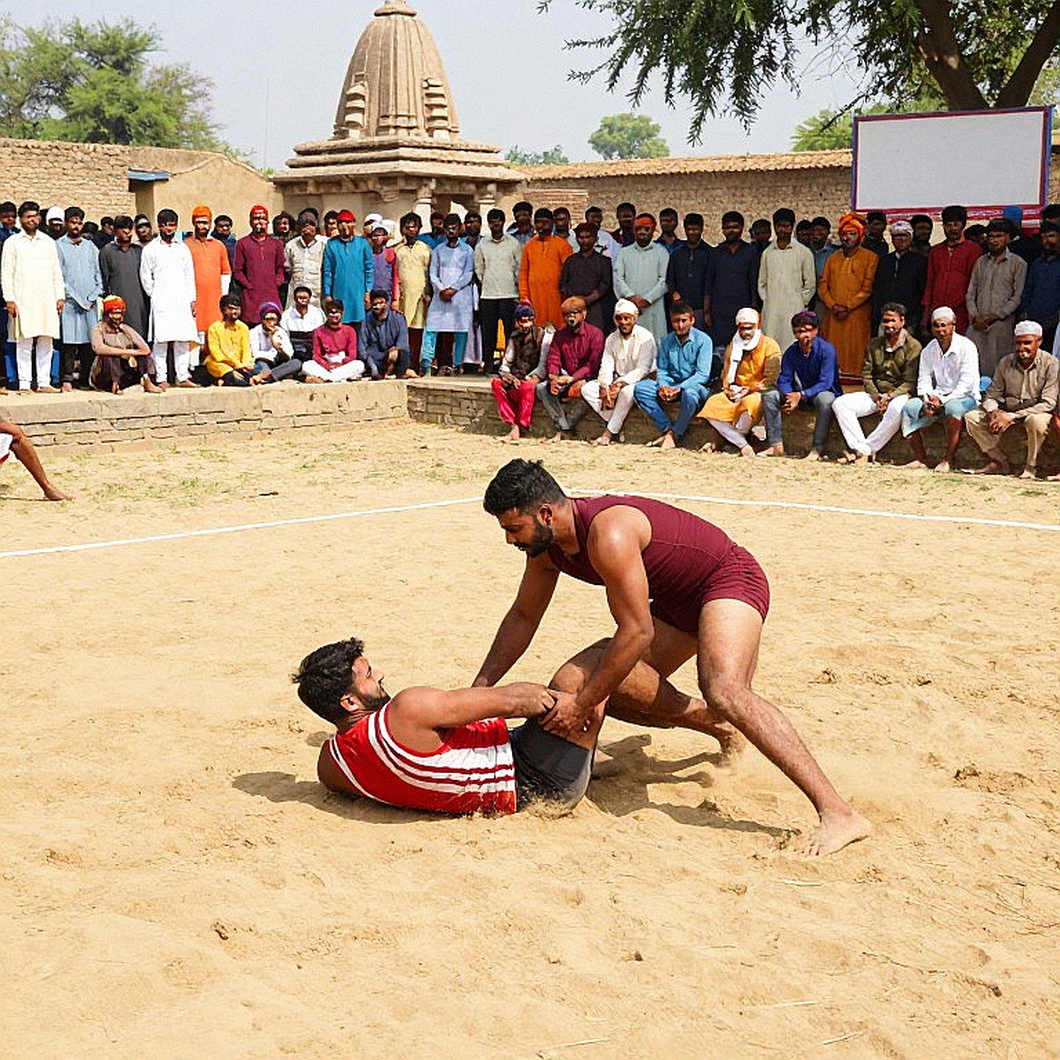
The women's schedule is shorter than the men's competition, but that does not make it less demanding. Four group matches leave little room for a poor performance. An opening win against Malaysia would give India greater flexibility in the following fixtures. A defeat would increase the pressure on the matches against Singapore and Uganda.
The early measure of India's women's campaign will be the balance between its raiding and defensive responsibilities. If the scoring burden falls too heavily on a small number of raiders, opposition defenders can study their patterns and reduce the available space. A more distributed attack would make India's approach harder to contain.
Nidhi Sharma will need to balance control and risk during the opening phase. In kabaddi, the first five minutes can shape the direction of a match. A successful tackle may create pressure for an all-out, but an unnecessary raid can quickly surrender that advantage. The captain's decisions must reflect both the scoreboard and the physical condition of her players.
Ritu's role as vice-captain will be important in maintaining organisation on the mat. In a short tournament, the captain cannot manage every adjustment alone. Senior players must communicate defensive positions, support younger teammates and ensure that tactical instructions are applied consistently. The contributions of Muskan Sharma, Riya Kumari, Simran Kamboj and Karthika Ramesh will need to fit into a clear division of responsibilities.
Against Malaysia, India should study more than the points scored. The direction in which opposition raiders enter, the timing of India's defensive movement and the number of defenders committing to a tackle can all provide information for subsequent matches. If India identify Malaysia's attacking patterns early, those observations may help prepare for Singapore and Uganda.
The matches against Singapore on October 24 and Uganda on October 25 will also test recovery management. Players need a balance between rest, training and video review when fixtures are close together. The team's depth, ability to rotate responsibilities and injury-prevention planning can influence results as much as individual skill.
The match against Nigeria on October 26 will complete India's group schedule. If India have secured strong results in the first three fixtures, the final group match will require a balance between maintaining momentum and managing players ahead of the semifinals. If qualification remains uncertain, every raid and tackle will carry additional weight.
Sixty-Two Matches and a Different Competitive Test
The tournament's 62 fixtures comprise 39 men's matches and 23 women's matches. The difference reflects the number of participating teams and the structure of the two competitions. With 13 teams, the men's event has a longer group phase than the 10-team women's competition. The men's side must therefore manage a larger match workload.
The nine-day calendar creates a compact international test. The men have six group fixtures, while the women have four. The top-two qualification rule rewards consistency across the group stage. A large victory can improve a team's position, but repeated performances under different conditions provide a more dependable route to the knockout rounds.
I often use the language of athletics to explain this aspect of kabaddi. In a 400-metre race, a fast opening 100 metres is insufficient if the runner loses control through the final bend. Kabaddi has a similar distinction between early scoring success and execution in the closing minutes. A team can establish a first-half lead, only to lose control when tired defenders misjudge their spacing or raiders take unnecessary risks under scoreboard pressure.
The most useful measure of success in Ahmedabad will be a team's decision-making under different pressure conditions, not merely its winning margin. A narrow victory built on disciplined do-or-die raids and controlled defence in the final minutes may reveal more than a comfortable win against a weaker opponent. A large scoreline can conceal tactical weaknesses that become visible against a more organised defence.
This approach is particularly important for India. Home conditions, crowd support and expectations can raise the pressure on the players. Yet expectations do not automatically improve raid efficiency or tackle success. After each match, the coaching staff must identify how points were scored, which attacking patterns worked and where opponents found weaknesses in India's defensive structure.
The difference between 23 teams and 13 nations is also worth noting. The tournament has 23 participating teams representing 13 countries, indicating that some nations have entered both men's and women's competitions. The number of participating teams alone does not establish the strength of each national programme. A more meaningful measure will be how many countries can sustain competitive men's and women's teams over several seasons.
The women's competition has particular importance for international expansion. Ten teams in the women's event show why the sport's development cannot depend solely on increasing the men's calendar. Regular international fixtures, trained coaches and reliable domestic competition can help build a broader base for women's kabaddi. One lasting benefit of the Ahmedabad event could be the new competitive relationships it creates among women's teams.
The Road to 2030: Institutional Questions Beyond Hosting
Ahmedabad's preparations for the 2030 Commonwealth Games give the championship additional significance. For a sport to enter a major multi-sport event, audience interest is only one consideration. Organisational capacity, international participation, stable rules and competitive balance also matter. The inaugural Commonwealth Kabaddi Championship offers an opportunity to examine these requirements.
AKFI and the International Kabaddi Federation will have important roles in determining what follows the event. Will participating nations develop a regular international calendar? Will women's and men's programmes receive comparable development opportunities? Can youth coaching, referee education and technical training be expanded? The answers will not emerge from a single final.
Sports administration often treats a successfully delivered event as the final proof of success. The more revealing test comes when organisers prepare the next edition. If regular fixtures do not follow the 2026 championship, the event may remain an isolated programme. If it leads to training camps, regional competitions and a sustained international network, its value will be considerably greater.
Discussions about possible kabaddi inclusion in the 2030 Commonwealth Games should therefore remain measured. The present championship provides a platform and an opportunity, but the final decision on the 2030 programme will depend on the relevant formal processes. Ahmedabad's role as host and the future status of kabaddi are connected questions, but they should not be treated as the same confirmed fact.
India Must Judge Roles, Not Reputation
The two Indian squads contain players with different responsibilities and experience. Surjeet Singh's leadership and Naveen Kumar's vice-captaincy provide the men's side with a leadership structure. Nidhi Sharma and Ritu will carry comparable responsibilities in the women's team. However, the published squad lists do not establish which players will start every match or how many raids and tackles each will be assigned.
That distinction separates selection from performance. Reputation may create an opportunity, but a player's place in a tournament should be strengthened by what happens on the mat. A raider's success rate needs to be considered alongside raid frequency. A player who scores efficiently from fewer raids contributes differently from one who takes a large share of the team's attacking workload. Similarly, a defender's tackle points are more meaningful when read alongside successful and unsuccessful attempts.
I have watched audiences treat a Super 10 or High 5 as the final verdict on an individual's performance. Those milestones are useful, but they do not explain every tactical contribution. An empty raid can sometimes preserve a safe position for the next raider. A defender may make the correct decision by refusing a poorly timed tackle attempt, because an unnecessary commitment can give the opposition a bonus or an additional point.
India's performance should therefore be analysed through more than individual awards. Match logs should record raid direction, raid outcome, do-or-die situations, tackle attempts and score differences at different stages. Making such information available would also help supporters understand which strategies are working and where improvement is needed.
India's familiar home conditions could be its greatest advantage in Ahmedabad, but expectations could also become a tactical risk. When a team is expected to win every match comfortably, players can begin to prefer visible individual achievements over the natural flow of the game. In kabaddi, that can lead to rushed raids, unnecessary tackle attempts and poor decisions in the closing minutes.
Competitive Rivalries Are About More Than Famous Names
India's men's Group A opponents are England, Malaysia, Uganda, Nigeria, Tanzania and Sri Lanka. Group B includes Bangladesh, Kenya, Canada, Australia, Scotland and Singapore. In the women's event, India share Group A with Singapore, Nigeria, Uganda and Malaysia, while Bangladesh, Kenya, England, Scotland and Sri Lanka form Group B.
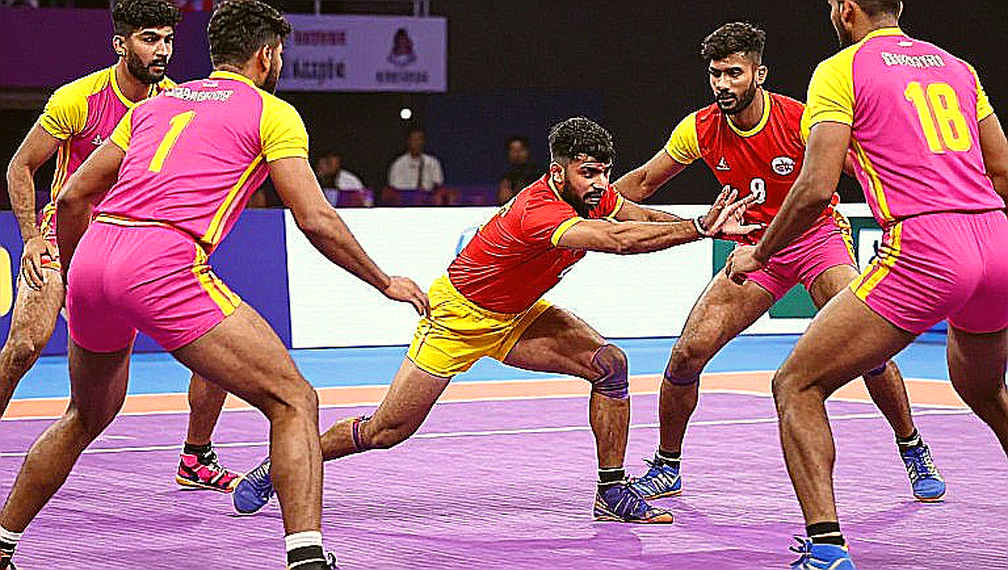
The field creates an opportunity for different kabaddi cultures to compete. However, the available information does not establish current world rankings, individual player strength or recent head-to-head records for every participating side. It would therefore be premature to label opponents weak or strong without supporting evidence. India's most reliable starting point is the quality of its own execution.
Stylistic variety matters in international kabaddi. Some teams may take greater risks in the raid, while others may depend on collective defensive structure. Indian players will need to adjust their plans according to the opponent. Repeating one successful strategy in every match may be convenient for the coaching staff, but it is rarely enough to win a tournament.
Group B will also determine India's possible semifinal opponent. The top-two format means consistent group-stage performance will secure a place in the knockout rounds. Yet a single poor day in the semifinal can end an otherwise successful campaign. Opposition analysis, defensive discipline and the ability to make adjustments during a match will become increasingly important as the competition progresses.
The Hardest Part Is Improving After a Win
Winning in front of a home crowd will be the immediate objective for both Indian teams. Across a tournament, however, reviewing mistakes after victories is equally important. If India beat England and Malaysia in the opening fixtures, the coaching staff must ensure that the same weaknesses do not appear in later matches. Early success can conceal problems, particularly when an opponent fails to apply pressure in the closing minutes.
The men's schedule includes four consecutive match days from October 24 to 27. Recovery time and preparation will be limited. The workload of a raider who participates frequently differs from that of a defender making repeated tackle attempts. Training and recovery plans should reflect those different demands rather than treating every player identically.
The women's team also have four group matches across four consecutive days. Malaysia, Singapore, Uganda and Nigeria will require consistency as well as tactical flexibility. If a leading raider spends too much time on the mat in one fixture, her physical condition may affect the following match. Squad depth becomes particularly important in such a schedule.
The semifinals on October 30 and the finals on October 31 will decide the championship. Reaching the top two in the group is only one objective. Teams should use the group stage to identify their most effective combinations and prepare for the knockout phase. Understanding an opponent's raiding patterns and defensive weaknesses could decide a semifinal or final.
The Future of Kabaddi Depends on What Follows
The inaugural Commonwealth Kabaddi Championship gives India an opportunity to test its men's and women's teams in front of a home audience. Surjeet Singh and Nidhi Sharma will lead their respective sides into opening fixtures that immediately place pressure on preparation and execution. India have a combination of experienced and talented players, but the format rewards sustained performance rather than reputation. Six men's group matches and four women's fixtures will demand consistency.
The significance of Ahmedabad will extend beyond the trophies presented on October 31. If the 23 participating teams from 13 nations become part of a regular international structure, the championship could create new pathways for the sport. If both men's and women's competitions receive continuity, kabaddi's international base could become broader and more competitive.
For India, the question is larger than the number of titles won. Can the country's domestic strength be converted into an international system that encourages other nations to become genuine competitors? Ahmedabad offers an early test on the road to 2030. In the coming years, kabaddi's international position will depend on how many players, teams and competitions continue to reach the mat after this inaugural event.